Abstract
Aqueous extracts of the four weed species Conyza canadensis, Blumea obliqua, Amaranthus viridis and Eclipta prostrata caused substantial mortality of the plant-parasitic nematodes Xiphinema americanum, Tylenchulus semipenetrans and Meloidogyne incognita in vitro. Conyza canadensis and A. viridis were the most effective in killing the nematodes while E. prostrata was the least effective. Soil amendment with C. canadensis or A. viridis at the highest concentration (5 %) resulted in a significant reduction in soil population densities, root-knot development, and nematode reproductive potential of M. incognita in okra and brinjal. Soil amendment with B. obliqua at 5% concentration increased plant height of both crops while A. viridis at 5% concentration reduced the fresh weight of okra shoots. Ether extracts of the weed species revealed qualitative differences in phenolic compounds. Altogether, thirteen phenolic compounds were isolated from the weeds with A. viridis yielding the highest number (6) of such compounds.
Abstract from the paper’s OpenAlex record, shown for indexing and research. Copyright remains with the authors or the publisher. Read at the source ↗
The text the model read, with the source record’s inline markup (italics, sub- and superscripts) rendered and its character entities decoded; quote offsets refer to the raw text.
Claims 9
Claim · model-written summary
Aqueous extracts of four weed species caused increased mortality of plant-parasitic nematodes in vitro
- Taxon
- Conyza canadensis, Blumea obliqua, Amaranthus viridis and Eclipta prostrata
 Eclipta prostrata
 Amaranthus viridis
 Erigeron canadensis
 Blumea obliquae0
- Treatment
- Aqueous extractse0
- Interactor
- plant-parasitic nematodese0pest
- Outcome
- mortality of the plant-parasitic nematodese0
- Direction
- increaseinferrede0
- Setting
- in vitroe0
Organisms pictured · Representative pictures of the matched species, not figures from the paper.


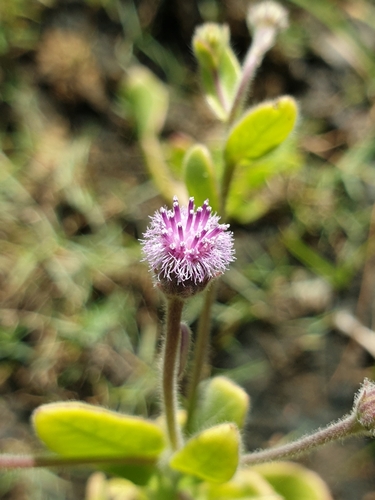
Verbatim
e0“Aqueous extracts of the four weed species Conyza canadensis, Blumea obliqua, Amaranthus viridis and Eclipta prostrata caused substantial mortality of the plant-parasitic nematodes Xiphinema americanum, Tylenchulus semipenetrans and Meloidogyne incognita in vitro”
Claim · model-written summary
Conyza canadensis and Amaranthus viridis were the most effective weeds in killing nematodes
- Taxon
- Conyza canadensis and A. viridisAmaranthus viridisErigeron canadensise1
- Outcome
- killing the nematodese1
- Direction
- most effectivee1
Organisms pictured · Representative pictures of the matched species, not figures from the paper.
Verbatim
e1“Conyza canadensis and A. viridis were the most effective in killing the nematodes while E. prostrata was the least effective”
Claim · model-written summary
Eclipta prostrata was the least effective weed in killing nematodes
- Taxon
- E. prostrataEclipta prostratae1
- Outcome
- killing the nematodese1
- Direction
- least effectivee1
Organisms pictured · Representative pictures of the matched species, not figures from the paper.
Verbatim
e1“Conyza canadensis and A. viridis were the most effective in killing the nematodes while E. prostrata was the least effective”
Claim · model-written summary
Soil amendment with Conyza canadensis or Amaranthus viridis at 5% significantly reduced soil population densities, root-knot development and reproductive potential of M. incognita in okra and brinjal
- Taxon
- okra and brinjal
 Solanum melongena
 Abelmoschus esculentuse2
- Treatment
- Soil amendment with C. canadensis or A. viridis at the highest concentration (5 %)e2
- Interactor
- M. incognita
 Meloidogyne incognitae2pest
- Outcome
- soil population densities, root-knot development, and nematode reproductive potentiale2
- Direction
- reductione2
Not reportedComparator
Organisms pictured · Representative pictures of the matched species, not figures from the paper.


Verbatim
e2“Soil amendment with C. canadensis or A. viridis at the highest concentration (5 %) resulted in a significant reduction in soil population densities, root-knot development, and nematode reproductive potential of M. incognita in okra and brinjal”
Claim · model-written summary
Soil amendment with Blumea obliqua at 5% increased plant height of okra and brinjal
- Taxon
- okra and brinjalSolanum melongenaAbelmoschus esculentust0
- Treatment
- Soil amendment with B. obliqua at 5% concentratione3
- Outcome
- plant heighte3
- Direction
- increasede3
Not reportedComparator
Organisms pictured · Representative pictures of the matched species, not figures from the paper.
Verbatim
t0“Effects of some common weeds from Pakistan on plant-parasitic nematodes in vitro and population densities and survival of Meloidogyne incognita in okra and brinjal”
e3“Soil amendment with B. obliqua at 5% concentration increased plant height of both crops”
Claim · model-written summary
Amaranthus viridis at 5% reduced fresh weight of okra shoots
- Taxon
- okraAbelmoschus esculentuse4
- Treatment
- A. viridis at 5% concentratione4
- Outcome
- fresh weight of okra shootse4
- Direction
- reducede4
Not reportedComparator
Organisms pictured · Representative pictures of the matched species, not figures from the paper.
Verbatim
e4“A. viridis at 5% concentration reduced the fresh weight of okra shoots”
Claim · model-written summary
Thirteen phenolic compounds were isolated from the weeds
Verbatim
e5“Altogether, thirteen phenolic compounds were isolated from the weeds with A. viridis yielding the highest number (6) of such compounds”
Claim · model-written summary
Amaranthus viridis yielded the highest number of phenolic compounds, six
- Taxon
- A. viridisAmaranthus viridise5
- Outcome
- highest numbere5
- Value
- 6e5
Organisms pictured · Representative pictures of the matched species, not figures from the paper.
Verbatim
e5“Altogether, thirteen phenolic compounds were isolated from the weeds with A. viridis yielding the highest number (6) of such compounds”
Claim · model-written summary
Ether extracts of the weed species showed qualitative differences in phenolic compounds
Verbatim
e6“Ether extracts of the weed species revealed qualitative differences in phenolic compounds”
The same questions in other papers
other · growth · Solanum melongena (eggplant)Results differ
19 papers in the same direction as this paper · 3 in the opposite direction
- no effect
- negative
- no effect
19 papers more in this group
See all 23 papers →other · growth · Abelmoschus esculentus (okra)Positive and negative results
29 papers in the same direction as this paper · 2 in the opposite direction
- negative
- negative
- positive
28 papers more in this group
See all 32 papers →other · Meloidogyne incognita · Abelmoschus esculentus (okra)Results agree
2 papers in the same direction as this paper
- positive
- positive
other · Meloidogyne incognita · Solanum melongena (eggplant)Results agree
2 papers in the same direction as this paper
- positive
- positive
Claims are grouped by organism, treatment and what was measured or targeted. A paper counts as positive when any of its claims in the group is positive.