Abstract
Several soil-borne fungal pathogens attack soybean plants, causing seedling damping-off and root rot diseases, in Egypt. Isolation trials from rooted rots of soybean, collected from various locations at Gharbiya, Kafr El-Sheikh and Minufiya governorates, revealed that Rhizoctonia solani, Fusarium solani and Macrophomina phaseolina were the most virulent and predominant pathogens. All the tested fungicides significantly reduced linear growth of the tested pathogens. Three known bioagents i.e. Trichoderma harzianum, T. hamatum and Bacillus subtilis were tested against such pathogens, and revealed remarkable effect in reducing mycelial growth on PDA medium. T. hamatum, mainly, grew over the mycelium of the tested pathogens. Under greenhouse conditions, both the fungicides and antagonists gave significant reductions of root rot severity, but fungicides were more effective than biocontrol agents in reducing the disease. Application of the selective antagonists and fungicides significantly decreased soybean root rot than untreated check, in naturally pathogen- infested fields. Plant growth and activity of nitrogenase enzyme were enhanced greatly, when the fungicides were applied compared with antagonists treatments.
Abstract from the paper’s OpenAlex record; open copy licensed cc-by-nc-sa. Read at the source ↗
The text the model read, with the source record’s inline markup (italics, sub- and superscripts) rendered and its character entities decoded; quote offsets refer to the raw text.
Claims 10
Claim · model-written summary
Rhizoctonia solani, Fusarium solani and Macrophomina phaseolina were the most virulent and predominant pathogens in sampled soybean roots.
- Taxon
- SOYBEAN
 Glycine maxt0
- Interactor
- Rhizoctonia solani, Fusarium solani and Macrophomina phaseolina
 Macrophomina phaseolina
 Fusarium solani
 Rhizoctonia solanie0pathogen
- Outcome
- most virulent and predominant pathogense0
Organisms pictured · Representative pictures of the matched species, not figures from the paper.


Verbatim
e0“Rhizoctonia solani, Fusarium solani and Macrophomina phaseolina were the most virulent and predominant pathogens”
t0“SOYBEAN”
Claim · model-written summary
Fungicides significantly reduced growth of the tested soybean pathogens.
- Taxon
- SOYBEANGlycine maxt0
- Treatment
- fungicidese0
- Outcome
- linear growth of the tested pathogense0
- Direction
- reducede0
Not reportedComparator
Organisms pictured · Representative pictures of the matched species, not figures from the paper.
Verbatim
e0“All the tested fungicides significantly reduced linear growth of the tested pathogens”
t0“SOYBEAN”
Claim · model-written summary
Trichoderma harzianum, T. hamatum and Bacillus subtilis reduced pathogen mycelial growth on PDA.
- Taxon
- SOYBEANGlycine maxt0
- Treatment
- Trichoderma harzianum, T. hamatum and Bacillus subtilise0
- Interactor
- Trichoderma harzianum, T. hamatum and Bacillus subtilis
 Bacillus subtilis
 Trichoderma harzianum
 Trichoderma hamatume0biocontrol_agent
- Outcome
- mycelial growthe0
- Direction
- reducinge0
- Setting
- PDA mediume0
Not reportedComparator
Organisms pictured · Representative pictures of the matched species, not figures from the paper.


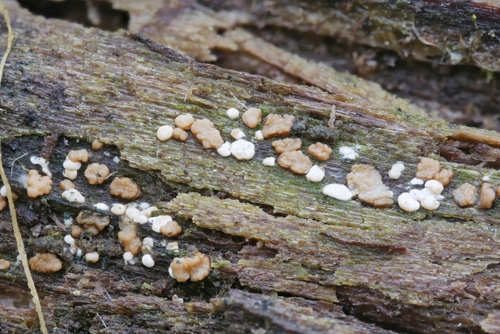
Verbatim
e0“Trichoderma harzianum, T. hamatum and Bacillus subtilis were tested against such pathogens, and revealed remarkable effect in reducing mycelial growth on PDA medium”
t0“SOYBEAN”
Claim · model-written summary
T. hamatum grew over the tested pathogen mycelium.
- Taxon
- SOYBEANGlycine maxt0
- Interactor
- T. hamatumTrichoderma hamatume0biocontrol_agent
- Outcome
- grew over the mycelium of the tested pathogense0
Organisms pictured · Representative pictures of the matched species, not figures from the paper.
Verbatim
e0“T. hamatum, mainly, grew over the mycelium of the tested pathogens”
t0“SOYBEAN”
Claim · model-written summary
Fungicides significantly reduced soybean root rot severity under greenhouse conditions.
- Taxon
- SOYBEANGlycine maxt0
- Treatment
- fungicidese0
- Outcome
- root rot severitye0
- Direction
- reductionse0
- Setting
- greenhouse conditionse0
Not reportedComparator
Organisms pictured · Representative pictures of the matched species, not figures from the paper.
Verbatim
e0“Under greenhouse conditions, both the fungicides and antagonists gave significant reductions of root rot severity, but fungicides were more effective than biocontrol agents in reducing the disease”
t0“SOYBEAN”
Claim · model-written summary
Antagonists significantly reduced soybean root rot severity under greenhouse conditions.
- Taxon
- SOYBEANGlycine maxt0
- Treatment
- antagonistse0
- Outcome
- root rot severitye0
- Direction
- reductionse0
- Setting
- greenhouse conditionse0
Not reportedComparator
Organisms pictured · Representative pictures of the matched species, not figures from the paper.
Verbatim
e0“Under greenhouse conditions, both the fungicides and antagonists gave significant reductions of root rot severity, but fungicides were more effective than biocontrol agents in reducing the disease”
t0“SOYBEAN”
Claim · model-written summary
Fungicides reduced root rot more than biocontrol agents.
- Taxon
- SOYBEANGlycine maxt0
- Treatment
- fungicidese0
- Outcome
- the diseasee0
- Direction
- reducinge0
- Comparator
- biocontrol agentse0
Organisms pictured · Representative pictures of the matched species, not figures from the paper.
Verbatim
e0“fungicides were more effective than biocontrol agents in reducing the disease”
t0“SOYBEAN”
Claim · model-written summary
Selected antagonists significantly decreased soybean root rot in infested fields.
- Taxon
- soybeanGlycine maxe0
- Treatment
- selective antagonistse0
- Outcome
- soybean root rote0
- Direction
- decreasede0
- Comparator
- untreated checke0
- Setting
- naturally pathogen- infested fieldse0
Organisms pictured · Representative pictures of the matched species, not figures from the paper.
Verbatim
e0“Application of the selective antagonists and fungicides significantly decreased soybean root rot than untreated check, in naturally pathogen- infested fields”
Claim · model-written summary
Fungicides significantly decreased soybean root rot in infested fields.
- Taxon
- soybeanGlycine maxe0
- Treatment
- fungicidese0
- Outcome
- soybean root rote0
- Direction
- decreasede0
- Comparator
- untreated checke0
- Setting
- naturally pathogen- infested fieldse0
Organisms pictured · Representative pictures of the matched species, not figures from the paper.
Verbatim
e0“Application of the selective antagonists and fungicides significantly decreased soybean root rot than untreated check, in naturally pathogen- infested fields”
Claim · model-written summary
Fungicides enhanced plant growth and nitrogenase activity relative to antagonists.
- Taxon
- SOYBEANGlycine maxt0
- Treatment
- fungicidese0
- Outcome
- Plant growth and activity of nitrogenase enzymee0
- Direction
- enhancede0
- Comparator
- antagonists treatmentse0
Organisms pictured · Representative pictures of the matched species, not figures from the paper.
Verbatim
e0“Plant growth and activity of nitrogenase enzyme were enhanced greatly, when the fungicides were applied compared with antagonists treatments”
t0“SOYBEAN”
The same questions in other papers
Trichoderma hamatum · disease · Glycine max (soybean)Results agree
1 paper in the same direction as this paper
- positive
Bacillus subtilis · disease · Glycine max (soybean)Results agree
4 papers in the same direction as this paper
- positive
- positive
- positive
1 paper more in this group
See all 5 papers →Trichoderma harzianum · disease · Glycine max (soybean)Results agree
8 papers in the same direction as this paper
- positive
- positive
- positive
5 papers more in this group
See all 9 papers →fungicide · growth · Glycine max (soybean)Results differ
26 papers in the same direction as this paper · 6 in the opposite direction
- no effect
- negative
- negative
29 papers more in this group
See all 33 papers →fungicide · disease · Glycine max (soybean)Positive and negative results
44 papers in the same direction as this paper · 8 in the opposite direction · 1 reporting no difference from an alternative
- negative
- negative
- negative
50 papers more in this group
See all 54 papers →fungicide · physiology: enzyme activity · Glycine max (soybean)Results agree
3 papers in the same direction as this paper
- positive
- positive
- positive
biocontrol · disease · Glycine max (soybean)Results agree
11 papers in the same direction as this paper
- positive
- positive
- positive
8 papers more in this group
See all 12 papers →Claims are grouped by organism, treatment and what was measured or targeted. A paper counts as positive when any of its claims in the group is positive.