Abstract
The research work was performed to investigate the potential of Bacillus thuringiensis strain 199 to induce systemic resistance in tomato against Fusarium wilt. Roots of two-week-old seedlings of tomato plants were primed with bacterial strain. After 10 days of transplantation, some pots of tomato seedlings were provided with inoculum of Fusarium oxysporum lycopersici according to experimental design to induce disease. After 15 days of incubation period, plants challenged with F. oxysporum lycopersici alone were having obvious symptoms of Fusarium wilt. Plants that were treated with B. thuringiensis 199 + F. oxysporum lycopersici were having significant reduction of disease severity. Quantity of total phenolics increased 1.7-fold in bacterial-treated plants as compared to nontreated. Likewise, in case of defense-related enzymes, a significant increase of 1.3-, 1.8-, and 1.4-fold in polyphenol oxidase (PPO), phenyl ammonia lyase (PAL), and peroxidase (PO) was observed in comparison with untreated control. These results, hence, prove the potential of this bacterial strain for use as plant protection agent.
Abstract from the paper’s OpenAlex record, shown for indexing and research. Copyright remains with the authors or the publisher. Read at the source ↗
The text the model read, with the source record’s inline markup (italics, sub- and superscripts) rendered and its character entities decoded; quote offsets refer to the raw text.
Claims 7
Claim · model-written summary
Tomato plants challenged only with Fusarium developed obvious wilt symptoms.
- Taxon
- tomato
 Solanum lycopersicume1
- Treatment
- challenged with F. oxysporum lycopersici alonee0
- Interactor
- F. oxysporum lycopersici
 Fusarium oxysporume0pathogen
- Outcome
- obvious symptoms of Fusarium wilte0
Organisms pictured · Representative pictures of the matched species, not figures from the paper.


Verbatim
e0“plants challenged with F. oxysporum lycopersici alone were having obvious symptoms of Fusarium wilt”
e1“tomato plants”
Claim · model-written summary
Bacterial treatment reduced Fusarium wilt severity in tomato plants challenged with the pathogen.
- Taxon
- tomatoSolanum lycopersicume1
- Treatment
- treated with B. thuringiensis 199 + F. oxysporum lycopersicie0
- Interactor
- F. oxysporum lycopersiciFusarium oxysporume0pathogen
- Second interactor
- B. thuringiensis 199
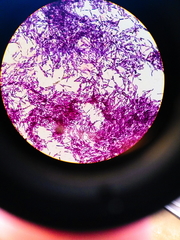 Bacillus thuringiensise0biocontrol_agent
- Outcome
- disease severitye0
- Direction
- reductione0
Not reportedComparator
Organisms pictured · Representative pictures of the matched species, not figures from the paper.
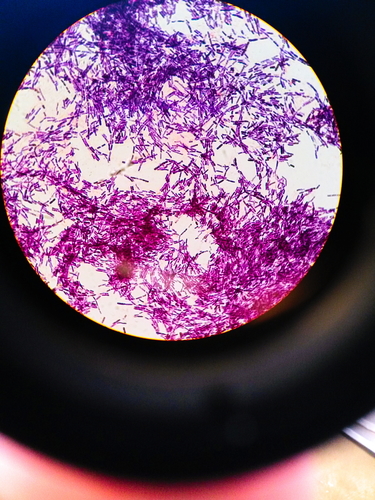
Verbatim
e0“Plants that were treated with B. thuringiensis 199 + F. oxysporum lycopersici were having significant reduction of disease severity.”
e1“tomato plants”
Claim · model-written summary
Bacterial treatment increased total phenolics 1.7-fold over untreated plants.
- Taxon
- tomatoSolanum lycopersicume1
- Treatment
- bacterial-treatede0
- Interactor
- Bacillus thuringiensis strain 199Bacillus thuringiensise2biocontrol_agent
- Outcome
- Quantity of total phenolicse0
- Direction
- increasede0
- Value
- 1.7-folde0
- Comparator
- nontreatede0
Organisms pictured · Representative pictures of the matched species, not figures from the paper.
Verbatim
e0“Quantity of total phenolics increased 1.7-fold in bacterial-treated plants as compared to nontreated.”
e1“tomato plants”
e2“Bacillus thuringiensis strain 199”
Claim · model-written summary
Bacterial treatment increased polyphenol oxidase activity 1.3-fold relative to untreated controls.
- Taxon
- tomatoSolanum lycopersicume1
- Treatment
- bacterial-treatede3
- Interactor
- Bacillus thuringiensis strain 199Bacillus thuringiensise2biocontrol_agent
- Outcome
- polyphenol oxidase (PPO)e0
- Direction
- increasee0
- Value
- 1.3-e0
- Comparator
- untreated controle0
Organisms pictured · Representative pictures of the matched species, not figures from the paper.
Verbatim
e0“a significant increase of 1.3-, 1.8-, and 1.4-fold in polyphenol oxidase (PPO), phenyl ammonia lyase (PAL), and peroxidase (PO) was observed in comparison with untreated control.”
e1“tomato plants”
e2“Bacillus thuringiensis strain 199”
e3“bacterial-treated plants”
Claim · model-written summary
Bacterial treatment increased phenyl ammonia lyase activity 1.8-fold relative to untreated controls.
- Taxon
- tomatoSolanum lycopersicume1
- Treatment
- bacterial-treatede3
- Interactor
- Bacillus thuringiensis strain 199Bacillus thuringiensise2biocontrol_agent
- Outcome
- phenyl ammonia lyase (PAL)e0
- Direction
- increasee0
- Value
- 1.8-e0
- Comparator
- untreated controle0
Organisms pictured · Representative pictures of the matched species, not figures from the paper.
Verbatim
e0“a significant increase of 1.3-, 1.8-, and 1.4-fold in polyphenol oxidase (PPO), phenyl ammonia lyase (PAL), and peroxidase (PO) was observed in comparison with untreated control.”
e1“tomato plants”
e2“Bacillus thuringiensis strain 199”
e3“bacterial-treated plants”
Claim · model-written summary
Bacterial treatment increased peroxidase activity 1.4-fold relative to untreated controls.
- Taxon
- tomatoSolanum lycopersicume1
- Treatment
- bacterial-treatede3
- Interactor
- Bacillus thuringiensis strain 199Bacillus thuringiensise2biocontrol_agent
- Outcome
- peroxidase (PO)e0
- Direction
- increasee0
- Value
- 1.4-folde0
- Comparator
- untreated controle0
Organisms pictured · Representative pictures of the matched species, not figures from the paper.
Verbatim
e0“a significant increase of 1.3-, 1.8-, and 1.4-fold in polyphenol oxidase (PPO), phenyl ammonia lyase (PAL), and peroxidase (PO) was observed in comparison with untreated control.”
e1“tomato plants”
e2“Bacillus thuringiensis strain 199”
e3“bacterial-treated plants”
Claim · model-written summary
The authors propose Bacillus thuringiensis 199 as a plant protection agent.
- Taxon
- tomatoSolanum lycopersicume1
- Interactor
- Bacillus thuringiensis strain 199Bacillus thuringiensise2biocontrol_agent
- Outcome
- use as plant protection agente0
Organisms pictured · Representative pictures of the matched species, not figures from the paper.
Verbatim
e0“These results, hence, prove the potential of this bacterial strain for use as plant protection agent.”
e1“tomato plants”
e2“Bacillus thuringiensis strain 199”
The same questions in other papers
Fusarium oxysporum · disease · Solanum lycopersicum (tomato)Positive and negative results
8 papers in the same direction as this paper · 3 in the opposite direction
- no effect
- negative
- negative
8 papers more in this group
See all 12 papers →Bacillus thuringiensis · disease · Solanum lycopersicum (tomato)Results agree
4 papers in the same direction as this paper
- positive
- positive
- positive
1 paper more in this group
See all 5 papers →Claims are grouped by organism, treatment and what was measured or targeted. A paper counts as positive when any of its claims in the group is positive.