Abstract
Small - scale field trials were conducted in the Kanchanaburi and Ratchaburi provinces of Thailand between December 1994 and March 1996 to gather efficacy data to support a registration dossier for a commercial formulation of a nuclear polyhedrois virus of beet armyworm , Spodoptera exigua, under the tradename Spod - X . A liquid concentrate formula tion of Spod - X was compared with two commercial standards , Bacillus thuringiensis subsp . aizawai (CenTuri 3 . 5 WDG) and the insect growth regulator tebufenozide (Mimic 20F , a benzoylhydrazine ecdysone agonist) , for control of beet armyworm on garden pea , Chinese kale , shallot and table grape . Spod - X applied at 4 - day intervals at 3 . 1 - 12 . 5 1011 occlusion bodies (OBs) ha 1 in a spray volume of 625 - 1000 l ha 1 provided excellent control of beet armyworm on garden pea and grape (75 - 100 % reductions) after the second application . On Chinese kale and shallot , rates of Spod - X in the rate 5 - 60 1011 OBs ha 1 sprayed every 4 days in a spray volume of 1000 l ha 1 provided significant protection from infestation of beet armyworm over the growing season; however , efficacy was poor to moderate . Tank - mixing Spod - X with the pyrethroid , deltamethrin (Decis3EC) , did not improveefficacy on shallot;however , combinations of virus and B. thuringiensis or tebufenozide achieved commercially acceptable levels of crop protection on Chinese kale compared with virus alone . Lower levels of control and crop pro tection observed with all materials on Chinese kale and shallot reflect , in part , the tendency of S. exigua larvae to feed within sheltered sites and directly damage marketable plant parts . In general , all rates of Spod - X performed as well as , or better than , the B. thuringiensis standard (56 . 3 - 105 g ha 1 a.i.) on all crops tested . In general , reductions of beet armyworm larval populations and plant damage provided by all labeled rates of the chemical standard , tebufenozide (125 - 250 g ha 1 a . i .), were marginally greater than all rates of Spod - X tested . On crops such as pea and grape , where beet armyworm predominately feed on exposed leaf surfaces , our data unequivocally support the use of Spod - X for cost - effective , season - long pest management . Strategies to improve the efficacy of virus on shallot and kale are discussed .
Abstract from the paper’s OpenAlex record, shown for indexing and research. Copyright remains with the authors or the publisher. Read at the source ↗
The text the model read, with the source record’s inline markup (italics, sub- and superscripts) rendered and its character entities decoded; quote offsets refer to the raw text.
Claims 11
Claim · model-written summary
Spod-X reduced beet armyworm on garden pea by 75–100% after the second application.
- Taxon
- garden pea
 Lathyrus oleraceuse0
- Treatment
- Spod - Xe0
- Interactor
- beet armyworm
 Spodoptera exiguae0pest
- Outcome
- control of beet armyworme0
- Direction
- reductionse0
- Value
- 75 - 100 %e0
Not reportedComparator
Organisms pictured · Representative pictures of the matched species, not figures from the paper.


Verbatim
e0“Spod - X applied at 4 - day intervals at 3 . 1 - 12 . 5 1011 occlusion bodies (OBs) ha 1 in a spray volume of 625 - 1000 l ha 1 provided excellent control of beet armyworm on garden pea and grape (75 - 100 % reductions) after the second application .”
Claim · model-written summary
Spod-X reduced beet armyworm on grape by 75–100% after the second application.
- Taxon
- grapee0
- Treatment
- Spod - Xe0
- Interactor
- beet armywormSpodoptera exiguae0pest
- Outcome
- control of beet armyworme0
- Direction
- reductionse0
- Value
- 75 - 100 %e0
Not reportedComparator
Organisms pictured · Representative pictures of the matched species, not figures from the paper.
Verbatim
e0“Spod - X applied at 4 - day intervals at 3 . 1 - 12 . 5 1011 occlusion bodies (OBs) ha 1 in a spray volume of 625 - 1000 l ha 1 provided excellent control of beet armyworm on garden pea and grape (75 - 100 % reductions) after the second application .”
Claim · model-written summary
Spod-X significantly protected Chinese kale from beet armyworm infestation, with poor to moderate efficacy.
- Taxon
- Chinese kale
 Brassica oleracea var. alboglabrae0
- Treatment
- Spod - Xe0
- Interactor
- beet armywormSpodoptera exiguae0pest
- Outcome
- protection from infestation of beet armyworme0
- Qualifier
- efficacy was poor to moderatee0
Not reportedComparatorDirection
Organisms pictured · Representative pictures of the matched species, not figures from the paper.

Verbatim
e0“On Chinese kale and shallot , rates of Spod - X in the rate 5 - 60 1011 OBs ha 1 sprayed every 4 days in a spray volume of 1000 l ha 1 provided significant protection from infestation of beet armyworm over the growing season; however , efficacy was poor to moderate .”
Claim · model-written summary
Spod-X significantly protected shallot from beet armyworm infestation, with poor to moderate efficacy.
- Taxon
- shallot
 Allium cepa var. aggregatume0
- Treatment
- Spod - Xe0
- Interactor
- beet armywormSpodoptera exiguae0pest
- Outcome
- protection from infestation of beet armyworme0
- Qualifier
- efficacy was poor to moderatee0
Not reportedComparatorDirection
Organisms pictured · Representative pictures of the matched species, not figures from the paper.

Verbatim
e0“On Chinese kale and shallot , rates of Spod - X in the rate 5 - 60 1011 OBs ha 1 sprayed every 4 days in a spray volume of 1000 l ha 1 provided significant protection from infestation of beet armyworm over the growing season; however , efficacy was poor to moderate .”
Claim · model-written summary
Deltamethrin tank mixing did not improve Spod-X efficacy on shallot.
- Taxon
- shallotAllium cepa var. aggregatume0
- Treatment
- Tank - mixing Spod - X with the pyrethroid , deltamethrin (Decis3EC)e0
- Outcome
- efficacye0
- Direction
- did not improvee0
Not reportedComparator
Organisms pictured · Representative pictures of the matched species, not figures from the paper.
Verbatim
e0“Tank - mixing Spod - X with the pyrethroid , deltamethrin (Decis3EC) , did not improveefficacy on shallot”
Claim · model-written summary
Virus plus B. thuringiensis achieved acceptable crop protection on Chinese kale relative to virus alone.
- Taxon
- Chinese kaleBrassica oleracea var. alboglabrae0
- Treatment
- combinations of virus and B. thuringiensise0
- Interactor
- B. thuringiensis
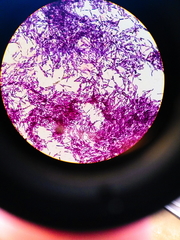 Bacillus thuringiensise0biocontrol_agent
- Outcome
- crop protectione0
- Comparator
- virus alonee0
Not reportedDirection
Organisms pictured · Representative pictures of the matched species, not figures from the paper.
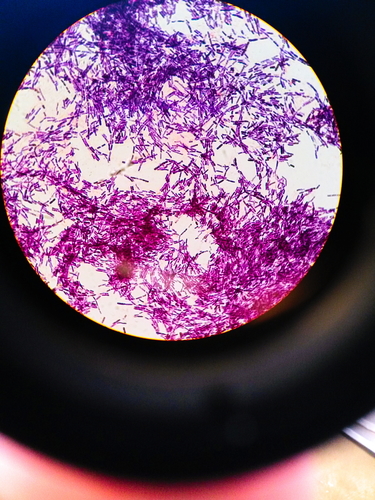
Verbatim
e0“combinations of virus and B. thuringiensis or tebufenozide achieved commercially acceptable levels of crop protection on Chinese kale compared with virus alone”
Claim · model-written summary
Virus plus tebufenozide achieved acceptable crop protection on Chinese kale relative to virus alone.
- Taxon
- Chinese kaleBrassica oleracea var. alboglabrae0
- Treatment
- tebufenozidee0
- Outcome
- crop protectione0
- Comparator
- virus alonee0
Not reportedDirection
Organisms pictured · Representative pictures of the matched species, not figures from the paper.
Verbatim
e0“combinations of virus and B. thuringiensis or tebufenozide achieved commercially acceptable levels of crop protection on Chinese kale compared with virus alone”
Claim · model-written summary
Spod-X performed as well as or better than B. thuringiensis across tested crops.
- Treatment
- Spod - Xe0
- Outcome
- performed as well as , or better thane0
- Direction
- better thane0
- Comparator
- B. thuringiensis standarde0
Not reportedTaxon
Verbatim
e0“all rates of Spod - X performed as well as , or better than , the B. thuringiensis standard (56 . 3 - 105 g ha 1 a.i.) on all crops tested”
Claim · model-written summary
Tebufenozide gave marginally greater beet armyworm control and crop protection than Spod-X.
- Treatment
- tebufenozidee0
- Interactor
- beet armywormSpodoptera exiguae0pest
- Outcome
- reductions of beet armyworm larval populations and plant damagee0
- Direction
- greatere0
- Comparator
- Spod - Xe0
Not reportedTaxon
Organisms pictured · Representative pictures of the matched species, not figures from the paper.
Verbatim
e0“reductions of beet armyworm larval populations and plant damage provided by all labeled rates of the chemical standard , tebufenozide (125 - 250 g ha 1 a . i .), were marginally greater than all rates of Spod - X tested”
Claim · model-written summary
The authors support season-long use of Spod-X on pea.
- Taxon
- peaLathyrus oleraceuse0
- Interactor
- beet armywormSpodoptera exiguae0pest
- Outcome
- use of Spod - X for cost - effective , season - long pest managemente0
Organisms pictured · Representative pictures of the matched species, not figures from the paper.
Verbatim
e0“On crops such as pea and grape , where beet armyworm predominately feed on exposed leaf surfaces , our data unequivocally support the use of Spod - X for cost - effective , season - long pest management .”
Claim · model-written summary
The authors support season-long use of Spod-X on grape.
- Taxon
- grapee0
- Interactor
- beet armywormSpodoptera exiguae0pest
- Outcome
- use of Spod - X for cost - effective , season - long pest managemente0
Organisms pictured · Representative pictures of the matched species, not figures from the paper.
Verbatim
e0“On crops such as pea and grape , where beet armyworm predominately feed on exposed leaf surfaces , our data unequivocally support the use of Spod - X for cost - effective , season - long pest management .”
The same questions in other papers
tebufenozide · control · Brassica oleracea (wild cabbage)Results agree
2 papers in the same direction as this paper
- positive
- positive
Bacillus thuringiensis · control · Brassica oleracea (wild cabbage)Results agree
6 papers in the same direction as this paper
- positive
- positive
- positive
3 papers more in this group
See all 7 papers →Claims are grouped by organism, treatment and what was measured or targeted. A paper counts as positive when any of its claims in the group is positive.