Abstract
Seed of sorghum variety RS610 was treated with phorate (Thimet 44-D) at the rate of 0.5, 1.0, 2.0 and 4.0 pounds of active ingredient per 100 pounds of seed, with and without Arasan 75 at 10-2/3 ounces. Additional treatments included Arasan 75 and Sticker 25-1 alone and in combination. In field tests the 2- and 4-pound rates seriously reduced stand and delayed plant development as measured by pollen shedding. Plants from seed treated with the 0.5- and I-pound rates shed pollen earlier than the untreated. Highly significant differences in seed yield were associated with differences in stand. The plots receiving the phorate treatments had significantly less yield than the untreated. In greenhouse tests, germination was reduced by the higher dosages and prolonged about 3 days. Treated seed, after 10 months storage, showed a great reduction in germination. Per cent germination under greenhouse conditions was highly significantly correlated with the field stand. Arasan reduced the toxic effect of the phorate. The sticker showed some deleterious effect on germination, which was reduced when combined with Arasan. The higher dosage rates controlled the corn leaf aphid, Rhopalosiphum maidis (Fitch), during the earlier period of growth. However, the phorate treatments gave no control of aphid populations on bagged heads of sorghum in the field.
Abstract from the paper’s OpenAlex record, shown for indexing and research. Copyright remains with the authors or the publisher. Read at the source ↗
The text the model read, with the source record’s inline markup (italics, sub- and superscripts) rendered and its character entities decoded; quote offsets refer to the raw text.
Claims 14
Claim · model-written summary
The 2- and 4-pound phorate rates seriously reduced sorghum stand.
- Material
- RS610e0
- Treatment
- 2- and 4-pound ratese1
- Outcome
- stande1
- Direction
- reducede1
- Setting
- In field testse1
 Sorghum
Not reportedComparator
Organisms pictured · Representative pictures of the matched species, not figures from the paper.

Verbatim
e0“Seed of sorghum variety RS610 was treated with phorate”
e1“In field tests the 2- and 4-pound rates seriously reduced stand and delayed plant development as measured by pollen shedding”
t0“Grain Sorghum”
Claim · model-written summary
The 2- and 4-pound phorate rates delayed sorghum plant development as measured by pollen shedding.
- Material
- RS610e0
- Treatment
- 2- and 4-pound ratese1
- Outcome
- plant developmente1
- Direction
- delayede1
- Qualifier
- as measured by pollen sheddinge1
Not reportedComparator
Organisms pictured · Representative pictures of the matched species, not figures from the paper.
Verbatim
e0“Seed of sorghum variety RS610 was treated with phorate”
e1“In field tests the 2- and 4-pound rates seriously reduced stand and delayed plant development as measured by pollen shedding”
t0“Grain Sorghum”
Claim · model-written summary
The 0.5- and 1-pound phorate rates made sorghum shed pollen earlier than untreated plants.
- Material
- RS610e0
- Treatment
- 0.5- and I-pound ratese2
- Outcome
- shed pollene2
- Direction
- earliere2
- Comparator
- untreatede2
Organisms pictured · Representative pictures of the matched species, not figures from the paper.
Verbatim
e0“Seed of sorghum variety RS610 was treated with phorate”
e2“Plants from seed treated with the 0.5- and I-pound rates shed pollen earlier than the untreated”
t0“Grain Sorghum”
Claim · model-written summary
Seed yield differed highly significantly with differences in stand.
Not reportedDirection
Organisms pictured · Representative pictures of the matched species, not figures from the paper.
Verbatim
e0“Seed of sorghum variety RS610 was treated with phorate”
e3“Highly significant differences in seed yield were associated with differences in stand”
e4“In field tests”
t0“Grain Sorghum”
Claim · model-written summary
Phorate-treated plots yielded significantly less than untreated plots.
Organisms pictured · Representative pictures of the matched species, not figures from the paper.
Verbatim
e0“Seed of sorghum variety RS610 was treated with phorate”
e4“The plots receiving the phorate treatments had significantly less yield than the untreated”
t0“Grain Sorghum”
Claim · model-written summary
The higher phorate dosages reduced germination in greenhouse tests.
Not reportedComparator
Organisms pictured · Representative pictures of the matched species, not figures from the paper.
Verbatim
e0“Seed of sorghum variety RS610 was treated with phorate”
e5“In greenhouse tests, germination was reduced by the higher dosages and prolonged about 3 days”
t0“Grain Sorghum”
Claim · model-written summary
The higher phorate dosages prolonged germination by about 3 days in greenhouse tests.
Not reportedComparator
Organisms pictured · Representative pictures of the matched species, not figures from the paper.
Verbatim
e0“Seed of sorghum variety RS610 was treated with phorate”
e5“In greenhouse tests, germination was reduced by the higher dosages and prolonged about 3 days”
t0“Grain Sorghum”
Claim · model-written summary
Phorate-treated seed stored for 10 months showed a great reduction in germination.
Not reportedComparator
Organisms pictured · Representative pictures of the matched species, not figures from the paper.
Verbatim
e0“Seed of sorghum variety RS610 was treated with phorate”
e6“Treated seed, after 10 months storage, showed a great reduction in germination”
t0“Grain Sorghum”
Claim · model-written summary
Germination under greenhouse conditions was highly significantly correlated with field stand.
Not reportedDirection
Organisms pictured · Representative pictures of the matched species, not figures from the paper.
Verbatim
e0“Seed of sorghum variety RS610 was treated with phorate”
e7“Per cent germination under greenhouse conditions was highly significantly correlated with the field stand”
t0“Grain Sorghum”
Claim · model-written summary
Arasan reduced the toxic effect of phorate on sorghum.
Not reportedComparator
Organisms pictured · Representative pictures of the matched species, not figures from the paper.
Verbatim
e0“Seed of sorghum variety RS610 was treated with phorate”
e1“Arasan reduced the toxic effect of the phorate”
t0“Grain Sorghum”
Claim · model-written summary
The sticker showed some deleterious effect on sorghum germination.
Not reportedComparator
Organisms pictured · Representative pictures of the matched species, not figures from the paper.
Verbatim
e0“Seed of sorghum variety RS610 was treated with phorate”
e1“The sticker showed some deleterious effect on germination, which was reduced when combined with Arasan”
t0“Grain Sorghum”
Claim · model-written summary
The deleterious effect of the sticker on germination was reduced when it was combined with Arasan.
Not reportedComparator
Organisms pictured · Representative pictures of the matched species, not figures from the paper.
Verbatim
e0“Seed of sorghum variety RS610 was treated with phorate”
e1“The sticker showed some deleterious effect on germination, which was reduced when combined with Arasan”
t0“Grain Sorghum”
Claim · model-written summary
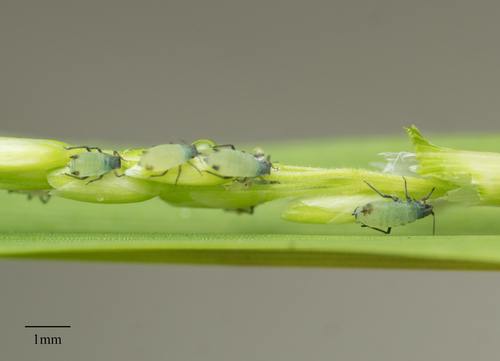
The higher phorate dosage rates controlled the corn leaf aphid during the earlier period of growth.
- Organ / stage
- earlier period of growthe1
- Treatment
- higher dosage ratese1
- Interactor
- Rhopalosiphum maidis
 Rhopalosiphum maidise1pest
- Outcome
- corn leaf aphide1
- Direction
- controllede1
Not reportedComparator
Organisms pictured · Representative pictures of the matched species, not figures from the paper.
Verbatim
e0“Seed of sorghum variety RS610 was treated with phorate”
e1“The higher dosage rates controlled the corn leaf aphid, Rhopalosiphum maidis (Fitch), during the earlier period of growth”
t0“Grain Sorghum”
Claim · model-written summary
The phorate treatments gave no control of aphid populations on bagged sorghum heads in the field.
- Organ / stage
- bagged headse1
- Treatment
- phorate treatmentse1
- Interactor
- aphide1pest
- Outcome
- aphid populationse1
- Direction
- no controle1
- Setting
- in the fielde1
Not reportedComparator
Organisms pictured · Representative pictures of the matched species, not figures from the paper.
Verbatim
e1“the phorate treatments gave no control of aphid populations on bagged heads of sorghum in the field”
t0“Grain Sorghum”
The same questions in other papers
phorate · yield · SorghumResults differ
5 in the opposite direction
- positive
- positive
- positive
2 papers more in this group
See all 6 papers →phorate · pest · SorghumPositive and negative results
1 in the opposite direction
- positive
storage · growth · SorghumPositive and negative results
5 papers in the same direction as this paper · 10 in the opposite direction
- positive
- positive
- positive
12 papers more in this group
See all 16 papers →Claims are grouped by organism, treatment and what was measured or targeted. A paper counts as positive when any of its claims in the group is positive.