Abstract
Magnaporthe oryzae is the causal agent of rice blast disease, a devastating problem worldwide. This fungus has caused breakdown of resistance conferred by newly developed commercial cultivars. To address how the rice blast fungus adapts itself to new resistance genes so quickly, we examined chromosomal locations of AVR-Pita, a subtelomeric gene family corresponding to the Pita resistance gene, in various isolates of M. oryzae (including wheat and millet pathogens) and its related species. We found that AVR-Pita (AVR-Pita1 and AVR-Pita2) is highly variable in its genome location, occurring in chromosomes 1, 3, 4, 5, 6, 7, and supernumerary chromosomes, particularly in rice-infecting isolates. When expressed in M. oryzae, most of the AVR-Pita homologs could elicit Pita-mediated resistance, even those from non-rice isolates. AVR-Pita was flanked by a retrotransposon, which presumably contributed to its multiple translocation across the genome. On the other hand, family member AVR-Pita3, which lacks avirulence activity, was stably located on chromosome 7 in a vast majority of isolates. These results suggest that the diversification in genome location of AVR-Pita in the rice isolates is a consequence of recognition by Pita in rice. We propose a model that the multiple translocation of AVR-Pita may be associated with its frequent loss and recovery mediated by its transfer among individuals in asexual populations. This model implies that the high mobility of AVR-Pita is a key mechanism accounting for the rapid adaptation toward Pita. Dynamic adaptation of some fungal plant pathogens may be achieved by deletion and recovery of avirulence genes using a population as a unit of adaptation.
Abstract from the paper’s OpenAlex record; open copy licensed cc-by. Read at the source ↗
The text the model read, with the source record’s inline markup (italics, sub- and superscripts) rendered and its character entities decoded; quote offsets refer to the raw text.
Claims 8
Claim · model-written summary
AVR-Pita is highly variable in its genome location, occurring in several chromosomes and supernumerary chromosomes, particularly in rice-infecting isolates.
- Taxon
- rice
 Oryza sativae0
- Interactor
- Magnaporthe oryzae
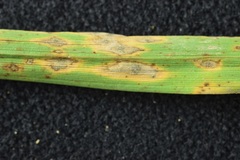 Pyricularia oryzaee0pathogen
- Gene
- AVR-Pitae1
- Outcome
- genome locatione1
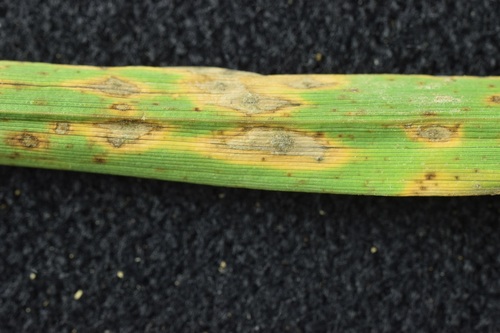
Organisms pictured · Representative pictures of the matched species, not figures from the paper.

Verbatim
e0“Magnaporthe oryzae is the causal agent of rice blast disease”
e1“AVR-Pita (AVR-Pita1 and AVR-Pita2) is highly variable in its genome location, occurring in chromosomes 1, 3, 4, 5, 6, 7, and supernumerary chromosomes, particularly in rice-infecting isolates”
Claim · model-written summary
When expressed in M. oryzae, most AVR-Pita homologs could elicit Pita-mediated resistance, including homologs from non-rice isolates.
- Taxon
- riceOryza sativae0
- Treatment
- expressed in M. oryzaee2
- Interactor
- M. oryzaePyricularia oryzaee2pathogen
- Gene
- AVR-Pitae2
- Outcome
- Pita-mediated resistancee2
Not reportedComparatorDirection
Organisms pictured · Representative pictures of the matched species, not figures from the paper.
Verbatim
e0“Magnaporthe oryzae is the causal agent of rice blast disease”
e2“When expressed in M. oryzae, most of the AVR-Pita homologs could elicit Pita-mediated resistance, even those from non-rice isolates”
Claim · model-written summary
AVR-Pita3, which lacks avirulence activity, was stably located on chromosome 7 in a vast majority of isolates.
- Taxon
- riceOryza sativae0
- Gene
- AVR-Pita3e2
- Outcome
- stably located on chromosome 7e2
- Qualifier
- lacks avirulence activitye2
Organisms pictured · Representative pictures of the matched species, not figures from the paper.
Verbatim
e0“Magnaporthe oryzae is the causal agent of rice blast disease”
e2“family member AVR-Pita3, which lacks avirulence activity, was stably located on chromosome 7 in a vast majority of isolates”
Claim · model-written summary
AVR-Pita flanked by a retrotransposon presumably contributed to its multiple translocation across the genome.
- Taxon
- riceOryza sativae0
- Gene
- AVR-Pitae3
- Outcome
- multiple translocation across the genomee3
- Qualifier
- flanked by a retrotransposone3
Organisms pictured · Representative pictures of the matched species, not figures from the paper.
Verbatim
e0“Magnaporthe oryzae is the causal agent of rice blast disease”
e3“AVR-Pita was flanked by a retrotransposon, which presumably contributed to its multiple translocation across the genome”
Claim · model-written summary
The diversification in genome location of AVR-Pita in rice isolates is suggested to be a consequence of recognition by Pita.
- Taxon
- riceOryza sativae4
- Gene
- Pitae4
- Outcome
- diversification in genome locatione4
- Qualifier
- a consequence of recognitione4
Organisms pictured · Representative pictures of the matched species, not figures from the paper.
Verbatim
e4“These results suggest that the diversification in genome location of AVR-Pita in the rice isolates is a consequence of recognition by Pita in rice”
Claim · model-written summary
A proposed model is that multiple translocation of AVR-Pita may be associated with its frequent loss and recovery through transfer among individuals in asexual populations.
- Taxon
- riceOryza sativae0
- Gene
- AVR-Pitae5
- Outcome
- multiple translocation of AVR-Pitae5
- Qualifier
- frequent loss and recovery mediated by its transfer among individuals in asexual populationse5
Organisms pictured · Representative pictures of the matched species, not figures from the paper.
Verbatim
e0“Magnaporthe oryzae is the causal agent of rice blast disease”
e5“We propose a model that the multiple translocation of AVR-Pita may be associated with its frequent loss and recovery mediated by its transfer among individuals in asexual populations”
Claim · model-written summary
A proposed model implies that the high mobility of AVR-Pita is a key mechanism accounting for rapid adaptation toward Pita.
- Taxon
- riceOryza sativae0
- Gene
- AVR-Pitae6
- Outcome
- rapid adaptation toward Pitae6
- Qualifier
- high mobilitye6
Organisms pictured · Representative pictures of the matched species, not figures from the paper.
Verbatim
e0“Magnaporthe oryzae is the causal agent of rice blast disease”
e6“This model implies that the high mobility of AVR-Pita is a key mechanism accounting for the rapid adaptation toward Pita”
Claim · model-written summary
Dynamic adaptation of some fungal plant pathogens may be achieved by deletion and recovery of avirulence genes using a population as a unit of adaptation.
- Taxon
- riceOryza sativae0
- Outcome
- Dynamic adaptation of some fungal plant pathogense7
- Qualifier
- deletion and recovery of avirulence genese7
Organisms pictured · Representative pictures of the matched species, not figures from the paper.
Verbatim
e0“Magnaporthe oryzae is the causal agent of rice blast disease”
e7“Dynamic adaptation of some fungal plant pathogens may be achieved by deletion and recovery of avirulence genes using a population as a unit of adaptation”
The same questions in other papers
Pyricularia oryzae · disease · Oryza sativa (rice)Positive and negative results
6 papers in the same direction as this paper · 6 in the opposite direction
- negative
- negative
- negative
9 papers more in this group
See all 13 papers →Claims are grouped by organism, treatment and what was measured or targeted. A paper counts as positive when any of its claims in the group is positive.