View: List Claim type Research area Organism Taxon as written Decade Paper Mechanism hypothesis original result basis n/a Claim · model-written summary
The decrease in yield and crop-load under foliar sprays is presumably due to greater preharvest fruit drop
decrease in yield and crop-load e2 a greater preharvest fruit drop e2 Verbatim
e1 “'Golden Reinders' apple trees ”
✓ located verbatim in the source · abstract, characters 30–59 e2 “resulted in a decrease in yield and crop-load, presumably due to a greater preharvest fruit drop ”
✓ located verbatim in the source · abstract, characters 334–430 Other claims from this paper (7) Recommendation author interpretation original result basis n/a Claim · model-written summary
The authors recommend against high GA3 levels because they cause a significant yield decrease .
high levels of GA 3 e7 Verbatim
e0 “Vitis vinifera L.
✓ located verbatim in the source · abstract, characters 20–37 e7 “Application of high levels of GA 3 is not recommended due to significant yield decrease ”
✓ located verbatim in the source · abstract, characters 1239–1326 Other claims from this paper (7) Mechanism hypothesis original result negative basis n/a Claim · model-written summary
The authors suggest increased yield per vine caused the decrease in skin catechin.
increased yield per vine e0 Verbatim
e0 “it is suggested that the decrease was caused by increased yield per vine ”
✓ located verbatim in the source · abstract, characters 601–673 e1 “An increase in node number linearly decrease d skin catechin ”
✓ located verbatim in the source · abstract, characters 536–595 t0 “Vitis vinifera L.
✓ located verbatim in the source · title, characters 89–106 Other claims from this paper (3) Recommendation author interpretation original result positive basis n/a Claim · model-written summary
The authors advise gradually reducing water applications over several years to avoid a sudden yield decrease .
gradually reduce water applications over several years e0 Verbatim
e0 “to avoid a sudden decrease in yield , it would be necessary to gradually reduce water applications over several years. ”
✓ located verbatim in the source · abstract, characters 1518–1635 t0 “Vitis labruscana Bailey ‘Concord’
✓ located verbatim in the source · title, characters 22–55 Other claims from this paper (3) Recommendation author interpretation original result basis n/a Claim · model-written summary
The authors conclude that the vegetative-productive balance matters, especially in esca-infected vineyards, to limit symptom expression and yield decrease .
vegetative-productive balance e0 Esca infected vineyards e0 Verbatim
e0 “underlined the importance of the vegetative-productive balance, in Esca infected vineyards especially, in order to limit the symptoms’ expression and the decrease in yield ”
✓ located verbatim in the source · abstract, characters 1541–1712 t0 “Esca Disease of Grapevine ”
✓ located verbatim in the source · title, characters 54–79 Other claims from this paper (7) Recommendation author interpretation original result basis n/a Claim · model-written summary
The authors recommend the 40 + 10 pruning treatment in the lower Midwest of the United States, as it optimized yield with only a slight decrease in primary bud cold hardiness.
40 + 10 treatment should be used e1 lower Midwest of the United States e1 Verbatim
e1 “the 40 + 10 treatment should be used in the lower Midwest of the United States, as it optimized yield with only a slight decrease in primary bud cold hardiness ”
✓ located verbatim in the source · abstract, characters 1180–1339 t0 “Traminette ”
✓ located verbatim in the source · title, characters 40–50 Other claims from this paper (8) Association observed review summary negative basis n/a Claim · model-written summary
Helopeltis theivora and Oligonychus coffeae feeding on tea tender parts is reported to decrease tea yield and quality.
yield and quality e3 Verbatim
e0 “Tea (Camellia sinensis ) ”
✓ located verbatim in the source · abstract, characters 0–23 e2 “Two of the most problematic pests for tea are the Tea Mosquito Bug (Helopeltis theivora ) and the Red Spider Mite (Oligonychus coffeae ) ”
✓ located verbatim in the source · abstract, characters 260–394 e3 “These pests feed on the tender parts of the tea plant, such as leaves, buds, and young shoots, resulting in decrease d yield and quality ”
✓ located verbatim in the source · abstract, characters 396–531 Other claims from this paper (1) Recommendation author interpretation original result positive basis n/a Claim · model-written summary
The authors propose 4:30 a.m. tapping to mitigate yield loss linked to declining relative humidity.
tapping starting at 4.30 a.m. e0 drop in relative humidity leading to a decrease in rubber yield e0 Verbatim
e0 “The tapping starting at 4.30 a.m. therefore appears as an alternative to reduce one of the harmful effects of climate change, namely the drop in relative humidity leading to a decrease in rubber yield ”
✓ located verbatim in the source · abstract, characters 989–1189 t0 “RUBBER ”
✓ located verbatim in the source · title, characters 43–49 Other claims from this paper (3) Intervention effect author interpretation review summary negative basis n/a Claim · model-written summary
Intercropping can adversely affect rubber growth and yield if not appropriately managed.
intercropping systems e0 rubber growth and yield e0 decrease inferred e0 if not appropriately managed e0 Not reported Comparator
Verbatim
e0 “implementing intercropping systems comes with challenges, including potential adverse effects on rubber growth and yield if not appropriately managed ”
✓ located verbatim in the source · abstract, characters 1165–1314 Other claims from this paper (5) Recommendation author interpretation original result basis n/a Claim · model-written summary
Improving crown width, promoting scaffold branch number and reducing clear bole height are key measures for increasing Camellia oleifera yield .
Verbatim
e0 “Based on stepwise regression and path analysis,the relationship between the tree composition and yield of Camellia oleifera was examined ”
✓ located verbatim in the source · abstract, characters 0–136 e4 “it is the key measure,for increasing C.oleifera yield to improve the crown width,to promote the number of scaffold branches and to decrease the clear bole height ”
✓ located verbatim in the source · abstract, characters 541–702 Other claims from this paper (3) Lexical search (BM25). All words must match; if nothing does, any word. Organism names also match every spelling of the same organism. No semantic search yet.
 Malus domesticae1
 Vitis vinifera
 Vitis
 Vitis
 Camellia sinensis
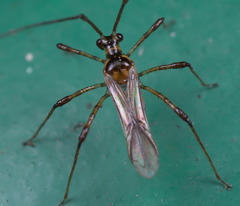 Helopeltis theivora
 Camellia oleifera