Abstract
The seed or root treatment with biocontrol agents or useful microorganisms may improve plant growth as well as provide protection against pathogens through a variety of mechanisms like induced systemic resistance, production of antibiotics or enzymes, production of plant hormones, competition with pathogens for space or nutrients, and direct parasitism on plant pathogens. In this study, Bacillus pumilus strain MK5 and Trichoderma atroviride ta001 were evaluated separately as well as in combination to control the powdery mildew disease of cucumber caused by fungi (Podosphaera xanthii or Erysiphe cichoracearum) for different two crop seasons (2021 and 2022). The minimum severity of powdery mildew (1.62%) was recorded under combined treatment of Trichoderma atroviride ta001 seed priming plus soil application with Bacillus pumilus strain MK5 as well as foliar sprays of T. atroviride ta001+ B. pumilus strain MK5 and provided 86.79% disease control over untreated plots. Maximum disease severity (12.27%) was observed under untreated control as compared to other treatments.
Abstract from the paper’s OpenAlex record, shown for indexing and research. Copyright remains with the authors or the publisher. Read at the source ↗
The text the model read, with the source record’s inline markup (italics, sub- and superscripts) rendered and its character entities decoded; quote offsets refer to the raw text.
Claims 3
Claim · model-written summary
The minimum powdery mildew severity (1.62%) occurred under the combined treatment of T. atroviride ta001 seed priming plus soil application and foliar sprays with B. pumilus MK5 in field cucumber.
- Taxon
- cucumber
 Cucumis sativust0
- Treatment
- combined treatment of Trichoderma atroviride ta001 seed priming plus soil application with Bacillus pumilus strain MK5e0
- Interactor
- powdery mildewe0pathogen
- Second interactor
- Trichoderma atroviride ta001
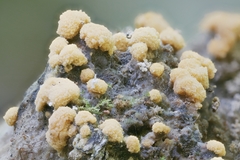 Trichoderma atroviridee0biocontrol_agent
- Outcome
- severity of powdery mildewe0
- Direction
- minimume0
- Value
- 1.62%e0
Not reportedComparator
Organisms pictured · Representative pictures of the matched species, not figures from the paper.

Verbatim
t0“cucumber”
e0“The minimum severity of powdery mildew (1.62%) was recorded under combined treatment of Trichoderma atroviride ta001 seed priming plus soil application with Bacillus pumilus strain MK5”
Claim · model-written summary
The combined treatment provided 86.79% powdery mildew disease control over untreated plots.
- Taxon
- cucumberCucumis sativust0
- Treatment
- combined treatment of Trichoderma atroviride ta001 seed priming plus soil application with Bacillus pumilus strain MK5e0
- Outcome
- disease controle1
- Direction
- increaseinferrede1
- Value
- 86.79%e1
- Comparator
- untreated plotse1
Not reportedInteractor
Organisms pictured · Representative pictures of the matched species, not figures from the paper.
Verbatim
t0“cucumber”
e0“recorded under combined treatment of Trichoderma atroviride ta001 seed priming plus soil application with Bacillus pumilus strain MK5”
e1“provided 86.79% disease control over untreated plots”
Claim · model-written summary
Maximum powdery mildew severity (12.27%) was observed in the untreated control.
- Taxon
- cucumberCucumis sativust0
- Outcome
- disease severitye0
- Direction
- Maximume0
- Value
- 12.27%e0
- Qualifier
- untreated controle0
Organisms pictured · Representative pictures of the matched species, not figures from the paper.
Verbatim
t0“cucumber”
e0“Maximum disease severity (12.27%) was observed under untreated control”
The same questions in other papers
Trichoderma atroviride · disease · Cucumis sativus (cucumber)Results agree
1 paper in the same direction as this paper
- positive
Bacillus pumilus · disease · Cucumis sativus (cucumber)Results agree
1 paper in the same direction as this paper
- positive
seed treatment · disease · Cucumis sativus (cucumber)Positive and negative results
6 papers in the same direction as this paper · 2 in the opposite direction
- negative
- negative
- positive
5 papers more in this group
See all 9 papers →application · control · Cucumis sativus (cucumber)Positive and negative results
9 papers in the same direction as this paper · 2 in the opposite direction · 1 reporting no difference from an alternative
- no effect
- no effect
- no effect
9 papers more in this group
See all 13 papers →application · disease · Cucumis sativus (cucumber)Positive and negative results
59 papers in the same direction as this paper · 7 in the opposite direction
- negative
- negative
- negative
63 papers more in this group
See all 67 papers →seed treatment · control · Cucumis sativus (cucumber)Results agree
3 papers in the same direction as this paper
- positive
- positive
- positive
Claims are grouped by organism, treatment and what was measured or targeted. A paper counts as positive when any of its claims in the group is positive.