Abstract
Arbuscular mycorrhizal fungi (AMF) are representative symbiotic partners of plants, and trade nutrients with them. This symbiotic association confers plants with the agronomically beneficial traits such as plant growth promotion and stress tolerance. Arbuscular mycorrhizae (AM) are divided into two morphotypes, the Arum-type and the Paris-type, based on fungal structures within the host plant cells. Although the phylogeny of host plants typically determines the AM morphotype, the AMF, Rhizophagus irregularis and Gigaspora margarita, can form Arum-type AM and Paris-type AM, respectively, in tomato (Solanum lycopersicum). In this study, the traits resulting from the AM symbiosis and root transcriptomes between Lotus japonicus and tomato inoculated with these two phylogenetically distal AMF were compared. In L. japonicus, Arum-type AMs formed when colonized by both AMF, as expected. Shoot growth in both plants was significantly promoted when inoculated by these AMF, although the impact of G. margarita was greater than that by R. irregularis colonization. A transcriptome analysis of both plants inoculated by the two AMF strongly suggested changes in the expression levels of genes associated with defense response. AMF inoculation induced resistance against Fusarium diseases in both plants, but the level of disease resistance in Rhizophagus-colonized plants was higher than in Gigaspora-colonized plants. Thus, the colonized AMF identity, and not the AM morphotype, determines the level of AM-induced traits, plant growth promotion and disease resistance. Negative relationships between these two traits would exist as a growth-defense tradeoff to fine-tune the balance in response to limited resources, and to optimize fitness.
Abstract from the paper’s OpenAlex record; open copy licensed cc-by. Read at the source ↗
The text the model read, with the source record’s inline markup (italics, sub- and superscripts) rendered and its character entities decoded; quote offsets refer to the raw text.
Claims 16
Claim · model-written summary
In Lotus japonicus, Arum-type AM formed when colonized by both Rhizophagus irregularis and Gigaspora margarita.
- Taxon
- Lotus japonicus
 Lotus japonicuse1
- Treatment
- colonized by both AMFe2
- Interactor
- Rhizophagus irregularis
 Rhizophagus irregularise0symbiont
- Second interactor
- Gigaspora margarita
 Gigaspora margaritae0symbiont
- Outcome
- Arum-type AMs formede2
Organisms pictured · Representative pictures of the matched species, not figures from the paper.
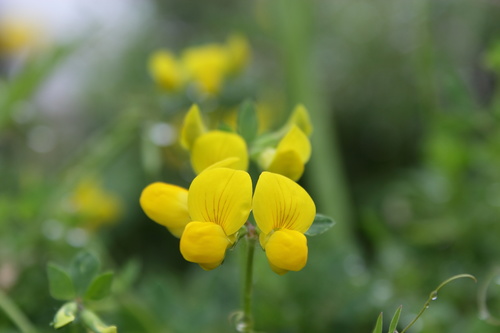


Verbatim
e0“the AMF, Rhizophagus irregularis and Gigaspora margarita, can form Arum-type AM and Paris-type AM, respectively, in tomato (Solanum lycopersicum)”
e1“root transcriptomes between Lotus japonicus and tomato inoculated with these two phylogenetically distal AMF were compared”
e2“In L. japonicus, Arum-type AMs formed when colonized by both AMF, as expected”
Claim · model-written summary
Shoot growth of Lotus japonicus was significantly promoted by inoculation with these AMF.
- Taxon
- Lotus japonicusLotus japonicuse1
- Treatment
- inoculated by these AMFe3
- Interactor
- Rhizophagus irregularisRhizophagus irregularise0symbiont
- Second interactor
- Gigaspora margaritaGigaspora margaritae0symbiont
- Outcome
- Shoot growthe3
- Direction
- promotede3
Not reportedComparator
Organisms pictured · Representative pictures of the matched species, not figures from the paper.
Verbatim
e0“the AMF, Rhizophagus irregularis and Gigaspora margarita, can form Arum-type AM and Paris-type AM, respectively, in tomato (Solanum lycopersicum)”
e1“root transcriptomes between Lotus japonicus and tomato inoculated with these two phylogenetically distal AMF were compared”
e3“Shoot growth in both plants was significantly promoted when inoculated by these AMF, although the impact of G. margarita was greater than that by R. irregularis colonization”
Claim · model-written summary
Shoot growth of tomato was significantly promoted by inoculation with these AMF.
- Taxon
- tomato
 Solanum lycopersicume1
- Treatment
- inoculated by these AMFe3
- Interactor
- Rhizophagus irregularisRhizophagus irregularise0symbiont
- Second interactor
- Gigaspora margaritaGigaspora margaritae0symbiont
- Outcome
- Shoot growthe3
- Direction
- promotede3
Not reportedComparator
Organisms pictured · Representative pictures of the matched species, not figures from the paper.

Verbatim
e0“the AMF, Rhizophagus irregularis and Gigaspora margarita, can form Arum-type AM and Paris-type AM, respectively, in tomato (Solanum lycopersicum)”
e1“root transcriptomes between Lotus japonicus and tomato inoculated with these two phylogenetically distal AMF were compared”
e3“Shoot growth in both plants was significantly promoted when inoculated by these AMF, although the impact of G. margarita was greater than that by R. irregularis colonization”
Claim · model-written summary
In Lotus japonicus, Gigaspora margarita had a greater impact on shoot growth than Rhizophagus irregularis colonization.
- Taxon
- Lotus japonicusLotus japonicuse1
- Treatment
- G. margaritae3
- Interactor
- G. margaritaGigaspora margaritae3symbiont
- Second interactor
- R. irregularisRhizophagus irregularise3symbiont
- Outcome
- impacte3
- Direction
- greatere3
- Comparator
- R. irregularis colonizatione3
Organisms pictured · Representative pictures of the matched species, not figures from the paper.
Verbatim
e1“root transcriptomes between Lotus japonicus and tomato inoculated with these two phylogenetically distal AMF were compared”
e3“Shoot growth in both plants was significantly promoted when inoculated by these AMF, although the impact of G. margarita was greater than that by R. irregularis colonization”
Claim · model-written summary
In tomato, Gigaspora margarita had a greater impact on shoot growth than Rhizophagus irregularis colonization.
- Taxon
- tomatoSolanum lycopersicume1
- Treatment
- G. margaritae3
- Interactor
- G. margaritaGigaspora margaritae3symbiont
- Second interactor
- R. irregularisRhizophagus irregularise3symbiont
- Outcome
- impacte3
- Direction
- greatere3
- Comparator
- R. irregularis colonizatione3
Organisms pictured · Representative pictures of the matched species, not figures from the paper.
Verbatim
e1“root transcriptomes between Lotus japonicus and tomato inoculated with these two phylogenetically distal AMF were compared”
e3“Shoot growth in both plants was significantly promoted when inoculated by these AMF, although the impact of G. margarita was greater than that by R. irregularis colonization”
Claim · model-written summary
AMF inoculation induced resistance against Fusarium disease in Lotus japonicus.
- Taxon
- Lotus japonicusLotus japonicuse1
- Treatment
- AMF inoculatione5
- Second interactor
- AMFe5symbiont
- Outcome
- resistance against Fusarium diseasese5
- Direction
- inducede5
 Fusarium
Not reportedComparator
Organisms pictured · Representative pictures of the matched species, not figures from the paper.

Verbatim
e1“root transcriptomes between Lotus japonicus and tomato inoculated with these two phylogenetically distal AMF were compared”
e5“AMF inoculation induced resistance against Fusarium diseases in both plants, but the level of disease resistance in Rhizophagus-colonized plants was higher than in Gigaspora-colonized plants”
Claim · model-written summary
AMF inoculation induced resistance against Fusarium disease in tomato.
- Taxon
- tomatoSolanum lycopersicume1
- Treatment
- AMF inoculatione5
- Second interactor
- AMFe5symbiont
- Outcome
- resistance against Fusarium diseasese5
- Direction
- inducede5
Not reportedComparator
Organisms pictured · Representative pictures of the matched species, not figures from the paper.
Verbatim
e1“root transcriptomes between Lotus japonicus and tomato inoculated with these two phylogenetically distal AMF were compared”
e5“AMF inoculation induced resistance against Fusarium diseases in both plants, but the level of disease resistance in Rhizophagus-colonized plants was higher than in Gigaspora-colonized plants”
Claim · model-written summary
In Lotus japonicus, plants colonized by Rhizophagus irregularis had higher Fusarium disease resistance than Gigaspora-colonized plants.
- Taxon
- Lotus japonicusLotus japonicuse1
- Treatment
- Rhizophagus-colonizede5
- Second interactor
- Rhizophagus irregularisRhizophagus irregularise0symbiont
- Outcome
- level of disease resistancee5
- Direction
- highere5
- Comparator
- Gigaspora-colonized plantse5
Organisms pictured · Representative pictures of the matched species, not figures from the paper.
Verbatim
e0“the AMF, Rhizophagus irregularis and Gigaspora margarita, can form Arum-type AM and Paris-type AM, respectively, in tomato (Solanum lycopersicum)”
e1“root transcriptomes between Lotus japonicus and tomato inoculated with these two phylogenetically distal AMF were compared”
e5“AMF inoculation induced resistance against Fusarium diseases in both plants, but the level of disease resistance in Rhizophagus-colonized plants was higher than in Gigaspora-colonized plants”
Claim · model-written summary
In tomato, plants colonized by Rhizophagus irregularis had higher Fusarium disease resistance than Gigaspora-colonized plants.
- Taxon
- tomatoSolanum lycopersicume1
- Treatment
- Rhizophagus-colonizede5
- Second interactor
- Rhizophagus irregularisRhizophagus irregularise0symbiont
- Outcome
- level of disease resistancee5
- Direction
- highere5
- Comparator
- Gigaspora-colonized plantse5
Organisms pictured · Representative pictures of the matched species, not figures from the paper.
Verbatim
e0“the AMF, Rhizophagus irregularis and Gigaspora margarita, can form Arum-type AM and Paris-type AM, respectively, in tomato (Solanum lycopersicum)”
e1“root transcriptomes between Lotus japonicus and tomato inoculated with these two phylogenetically distal AMF were compared”
e5“AMF inoculation induced resistance against Fusarium diseases in both plants, but the level of disease resistance in Rhizophagus-colonized plants was higher than in Gigaspora-colonized plants”
Claim · model-written summary
The Lotus japonicus root transcriptome strongly suggested changes in expression of genes associated with defense response after inoculation with the two AMF.
- Taxon
- Lotus japonicusLotus japonicuse1
- Treatment
- inoculated by the two AMFe4
- Outcome
- changes in the expression levels of genes associated with defense responsee4
- Qualifier
- strongly suggestede4
Organisms pictured · Representative pictures of the matched species, not figures from the paper.
Verbatim
e1“root transcriptomes between Lotus japonicus and tomato inoculated with these two phylogenetically distal AMF were compared”
e4“A transcriptome analysis of both plants inoculated by the two AMF strongly suggested changes in the expression levels of genes associated with defense response”
Claim · model-written summary
The tomato root transcriptome strongly suggested changes in expression of genes associated with defense response after inoculation with the two AMF.
- Taxon
- tomatoSolanum lycopersicume1
- Treatment
- inoculated by the two AMFe4
- Outcome
- changes in the expression levels of genes associated with defense responsee4
- Qualifier
- strongly suggestede4
Organisms pictured · Representative pictures of the matched species, not figures from the paper.
Verbatim
e1“root transcriptomes between Lotus japonicus and tomato inoculated with these two phylogenetically distal AMF were compared”
e4“A transcriptome analysis of both plants inoculated by the two AMF strongly suggested changes in the expression levels of genes associated with defense response”
Claim · model-written summary
In Lotus japonicus, the colonizing AMF identity, and not the AM morphotype, is concluded to determine the level of AM-induced traits.
- Taxon
- Lotus japonicusLotus japonicuse1
- Interactor
- AMFe7symbiont
- Outcome
- the level of AM-induced traitse7
- Qualifier
- and not the AM morphotypee7
Not reportedDirection
Organisms pictured · Representative pictures of the matched species, not figures from the paper.
Verbatim
e1“root transcriptomes between Lotus japonicus and tomato inoculated with these two phylogenetically distal AMF were compared”
e7“Thus, the colonized AMF identity, and not the AM morphotype, determines the level of AM-induced traits, plant growth promotion and disease resistance”
Claim · model-written summary
In tomato, the colonizing AMF identity, and not the AM morphotype, is concluded to determine the level of AM-induced traits.
- Taxon
- tomatoSolanum lycopersicume1
- Interactor
- AMFe7symbiont
- Outcome
- the level of AM-induced traitse7
- Qualifier
- and not the AM morphotypee7
Not reportedDirection
Organisms pictured · Representative pictures of the matched species, not figures from the paper.
Verbatim
e1“root transcriptomes between Lotus japonicus and tomato inoculated with these two phylogenetically distal AMF were compared”
e7“Thus, the colonized AMF identity, and not the AM morphotype, determines the level of AM-induced traits, plant growth promotion and disease resistance”
Claim · model-written summary
In Lotus japonicus, a negative relationship between growth promotion and disease resistance would exist as a growth-defense tradeoff.
- Taxon
- Lotus japonicusLotus japonicuse1
- Interactor
- AMFe7symbiont
- Outcome
- growth-defense tradeoffe6
- Direction
- Negative relationshipse6
Organisms pictured · Representative pictures of the matched species, not figures from the paper.
Verbatim
e1“root transcriptomes between Lotus japonicus and tomato inoculated with these two phylogenetically distal AMF were compared”
e6“Negative relationships between these two traits would exist as a growth-defense tradeoff to fine-tune the balance in response to limited resources, and to optimize fitness”
e7“Thus, the colonized AMF identity, and not the AM morphotype, determines the level of AM-induced traits, plant growth promotion and disease resistance”
Claim · model-written summary
In tomato, a negative relationship between growth promotion and disease resistance would exist as a growth-defense tradeoff.
- Taxon
- tomatoSolanum lycopersicume1
- Interactor
- AMFe7symbiont
- Outcome
- growth-defense tradeoffe6
- Direction
- Negative relationshipse6
Organisms pictured · Representative pictures of the matched species, not figures from the paper.
Verbatim
e1“root transcriptomes between Lotus japonicus and tomato inoculated with these two phylogenetically distal AMF were compared”
e6“Negative relationships between these two traits would exist as a growth-defense tradeoff to fine-tune the balance in response to limited resources, and to optimize fitness”
e7“Thus, the colonized AMF identity, and not the AM morphotype, determines the level of AM-induced traits, plant growth promotion and disease resistance”
Claim · model-written summary
In tomato, Rhizophagus irregularis and Gigaspora margarita can form Arum-type and Paris-type AM, respectively.
- Taxon
- tomatoSolanum lycopersicume0
- Interactor
- Rhizophagus irregularisRhizophagus irregularise0symbiont
- Second interactor
- Gigaspora margaritaGigaspora margaritae0symbiont
- Outcome
- Arum-type AM and Paris-type AMe0
Organisms pictured · Representative pictures of the matched species, not figures from the paper.
Verbatim
e0“the AMF, Rhizophagus irregularis and Gigaspora margarita, can form Arum-type AM and Paris-type AM, respectively, in tomato (Solanum lycopersicum)”
The same questions in other papers
inoculation · Rhizophagus irregularis · Solanum lycopersicum (tomato)Results differ
3 papers in the same direction as this paper
- positive
- positive
- positive
inoculation · Fusarium · Solanum lycopersicum (tomato)Positive and negative results
24 papers in the same direction as this paper · 2 in the opposite direction
- negative
- no effect
- positive
23 papers more in this group
See all 27 papers →mycorrhiza · Rhizophagus irregularis · Lotus japonicusResults agree
2 papers in the same direction as this paper
- positive
- positive
mycorrhiza · Fusarium · Solanum lycopersicum (tomato)Results agree
3 papers in the same direction as this paper
- positive
- positive
- positive
mycorrhiza · Rhizophagus irregularis · Solanum lycopersicum (tomato)Results agree
6 papers in the same direction as this paper
- positive
- positive
- positive
3 papers more in this group
See all 7 papers →Claims are grouped by organism, treatment and what was measured or targeted. A paper counts as positive when any of its claims in the group is positive.