Abstract
Cultivation of cumin (Cuminum cyminum L.), a vital spice crop in India, faces significant challenges due to foliar diseases including blight (Alternaria burnsii) and powdery mildew (Erysiphe polygoni) in the major growing districts of Gujarat, India. This research aimed to assess the efficacy of ten different ready-mix fungicides in managing blight and powdery mildew diseases in cumin under field conditions during Rabi seasons in 2019-20, 2020-21, and 2021-22. The results, presented as a three-year pooled dataset, revealed the overall effectiveness of the fungicidal treatments in suppressing both diseases. The treatment Metiram 55% + Pyraclostrobin 5% WG @ 0.180% exhibited the lowest disease intensity (13.82%), highest seed yield (786 kg ha ) statistically comparable to Pyraclostrobin 13.3% + Epoxiconazole 5% SE -1 that was (16.00%) and Azoxystrobin 11% + Tebuconazole 18.3% SC (18.50%). While, the control plots recorded the highest blight disease intensity (48.34%) and lowest seed yield (487 kg ha ). application -1 Economically, the of Metiram 55% + Pyraclostrobin 5% WG @ 0.180% demonstrated the highestt net realization (Rs. 33055/-). Although, the maximum Incremental Cost-Benefit Ratio (ICBR) was observed in the treatment of Pyraclostrobin 13.3% + Epoxiconazole 5% SE as 1:10.72, followed by the Metiram 55% + Pyraclostrobin 5% WG @ 0.180% (1:8.65).. KEYWORDS :Blight, cumin, powdery mildew, ready mix fungicides
Abstract from the paper’s OpenAlex record, shown for indexing and research. Copyright remains with the authors or the publisher. Read at the source ↗
The text the model read, with the source record’s inline markup (italics, sub- and superscripts) rendered and its character entities decoded; quote offsets refer to the raw text.
Claims 9
Claim · model-written summary
Metiram plus pyraclostrobin produced the lowest disease intensity, 13.82%.
- Taxon
- cumin
 Cuminum cyminumt0
- Treatment
- Metiram 55% + Pyraclostrobin 5% WG @ 0.180%e0
- Outcome
- disease intensitye0
- Direction
- loweste0
- Value
- 13.82%e0
Not reportedComparator
Organisms pictured · Representative pictures of the matched species, not figures from the paper.
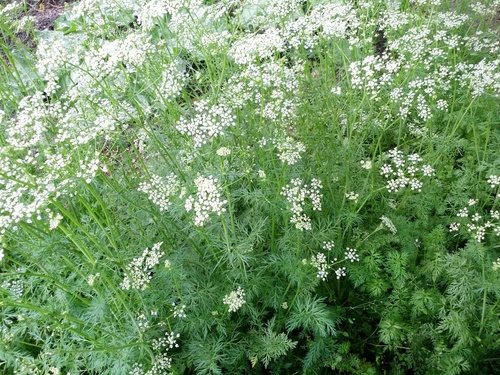
Verbatim
e0“The treatment Metiram 55% + Pyraclostrobin 5% WG @ 0.180% exhibited the lowest disease intensity (13.82%)”
t0“cumin”
Claim · model-written summary
Metiram plus pyraclostrobin gave the highest seed yield, 786 kg ha as printed.
- Taxon
- cuminCuminum cyminumt0
- Treatment
- Metiram 55% + Pyraclostrobin 5% WG @ 0.180%e1
- Outcome
- seed yielde0
- Direction
- higheste0
- Value
- 786 kg hae0
Not reportedComparator
Organisms pictured · Representative pictures of the matched species, not figures from the paper.
Verbatim
e0“highest seed yield (786 kg ha )”
e1“Metiram 55% + Pyraclostrobin 5% WG @ 0.180% exhibited”
t0“cumin”
Claim · model-written summary
Pyraclostrobin plus epoxiconazole had 16.00% disease intensity.
- Taxon
- cuminCuminum cyminumt0
- Treatment
- Pyraclostrobin 13.3% + Epoxiconazole 5% SEe0
- Outcome
- disease intensitye1
- Value
- 16.00%e0
Organisms pictured · Representative pictures of the matched species, not figures from the paper.
Verbatim
e0“Pyraclostrobin 13.3% + Epoxiconazole 5% SE -1 that was (16.00%)”
e1“lowest disease intensity”
t0“cumin”
Claim · model-written summary
Azoxystrobin plus tebuconazole had 18.50% disease intensity.
- Taxon
- cuminCuminum cyminumt0
- Treatment
- Azoxystrobin 11% + Tebuconazole 18.3% SCe0
- Outcome
- disease intensitye1
- Value
- 18.50%e0
Organisms pictured · Representative pictures of the matched species, not figures from the paper.
Verbatim
e0“Azoxystrobin 11% + Tebuconazole 18.3% SC (18.50%)”
e1“lowest disease intensity”
t0“cumin”
Claim · model-written summary
Control plots had the highest blight intensity, 48.34%.
- Taxon
- cuminCuminum cyminumt0
- Outcome
- blight disease intensitye0
- Direction
- higheste0
- Value
- 48.34%e0
Organisms pictured · Representative pictures of the matched species, not figures from the paper.
Verbatim
e0“the control plots recorded the highest blight disease intensity (48.34%)”
t0“cumin”
Claim · model-written summary
Control plots had the lowest seed yield, 487 kg ha as printed.
- Taxon
- cuminCuminum cyminumt0
- Outcome
- seed yielde0
- Direction
- loweste0
- Value
- 487 kg hae0
Organisms pictured · Representative pictures of the matched species, not figures from the paper.
Verbatim
e0“lowest seed yield (487 kg ha )”
t0“cumin”
Claim · model-written summary
Metiram plus pyraclostrobin had the highest net realization of Rs. 33055/-.
- Taxon
- cuminCuminum cyminumt0
- Treatment
- Metiram 55% + Pyraclostrobin 5% WG @ 0.180%e0
- Outcome
- net realizatione0
- Value
- Rs. 33055/-e0
Organisms pictured · Representative pictures of the matched species, not figures from the paper.
Verbatim
e0“Metiram 55% + Pyraclostrobin 5% WG @ 0.180% demonstrated the highestt net realization (Rs. 33055/-)”
t0“cumin”
Claim · model-written summary
Pyraclostrobin plus epoxiconazole had the maximum incremental cost-benefit ratio, 1:10.72.
- Taxon
- cuminCuminum cyminumt0
- Treatment
- Pyraclostrobin 13.3% + Epoxiconazole 5% SEe0
- Outcome
- Incremental Cost-Benefit Ratio (ICBR)e0
- Direction
- maximume0
- Value
- 1:10.72e0
Organisms pictured · Representative pictures of the matched species, not figures from the paper.
Verbatim
e0“the maximum Incremental Cost-Benefit Ratio (ICBR) was observed in the treatment of Pyraclostrobin 13.3% + Epoxiconazole 5% SE as 1:10.72”
t0“cumin”
Claim · model-written summary
Metiram plus pyraclostrobin had an incremental cost-benefit ratio of 1:8.65.
- Taxon
- cuminCuminum cyminumt0
- Treatment
- Metiram 55% + Pyraclostrobin 5% WG @ 0.180%e0
- Outcome
- Incremental Cost-Benefit Ratio (ICBR)e1
- Value
- 1:8.65e0
Organisms pictured · Representative pictures of the matched species, not figures from the paper.
Verbatim
e0“Metiram 55% + Pyraclostrobin 5% WG @ 0.180% (1:8.65)”
e1“Incremental Cost-Benefit Ratio (ICBR)”
t0“cumin”
The same questions in other papers
metiram · yield · Cuminum cyminum (cumin)Results agree
1 paper in the same direction as this paper
- positive
pyraclostrobin · yield · Cuminum cyminum (cumin)Results agree
1 paper in the same direction as this paper
- positive
pyraclostrobin · disease · Cuminum cyminum (cumin)Results agree
1 paper in the same direction as this paper
- positive
Claims are grouped by organism, treatment and what was measured or targeted. A paper counts as positive when any of its claims in the group is positive.