Abstract
Citrus black rot caused by the pathogen Alternaria alstroemeriae severely affects the growth and production of citrus industry. In order to further elucidate the pathogen of citrus fruit rot in Yunnan Province, the pathogenic fungi causing citrus fruit rot were identified through isolation and purification, pathogenicity testing, morphological characteristics, and rDNA ITS sequence analysis. Meanwhile, we synthesized curcumin-loaded nanoliposomes, a potential management approach to control citrus postharvest pathogen, and conducted vitro and vivo experiment to investigate the effects of different curcumin-loaded nanoliposomes treatments inhibitory effect to pathogen A. alstroemeriae . The results showed that the pathogenic fungi of citrus rot diseases were A. alstroemeriae, Rhizopus arrhizus, Aspergillus flavus and Penicillium digitatum. The curcumin-loaded nanoliposomes had inhibitory effect on A. alstroemeriae , in vitro experiment showed that the minimum fungicidal concentration (MIC) of curcumin-loaded nanoliposomes against the hyphae growth of A. alstroemeriae was 10 μmol/L, and 4MIC treatment significantly reduced the occurrence of black rot in citrus fruit in vivo test. Curcumin-loaded nanoliposomes also enhanced the activities of the enzymes PPO, APX, POD, PAL, GR and CAT of citrus, decreased the O 2 − production rate. The accumulation of ASA, GSH and hydrogen radical scavenging rate in Citrus reticulata Blanco ‘Orah’ were increased in the curcumin-loaded nanoliposomes treatment fruit, which may be directly responsible for the delayed onset of black rot disease. Furthermore, curcumin-loaded nanoliposomes treatment maintained the quality of citrus fruit by delaying the TSS, TA degradation and higher level of total phenolics and flavonoid contents in citrus fruit. Overall, our findings revealed that curcumin-loaded nanoliposomes, functioning as a plant elicitor, could effectively modulate physiological enzyme activities to confer the black rot resistance in citrus, which highlighted the potential of curcumin-loaded nanoliposomes for sustainable agricultural practices.
Abstract from the paper’s OpenAlex record; open copy licensed cc-by. Read at the source ↗
The text the model read, with the source record’s inline markup (italics, sub- and superscripts) rendered and its character entities decoded; quote offsets refer to the raw text.
Claims 14
Claim · model-written summary
A. alstroemeriae was identified as a pathogenic fungus of citrus rot diseases.
- Interactor
- A. alstroemeriaeAlternaria alstroemeriaee0pathogen
- Outcome
- pathogenic fungi of citrus rot diseasese0
 Citrus
Organisms pictured · Representative pictures of the matched species, not figures from the paper.

Verbatim
e0“the pathogenic fungi of citrus rot diseases were A. alstroemeriae, Rhizopus arrhizus, Aspergillus flavus and Penicillium digitatum”
Claim · model-written summary
Rhizopus arrhizus was identified as a pathogenic fungus of citrus rot diseases.
- Interactor
- Rhizopus arrhizus
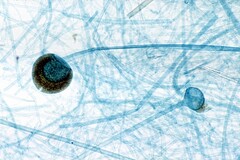 Rhizopus arrhizuse0pathogen
- Outcome
- pathogenic fungi of citrus rot diseasese0
Organisms pictured · Representative pictures of the matched species, not figures from the paper.

Verbatim
e0“the pathogenic fungi of citrus rot diseases were A. alstroemeriae, Rhizopus arrhizus, Aspergillus flavus and Penicillium digitatum”
Claim · model-written summary
Aspergillus flavus was identified as a pathogenic fungus of citrus rot diseases.
- Interactor
- Aspergillus flavus
 Aspergillus flavuse0pathogen
- Outcome
- pathogenic fungi of citrus rot diseasese0
Organisms pictured · Representative pictures of the matched species, not figures from the paper.

Verbatim
e0“the pathogenic fungi of citrus rot diseases were A. alstroemeriae, Rhizopus arrhizus, Aspergillus flavus and Penicillium digitatum”
Claim · model-written summary
Penicillium digitatum was identified as a pathogenic fungus of citrus rot diseases.
- Interactor
- Penicillium digitatum
 Penicillium digitatume0pathogen
- Outcome
- pathogenic fungi of citrus rot diseasese0
Organisms pictured · Representative pictures of the matched species, not figures from the paper.

Verbatim
e0“the pathogenic fungi of citrus rot diseases were A. alstroemeriae, Rhizopus arrhizus, Aspergillus flavus and Penicillium digitatum”
Claim · model-written summary
The minimum fungicidal concentration of curcumin-loaded nanoliposomes against the hyphae growth of A. alstroemeriae in vitro was 10 μmol/L.
- Taxon
- A. alstroemeriaeAlternaria alstroemeriaee0
- Treatment
- curcumin-loaded nanoliposomese0
- Outcome
- minimum fungicidal concentration (MIC)e0
- Value
- 10 μmol/Le0
Verbatim
e0“in vitro experiment showed that the minimum fungicidal concentration (MIC) of curcumin-loaded nanoliposomes against the hyphae growth of A. alstroemeriae was 10 μmol/L”
Claim · model-written summary
The 4MIC treatment significantly reduced the occurrence of black rot in citrus fruit in vivo.
Not reportedComparator
Organisms pictured · Representative pictures of the matched species, not figures from the paper.
Verbatim
e0“4MIC treatment significantly reduced the occurrence of black rot in citrus fruit in vivo test”
Claim · model-written summary
Curcumin-loaded nanoliposomes enhanced the activities of PPO, APX and POD in citrus.
- Treatment
- Curcumin-loaded nanoliposomese0
- Outcome
- activities of the enzymes PPO, APX, PODe0
- Direction
- enhancede0
Not reportedComparator
Organisms pictured · Representative pictures of the matched species, not figures from the paper.
Verbatim
e0“Curcumin-loaded nanoliposomes also enhanced the activities of the enzymes PPO, APX, POD, PAL, GR and CAT of citrus”
Claim · model-written summary
Curcumin-loaded nanoliposomes enhanced the activities of PAL, GR and CAT in citrus.
Not reportedComparator
Organisms pictured · Representative pictures of the matched species, not figures from the paper.
Verbatim
e0“Curcumin-loaded nanoliposomes also enhanced the activities of the enzymes PPO, APX, POD, PAL, GR and CAT of citrus”
Claim · model-written summary
Curcumin-loaded nanoliposomes decreased the O2- production rate in citrus.
Not reportedComparator
Organisms pictured · Representative pictures of the matched species, not figures from the paper.
Verbatim
e0“Curcumin-loaded nanoliposomes also enhanced the activities of the enzymes PPO, APX, POD, PAL, GR and CAT of citrus, decreased the O 2 − production rate”
Claim · model-written summary
ASA, GSH accumulation and hydrogen radical scavenging rate increased in Citrus reticulata Orah fruit treated with curcumin-loaded nanoliposomes.
- Taxon
- Citrus reticulata Blanco
 Citrus reticulatae0
- Material
- Orahe0
- Treatment
- curcumin-loaded nanoliposomes treatmente0
- Outcome
- accumulation of ASA, GSH and hydrogen radical scavenging ratee0
- Direction
- increasede0
Not reportedComparator
Organisms pictured · Representative pictures of the matched species, not figures from the paper.

Verbatim
e0“The accumulation of ASA, GSH and hydrogen radical scavenging rate in Citrus reticulata Blanco ‘Orah’ were increased in the curcumin-loaded nanoliposomes treatment fruit”
Claim · model-written summary
Curcumin-loaded nanoliposomes treatment delayed the degradation of TSS and TA in citrus fruit.
Not reportedComparator
Organisms pictured · Representative pictures of the matched species, not figures from the paper.
Verbatim
e0“curcumin-loaded nanoliposomes treatment maintained the quality of citrus fruit by delaying the TSS, TA degradation”
Claim · model-written summary
Curcumin-loaded nanoliposomes treatment gave higher total phenolics and flavonoid contents in citrus fruit.
- Treatment
- curcumin-loaded nanoliposomes treatmente0
- Outcome
- total phenolics and flavonoid contentse1
- Direction
- highere1
Not reportedComparator
Organisms pictured · Representative pictures of the matched species, not figures from the paper.
Verbatim
e0“curcumin-loaded nanoliposomes treatment maintained”
e1“higher level of total phenolics and flavonoid contents in citrus fruit”
Claim · model-written summary
ASA, GSH and hydrogen radical scavenging rate may be directly responsible for the delayed onset of black rot disease in citrus.
- Taxon
- Citrus reticulata BlancoCitrus reticulatae0
- Outcome
- delayed onset of black rot diseasee1
- Qualifier
- ASA, GSH and hydrogen radical scavenging ratee0
Organisms pictured · Representative pictures of the matched species, not figures from the paper.
Verbatim
e0“The accumulation of ASA, GSH and hydrogen radical scavenging rate in Citrus reticulata Blanco ‘Orah’ were increased in the curcumin-loaded nanoliposomes treatment fruit”
e1“which may be directly responsible for the delayed onset of black rot disease”
Claim · model-written summary
Curcumin-loaded nanoliposomes, acting as a plant elicitor, may modulate physiological enzyme activities to confer black rot resistance in citrus.
- Treatment
- curcumin-loaded nanoliposomese0
- Outcome
- black rot resistancee0
- Qualifier
- modulate physiological enzyme activitiese0
Organisms pictured · Representative pictures of the matched species, not figures from the paper.
Verbatim
e0“curcumin-loaded nanoliposomes, functioning as a plant elicitor, could effectively modulate physiological enzyme activities to confer the black rot resistance in citrus”
The same questions in other papers
nanoparticle · quality: phytochemicals · CitrusResults agree
1 paper in the same direction as this paper
- positive
Claims are grouped by organism, treatment and what was measured or targeted. A paper counts as positive when any of its claims in the group is positive.