Abstract
The current study was carried out during the two successive seasons of 2021 and 2022 on Ewais mango cultivar affected by the movement of sand dunes and grown in a private orchard in El-Mostakbal City, Ismailia Governorate, Egypt, to evaluate the effect of silicon formulations spraying and casuarina windbreak to control mango shield scale insect Milviscutulus mangiferae (green) (Hemipetra: Coccidae), and its effect on vegetative growth, leaf characteristics and yield. It can be concluded that the successful control of the mango shield scale insect can be achieved by diatom and Aglev Si 300 with a reduction percentage of more than 80%, followed by kaolin (60-87%) and bentonite (50-70%), respectively in different stages of mango shield scale insect (immature, adult and ovipositing adult stages). The efficacy of kaolineted potassium silicate and Si El-Ghanem compounds on the infestation percentage decreased with different stages with a reduction percentage of 79-91%, respectively against different stages of M. mangiferae. Extra power, triple power, boiled lime and sulfur against different stages had more than 90% reduction, compared to the control treatment. The results revealed that spraying silicon formulations with casuarina windbreak led to an increase in shoot diameter and length, leaf area, leaf total chlorophyll content, leaf water content, and yield. While, it decreased hard leaf character and leaf succulence grade, which led to an increase in the effectiveness of spraying silicon formulations in reducing infection. In addition, the casuarina windbreak significantly reduced sand drift.
Abstract from the paper’s OpenAlex record; open copy licensed cc-by-nc-sa. Read at the source ↗
The text the model read, with the source record’s inline markup (italics, sub- and superscripts) rendered and its character entities decoded; quote offsets refer to the raw text.
Claims 10
Claim · model-written summary
Diatom and Aglev Si 300 reduced mango shield scale by more than 80%.
- Taxon
- mango
 Mangifera indicae0
- Treatment
- diatom and Aglev Si 300e0
- Interactor
- mango shield scale insecte0pest
- Outcome
- mango shield scale insecte0
- Direction
- reductione0
- Value
- more than 80%e0
Not reportedComparator
Organisms pictured · Representative pictures of the matched species, not figures from the paper.

Verbatim
e0“successful control of the mango shield scale insect can be achieved by diatom and Aglev Si 300 with a reduction percentage of more than 80%”
Claim · model-written summary
Kaolin reduced mango shield scale across stages by 60-87%.
- Taxon
- MANGOMangifera indicat0
- Treatment
- kaoline0
- Interactor
- mango shield scale insecte0pest
- Outcome
- mango shield scale insecte0
- Value
- 60-87%e0
Not reportedComparatorDirection
Organisms pictured · Representative pictures of the matched species, not figures from the paper.
Verbatim
e0“followed by kaolin (60-87%) and bentonite (50-70%), respectively in different stages of mango shield scale insect”
t0“MANGO TREES”
Claim · model-written summary
Bentonite reduced mango shield scale across stages by 50-70%.
- Taxon
- MANGOMangifera indicat0
- Treatment
- bentonitee0
- Interactor
- mango shield scale insecte0pest
- Outcome
- mango shield scale insecte0
- Value
- 50-70%e0
Not reportedComparatorDirection
Organisms pictured · Representative pictures of the matched species, not figures from the paper.
Verbatim
e0“followed by kaolin (60-87%) and bentonite (50-70%), respectively in different stages of mango shield scale insect”
t0“MANGO TREES”
Claim · model-written summary
Kaolineted potassium silicate and Si El-Ghanem reduced infestation of M. mangiferae by 79-91%.
- Taxon
- MANGOMangifera indicat0
- Treatment
- kaolineted potassium silicate and Si El-Ghanem compoundse0
- Interactor
- M. mangiferae
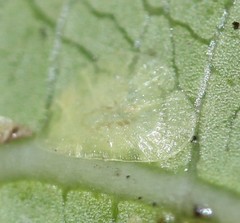 Milviscutulus mangiferaee0pathogen
- Outcome
- infestation percentagee0
- Direction
- decreasede0
- Value
- 79-91%e0
Not reportedComparator
Organisms pictured · Representative pictures of the matched species, not figures from the paper.

Verbatim
e0“The efficacy of kaolineted potassium silicate and Si El-Ghanem compounds on the infestation percentage decreased with different stages with a reduction percentage of 79-91%, respectively against different stages of M. mangiferae”
t0“MANGO TREES”
Claim · model-written summary
Extra power, triple power, boiled lime and sulfur reduced scale stages by more than 90% relative to control.
- Taxon
- MANGOMangifera indicat0
- Treatment
- Extra power, triple power, boiled lime and sulfure0
- Outcome
- different stagese0
- Direction
- reductione0
- Value
- more than 90%e0
- Comparator
- control treatmente0
Organisms pictured · Representative pictures of the matched species, not figures from the paper.
Verbatim
e0“Extra power, triple power, boiled lime and sulfur against different stages had more than 90% reduction, compared to the control treatment”
t0“MANGO TREES”
Claim · model-written summary
Silicon sprays with casuarina windbreak increased shoot diameter, shoot length and leaf area.
- Taxon
- MANGOMangifera indicat0
- Treatment
- spraying silicon formulations with casuarina windbreake0
- Outcome
- shoot diameter and length, leaf areae0
- Direction
- increasee0
Not reportedComparator
Organisms pictured · Representative pictures of the matched species, not figures from the paper.
Verbatim
e0“spraying silicon formulations with casuarina windbreak led to an increase in shoot diameter and length, leaf area, leaf total chlorophyll content, leaf water content, and yield”
t0“MANGO TREES”
Claim · model-written summary
Silicon sprays with casuarina windbreak increased leaf chlorophyll and water content.
- Taxon
- MANGOMangifera indicat0
- Treatment
- spraying silicon formulations with casuarina windbreake0
- Outcome
- leaf total chlorophyll content, leaf water contente0
- Direction
- increasee0
Not reportedComparator
Organisms pictured · Representative pictures of the matched species, not figures from the paper.
Verbatim
e0“spraying silicon formulations with casuarina windbreak led to an increase in shoot diameter and length, leaf area, leaf total chlorophyll content, leaf water content, and yield”
t0“MANGO TREES”
Claim · model-written summary
Silicon sprays with casuarina windbreak increased mango yield.
- Taxon
- MANGOMangifera indicat0
- Treatment
- spraying silicon formulations with casuarina windbreake0
- Outcome
- yielde0
- Direction
- increasee0
Not reportedComparator
Organisms pictured · Representative pictures of the matched species, not figures from the paper.
Verbatim
e0“spraying silicon formulations with casuarina windbreak led to an increase in shoot diameter and length, leaf area, leaf total chlorophyll content, leaf water content, and yield”
t0“MANGO TREES”
Claim · model-written summary
Silicon sprays with windbreak decreased leaf hardness and succulence.
- Taxon
- MANGOMangifera indicat0
- Outcome
- hard leaf character and leaf succulence gradee0
- Direction
- decreasede0
Not reportedTreatmentComparator
Organisms pictured · Representative pictures of the matched species, not figures from the paper.
Verbatim
e0“it decreased hard leaf character and leaf succulence grade”
t0“MANGO TREES”
Claim · model-written summary
Casuarina windbreak significantly reduced sand drift.
- Taxon
- MANGOMangifera indicat0
- Treatment
- casuarina windbreake0
- Outcome
- sand drifte0
- Direction
- reducede0
Not reportedComparator
Organisms pictured · Representative pictures of the matched species, not figures from the paper.
Verbatim
e0“the casuarina windbreak significantly reduced sand drift”
t0“MANGO TREES”
The same questions in other papers
kaolin · organism · Mangifera indica (mango)Results agree
1 paper in the same direction as this paper
- positive
silicon atom · growth · Mangifera indica (mango)Results agree
1 paper in the same direction as this paper
- positive
bentonite · organism · Mangifera indica (mango)Results agree
2 papers in the same direction as this paper
- positive
- positive
silicon atom · yield · Mangifera indica (mango)Results agree
2 papers in the same direction as this paper
- positive
- positive
application · growth · Mangifera indica (mango)Positive and negative results
35 papers in the same direction as this paper · 2 in the opposite direction
- negative
- no effect
- positive
34 papers more in this group
See all 38 papers →application · yield · Mangifera indica (mango)Positive and negative results
79 papers in the same direction as this paper · 5 in the opposite direction
- no effect
- negative
- negative
81 papers more in this group
See all 85 papers →application · physiology: water · Mangifera indica (mango)Results agree
1 paper in the same direction as this paper
- positive
Claims are grouped by organism, treatment and what was measured or targeted. A paper counts as positive when any of its claims in the group is positive.