Abstract
Abstract Bacterial soft rots are amongst the most economically important diseases that cause significant yield losses in various crops. A clear identification of the causal agents is required to develop management strategies. In 2022 and 2023, after the widespread occurrence of soft rot disease in sugar beet fields in the Firuzan region, Hamedan Province, Iran, the current study was conducted to identify and characterize the causal agents. A total of 38 bacterial isolates were obtained from sugar beet plants with soft rot symptoms and subjected to biochemical and phenotypical characterization and pathogenicity tests on healthy slices from potato tubers and sugar beet taproots. Twelve isolates from this study along with the type strain Pectobacterium carotovorum ICMP 5702 were selected for subsequent screening by BOX‐PCR. Six isolates were chosen for sequencing the 16SrRNA gene and phylogenetic analysis. In BLAST analyses, the pathogenic isolates S2, S9, S22, S11, S23 and 111 showed the highest similarity values (≥99%) with the reference sequences of Raoultella terrigena , Klebsiella michiganensis , Erwinia ( Winslowiella ) iniecta , Pantoea agglomerans and P. carotovorum , respectively. These isolates induced soft rot and maceration on plant materials from five species (bell pepper fruits, garlic cloves and slices from sugar beet taproot, potato tubers and carrot roots) 72 h after inoculation. In the greenhouse experiment, they caused soft rot symptoms in the taproots of 2‐month‐old sugar beet plants 3 weeks after inoculation. These soft rot agents had Gram‐negative, catalase‐positive and oxidase‐negative reactions, grew under both aerobic and anaerobic conditions, tolerated and grew at 37°C and 5% NaCl. In general, the results of this research showed that in addition to Pectobacterium , four other genera from the order Enterobacterales including Erwinia , Pantoea , Klebsiella and Raoultella , are amongst the causes of soft rot in sugar beet in Firuzan region of Hamedan.
Abstract from the paper’s OpenAlex record, shown for indexing and research. Copyright remains with the authors or the publisher. Read at the source ↗
The text the model read, with the source record’s inline markup (italics, sub- and superscripts) rendered and its character entities decoded; quote offsets refer to the raw text.
Claims 6
Claim · model-written summary
Six pathogenic isolates showed at least 99% similarity to named bacterial references.
- Taxon
- sugar beet
 Beta vulgaris subsp. vulgarise0t0
- Interactor
- Raoultella terrigena
 Klebsiella terrigenae0t0pathogen
- Outcome
- similarity valuese0
- Direction
- higheste0
- Value
- ≥99%e0
Organisms pictured · Representative pictures of the matched species, not figures from the paper.


Verbatim
e0“the pathogenic isolates S2, S9, S22, S11, S23 and 111 showed the highest similarity values (≥99%) with the reference sequences of Raoultella terrigena , Klebsiella michiganensis , Erwinia ( Winslowiella ) iniecta , Pantoea agglomerans and P. carotovorum , respectively.”
t0“sugar beet”
Claim · model-written summary
The isolates caused soft rot and maceration on tissues from five plant species after 72 hours.
- Taxon
- sugar beetBeta vulgaris subsp. vulgarise0
- Treatment
- inoculatione0
- Outcome
- soft rot and maceratione0
- Direction
- inducede0
- Qualifier
- 72 h after inoculatione0
Not reportedInteractorComparator
Organisms pictured · Representative pictures of the matched species, not figures from the paper.
Verbatim
e0“These isolates induced soft rot and maceration on plant materials from five species (bell pepper fruits, garlic cloves and slices from sugar beet taproot, potato tubers and carrot roots) 72 h after inoculation.”
Claim · model-written summary
The isolates caused soft rot in two-month-old sugar beet taproots three weeks after inoculation.
- Taxon
- sugar beetBeta vulgaris subsp. vulgarise0
- Organ / stage
- taprootse0
- Treatment
- inoculatione0
- Outcome
- soft rot symptomse0
- Direction
- causede0
- Qualifier
- 3 weeks after inoculatione0
- Setting
- greenhousee0
Not reportedComparator
Organisms pictured · Representative pictures of the matched species, not figures from the paper.
Verbatim
e0“In the greenhouse experiment, they caused soft rot symptoms in the taproots of 2‐month‐old sugar beet plants 3 weeks after inoculation.”
Claim · model-written summary
The soft rot agents were Gram-negative, catalase-positive and oxidase-negative, and grew aerobically and anaerobically.
- Taxon
- sugar beetBeta vulgaris subsp. vulgarise0t0
- Outcome
- Gram‐negative, catalase‐positive and oxidase‐negative reactionse0
Organisms pictured · Representative pictures of the matched species, not figures from the paper.
Verbatim
e0“These soft rot agents had Gram‐negative, catalase‐positive and oxidase‐negative reactions, grew under both aerobic and anaerobic conditions, tolerated and grew at 37°C and 5% NaCl.”
t0“sugar beet”
Claim · model-written summary
The agents tolerated and grew at 37°C and 5% NaCl.
- Taxon
- sugar beetBeta vulgaris subsp. vulgarise0t0
- Outcome
- grew at 37°C and 5% NaCle0
Not reportedInteractor
Organisms pictured · Representative pictures of the matched species, not figures from the paper.
Verbatim
e0“tolerated and grew at 37°C and 5% NaCl.”
t0“sugar beet”
Claim · model-written summary
The authors identify five Enterobacterales genera among causes of sugar beet soft rot in Firuzan.
- Taxon
- sugar beetBeta vulgaris subsp. vulgarise0
- Interactor
- Pectobacterium
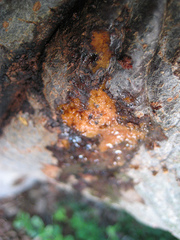 Pectobacteriume0pathogen
- Outcome
- causes of soft rote0
- Setting
- Firuzan region of Hamedane0
Organisms pictured · Representative pictures of the matched species, not figures from the paper.
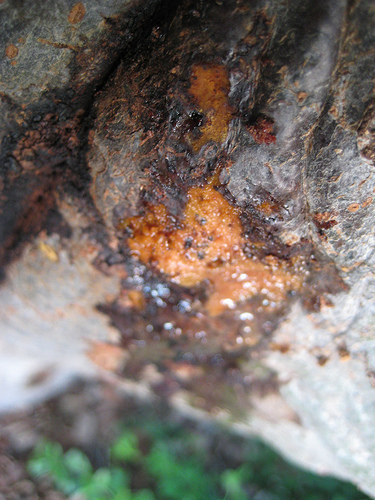
Verbatim
e0“in addition to Pectobacterium , four other genera from the order Enterobacterales including Erwinia , Pantoea , Klebsiella and Raoultella , are amongst the causes of soft rot in sugar beet in Firuzan region of Hamedan.”
The same questions in other papers
inoculation · disease · Beta vulgaris (beet)Positive and negative results
16 papers in the same direction as this paper · 7 in the opposite direction
- negative
- positive
- positive
20 papers more in this group
See all 24 papers →Claims are grouped by organism, treatment and what was measured or targeted. A paper counts as positive when any of its claims in the group is positive.