Abstract
Abstract Intercropping perennial forage grasses into cereal crops is an alternative to recover degraded pastures. However, the intercrop of forage grasses, such as Urochloa ruziziensis (R. Germ. and C. M. Evard) Crins (Congo grass), can lead to losses in cereal yield. Therefore, it is necessary to develop management strategies that allow forage grass establishment without major losses in cereal yield in intercropping. The objective was to study the agronomic and economic impacts of intercropping U. ruziziensis into a Clearfield upland rice ( Oryza sativa L.) cultivar in the state of Goiás, Brazil, in two growing seasons. Treatments included forage grass seeds sowing method (broadcast or incorporation to the soil) and sowing times (at rice sowing, 20 days after emergence [DAE], and 45 DAE of rice). Also, imazapyr + imazapic herbicide was applied to restrict the competitive effect on rice yield. Monocropping control plots were also evaluated. Grain yield was measured on rice. Forage grass dry matter yield was measured at 30, 60, and 90 days after harvesting (DAH) of rice. Crude protein content was analyzed at 90 DAH. Profitability was calculated for each cropping system relative to rice monocropping. Intercropping of rice and U. ruziziensis sowed at 45 DAE provided the highest grain yield relative to other assessed intercropping treatments as well as rice monocropping. Concurrent sowing of rice and incorporated U. ruziziensis seeding provided the greatest economic return. This reformed cropping system improved land and pasture output, which can reduce the pressure to convert more land to agricultural use.
Abstract from the paper’s OpenAlex record, shown for indexing and research. Copyright remains with the authors or the publisher. Read at the source ↗
The text the model read, with the source record’s inline markup (italics, sub- and superscripts) rendered and its character entities decoded; quote offsets refer to the raw text.
Claims 3
Claim · model-written summary
Intercropping U. ruziziensis at 45 DAE gave the highest rice grain yield relative to other intercropping treatments and rice monocropping.
- Taxon
- rice
 Oryza sativae0
- Treatment
- Intercropping of rice and U. ruziziensis sowed at 45 DAEe0
- Interactor
- U. ruziziensis
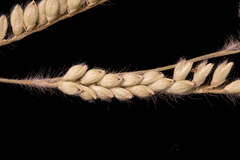 Urochloa ruziziensise0weed
- Outcome
- grain yielde0
- Direction
- higheste0
- Comparator
- other assessed intercropping treatments as well as rice monocroppinge0
Organisms pictured · Representative pictures of the matched species, not figures from the paper.


Verbatim
e0“Intercropping of rice and U. ruziziensis sowed at 45 DAE provided the highest grain yield relative to other assessed intercropping treatments as well as rice monocropping.”
Claim · model-written summary
Concurrent sowing of rice with incorporated U. ruziziensis seed produced the greatest economic return.
- Taxon
- riceOryza sativae0
- Treatment
- Concurrent sowing of rice and incorporated U. ruziziensis seedinge0
- Interactor
- U. ruziziensisUrochloa ruziziensise0weed
- Outcome
- economic returne0
- Direction
- greateste0
Not reportedComparator
Organisms pictured · Representative pictures of the matched species, not figures from the paper.
Verbatim
e0“Concurrent sowing of rice and incorporated U. ruziziensis seeding provided the greatest economic return.”
Claim · model-written summary
The reformed intercropping system improved land and pasture output.
Not reportedTaxon
Verbatim
e0“This reformed cropping system improved land and pasture output”
The same questions in other papers
Urochloa ruziziensis · yield · Oryza sativa (rice)Results agree
2 papers in the same direction as this paper
- positive
- positive
intercropping · yield · Oryza sativa (rice)Results differ
76 papers in the same direction as this paper · 15 in the opposite direction · 3 reporting no difference from an alternative
- positive
- positive
- negative
91 papers more in this group
See all 95 papers →Claims are grouped by organism, treatment and what was measured or targeted. A paper counts as positive when any of its claims in the group is positive.