Abstract
The correct management of cover crops in no-tillage aims to obtain greater benefits with its introduction in agricultural systems. The use of forage species such as Brachiaria, due to the large amount of biomass and for persisting longer on the ground, has become a good option. In this sense, an important point is the time interval between the cover desiccation with glyphosate and planting of rice in order to obtain higher operating income in the sowing, greater availability of nutrients, greater presence of straw on the soil surface, and lower release of possible allelopathic substances. The objective of this study was to assess the effect of the management of B. ruziziensis, with or without herbicide, preceding the crop planting, in the yield components and yield of rice. The trial was conducted in greenhouse conditions and consisted of three types of management of B. ruziziensis before sowing rice. B. ruziziensis showed linear growth and the presence of large amounts of its dry matter biomass on the soil surface was detrimental to rice yield; B. ruziziensis management close to planting caused a significant reduction in rice yield; the management of B. ruziziensis with herbicides should be conducted with more than 20 days before planting rice; the management of B. ruziziensis for the removal of its leaves with or without herbicide should be carried out with 10 or more days before planting rice, and the correct management of B. ruziziensis at the right time allowed for significant increases in the rice yield.
Abstract from the paper’s OpenAlex record; open copy licensed cc-by-nc. Read at the source ↗
The text the model read, with the source record’s inline markup (italics, sub- and superscripts) rendered and its character entities decoded; quote offsets refer to the raw text.
Claims 6
Claim · model-written summary
B. ruziziensis grew linearly.
- Taxon
- B. ruziziensis
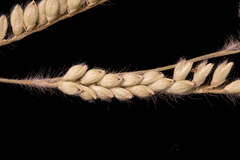 Urochloa ruziziensise0
- Outcome
- linear growthe0
Organisms pictured · Representative pictures of the matched species, not figures from the paper.

Verbatim
e0“B. ruziziensis showed linear growth”
Claim · model-written summary
Large amounts of Brachiaria dry biomass on the soil surface harmed rice yield.
- Taxon
- rice
 Oryza sativae0
- Interactor
- B. ruziziensisUrochloa ruziziensise0weed
- Outcome
- rice yielde0
- Direction
- detrimentale0
- Qualifier
- large amounts of its dry matter biomass on the soil surfacee0
Organisms pictured · Representative pictures of the matched species, not figures from the paper.

Verbatim
e0“B. ruziziensis showed linear growth and the presence of large amounts of its dry matter biomass on the soil surface was detrimental to rice yield”
Claim · model-written summary
Brachiaria management close to rice planting significantly reduced rice yield.
- Taxon
- riceOryza sativae0
- Treatment
- B. ruziziensis management close to plantinge0
- Interactor
- B. ruziziensisUrochloa ruziziensise0weed
- Outcome
- rice yielde0
- Direction
- reductione0
Not reportedComparator
Organisms pictured · Representative pictures of the matched species, not figures from the paper.
Verbatim
e0“B. ruziziensis management close to planting caused a significant reduction in rice yield”
Claim · model-written summary
Herbicide management of Brachiaria should occur more than 20 days before planting rice.
- Taxon
- riceOryza sativae0
- Interactor
- B. ruziziensisUrochloa ruziziensise0weed
- Outcome
- more than 20 days before planting ricee0
Organisms pictured · Representative pictures of the matched species, not figures from the paper.
Verbatim
e0“the management of B. ruziziensis with herbicides should be conducted with more than 20 days before planting rice”
Claim · model-written summary
Removing Brachiaria leaves with or without herbicide should occur at least 10 days before rice planting.
- Taxon
- riceOryza sativae0
- Interactor
- B. ruziziensisUrochloa ruziziensise0weed
- Outcome
- 10 or more days before planting ricee0
Organisms pictured · Representative pictures of the matched species, not figures from the paper.
Verbatim
e0“the management of B. ruziziensis for the removal of its leaves with or without herbicide should be carried out with 10 or more days before planting rice”
Claim · model-written summary
Correctly timed Brachiaria management significantly increased rice yield.
- Taxon
- riceOryza sativae0
- Treatment
- correct management of B. ruziziensis at the right timee0
- Interactor
- B. ruziziensisUrochloa ruziziensise0weed
- Outcome
- rice yielde0
- Direction
- increasese0
Not reportedComparator
Organisms pictured · Representative pictures of the matched species, not figures from the paper.
Verbatim
e0“the correct management of B. ruziziensis at the right time allowed for significant increases in the rice yield”
The same questions in other papers
Urochloa ruziziensis · yield · Oryza sativa (rice)Results agree
2 papers in the same direction as this paper
- positive
- positive
Claims are grouped by organism, treatment and what was measured or targeted. A paper counts as positive when any of its claims in the group is positive.