Abstract
Sucking pests like white ly, aphid, thrips, and lea hopper pose a serious threat to cotton crop, affecting yield and quality.Implementing integrated pest management strategies, which involve the use of biopesticides is essential for successful control.The present experiment was conducted to evaluate the ef icacy of different biopesticides and their combinations against sucking insect pests in Bt cotton at Khalsa College, Amritsar, Punjab during kharif 2022.Considering the Economic Threshold Level (ETL) of pests, four sprays were given at interval of 10 days.The data obtained revealed that a combination of neem oil and Verticillium lecanii showed a maximum reduction in population of sucking pests viz.white ly (64.88%), aphid (70.59%), thrips (54.23%) and lea hopper (62.73%) at seven days after the end of last spray.The present study highlights the signi icance of microbial biopesticides in promoting eco-friendly and sustainable pest management.
Abstract from the paper’s OpenAlex record, shown for indexing and research. Copyright remains with the authors or the publisher. Read at the source ↗
The text the model read, with the source record’s inline markup (italics, sub- and superscripts) rendered and its character entities decoded; quote offsets refer to the raw text.
Claims 4
Claim · model-written summary
Neem oil and Verticillium lecanii reduced white ly population by 64.88% seven days after the final spray.
- Taxon
- Bt cottont0
- Treatment
- combination of neem oil and Verticillium lecaniie0
- Interactor
- white lye0pest
- Second interactor
- Verticillium lecanii
 Akanthomyces lecaniie0biocontrol_agent
- Outcome
- white lye0
- Direction
- reductione0
- Value
- 64.88%e0
- Qualifier
- at seven days after the end of last spraye0
Not reportedComparator
Organisms pictured · Representative pictures of the matched species, not figures from the paper.
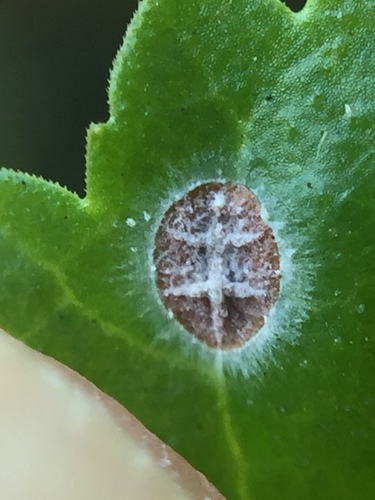
Verbatim
e0“The data obtained revealed that a combination of neem oil and Verticillium lecanii showed a maximum reduction in population of sucking pests viz.white ly (64.88%), aphid (70.59%), thrips (54.23%) and lea hopper (62.73%) at seven days after the end of last spray.”
t0“Bt cotton”
Claim · model-written summary
Neem oil and Verticillium lecanii reduced aphid population by 70.59% seven days after the final spray.
- Taxon
- Bt cottont0
- Treatment
- combination of neem oil and Verticillium lecaniie0
- Interactor
- aphide0pest
- Second interactor
- Verticillium lecaniiAkanthomyces lecaniie0biocontrol_agent
- Outcome
- aphide0
- Direction
- reductione0
- Value
- 70.59%e0
- Qualifier
- at seven days after the end of last spraye0
Not reportedComparator
Organisms pictured · Representative pictures of the matched species, not figures from the paper.
Verbatim
e0“The data obtained revealed that a combination of neem oil and Verticillium lecanii showed a maximum reduction in population of sucking pests viz.white ly (64.88%), aphid (70.59%), thrips (54.23%) and lea hopper (62.73%) at seven days after the end of last spray.”
t0“Bt cotton”
Claim · model-written summary
Neem oil and Verticillium lecanii reduced thrips population by 54.23% seven days after the final spray.
- Taxon
- Bt cottont0
- Treatment
- combination of neem oil and Verticillium lecaniie0
- Second interactor
- Verticillium lecaniiAkanthomyces lecaniie0biocontrol_agent
- Outcome
- thripse0
- Direction
- reductione0
- Value
- 54.23%e0
- Qualifier
- at seven days after the end of last spraye0
 Thrips
Not reportedComparator
Organisms pictured · Representative pictures of the matched species, not figures from the paper.

Verbatim
e0“The data obtained revealed that a combination of neem oil and Verticillium lecanii showed a maximum reduction in population of sucking pests viz.white ly (64.88%), aphid (70.59%), thrips (54.23%) and lea hopper (62.73%) at seven days after the end of last spray.”
t0“Bt cotton”
Claim · model-written summary
Neem oil and Verticillium lecanii reduced lea hopper population by 62.73% seven days after the final spray.
- Taxon
- Bt cottont0
- Treatment
- combination of neem oil and Verticillium lecaniie0
- Interactor
- lea hoppere0pest
- Second interactor
- Verticillium lecaniiAkanthomyces lecaniie0biocontrol_agent
- Outcome
- lea hoppere0
- Direction
- reductione0
- Value
- 62.73%e0
- Qualifier
- at seven days after the end of last spraye0
Not reportedComparator
Organisms pictured · Representative pictures of the matched species, not figures from the paper.
Verbatim
e0“The data obtained revealed that a combination of neem oil and Verticillium lecanii showed a maximum reduction in population of sucking pests viz.white ly (64.88%), aphid (70.59%), thrips (54.23%) and lea hopper (62.73%) at seven days after the end of last spray.”
t0“Bt cotton”
The same questions in other papers
botanical · Thrips · Gossypium hirsutum (cotton)Results agree
4 papers in the same direction as this paper
- positive
- positive
- positive
1 paper more in this group
See all 5 papers →Claims are grouped by organism, treatment and what was measured or targeted. A paper counts as positive when any of its claims in the group is positive.