Abstract
Background and Objective: Anthracnose in shallot contributes to significant losses. To solve this issue, silica nanoparticles, in combination with Bacillus velezensis and Bacillus thuringiensis were used together. Materials and Methods: In vitro antagonistic test of Bacillus velezensis B-27 with Colletotrichum gloeosporioides was carried out using dual culture and co-culture methods. Treatment in greenhouse experiments was carried out using single application of silica, B. thuringiensis, B. velezensis, a combination of B. thuringiensis and B. velezensis and a combination of B. thuringiensis, B. velezensis and silica. Detection of B. velezensis in the roots of shallot plants was carried out by PCR using a pair of specific primers. Results: Bacillus velezensis was able to inhibit the growth of C. gloeosporioides mycelium in vitro, both in the dual culture and co-culture methods, by 62.8 and 77.17%, respectively. Treatment of B. thuringiensis and B. velezensis, either individually or in combination with silica, could reduce the intensity of anthracnose disease by 20% each and stimulate the growth of shallot plants. The PCR detection using specific primers on the roots of shallot plants showed that B. velezensis was detected with a DNA band length of ±576 bp. Conclusion: Bacillus velezensis can inhibit the growth of C. gloeosporioides mycelium in vitro. Applying B. velezensis, B. thuringiensis and silica can reduce the intensity of anthracnose disease, promote plant growth and increase plant productivity. Furthermore, B. velezensis was detected in the roots of shallot plants, revealing that the bacteria are well-established.
Abstract from the paper’s OpenAlex record, shown for indexing and research. Copyright remains with the authors or the publisher. Read at the source ↗
The text the model read, with the source record’s inline markup (italics, sub- and superscripts) rendered and its character entities decoded; quote offsets refer to the raw text.
Claims 6
Claim · model-written summary
B. velezensis inhibited C. gloeosporioides mycelium by 62.8% in dual culture.
- Taxon
- shallot
 Allium cepa var. aggregatumt0
- Treatment
- Bacillus velezensise0
- Interactor
- C. gloeosporioides
 Colletotrichum gloeosporioidese0pathogen
- Second interactor
- Bacillus velezensis
 Bacillus velezensise0biocontrol_agent
- Outcome
- growth of C. gloeosporioides myceliume0
- Direction
- inhibite0
- Value
- 62.8e0
- Qualifier
- dual culturee0
Not reportedComparator
Organisms pictured · Representative pictures of the matched species, not figures from the paper.


Verbatim
e0“Bacillus velezensis was able to inhibit the growth of C. gloeosporioides mycelium in vitro, both in the dual culture and co-culture methods, by 62.8 and 77.17%, respectively”
t0“Shallot”
Claim · model-written summary
B. velezensis inhibited C. gloeosporioides mycelium by 77.17% in co-culture.
- Taxon
- shallotAllium cepa var. aggregatumt0
- Treatment
- Bacillus velezensise0
- Interactor
- C. gloeosporioidesColletotrichum gloeosporioidese0pathogen
- Second interactor
- Bacillus velezensisBacillus velezensise0biocontrol_agent
- Outcome
- growth of C. gloeosporioides myceliume0
- Direction
- inhibite0
- Value
- 77.17%e0
- Qualifier
- co-culturee0
Not reportedComparator
Organisms pictured · Representative pictures of the matched species, not figures from the paper.
Verbatim
e0“Bacillus velezensis was able to inhibit the growth of C. gloeosporioides mycelium in vitro, both in the dual culture and co-culture methods, by 62.8 and 77.17%, respectively”
t0“Shallot”
Claim · model-written summary
B. thuringiensis and B. velezensis treatments reduced anthracnose intensity by 20% each.
- Taxon
- shallotAllium cepa var. aggregatumt0
- Treatment
- B. thuringiensis and B. velezensise0
- Interactor
- B. thuringiensis
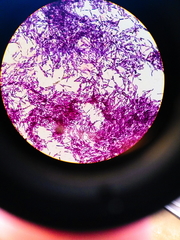 Bacillus thuringiensise0biocontrol_agent
- Second interactor
- B. velezensisBacillus velezensise0biocontrol_agent
- Outcome
- intensity of anthracnose diseasee0
- Direction
- reducee0
- Value
- 20%e0
Not reportedComparator
Organisms pictured · Representative pictures of the matched species, not figures from the paper.
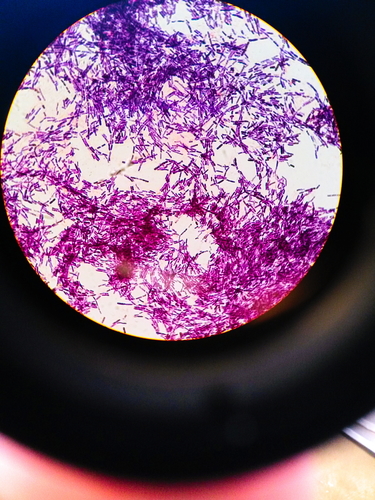
Verbatim
e0“Treatment of B. thuringiensis and B. velezensis, either individually or in combination with silica, could reduce the intensity of anthracnose disease by 20% each”
t0“Shallot”
Claim · model-written summary
The Bacillus treatments stimulated shallot growth.
- Taxon
- shallotAllium cepa var. aggregatumt0
- Outcome
- growth of shallot plantse0
- Direction
- stimulatee0
Not reportedTreatmentComparator
Organisms pictured · Representative pictures of the matched species, not figures from the paper.
Verbatim
e0“stimulate the growth of shallot plants”
t0“Shallot”
Claim · model-written summary
PCR detected B. velezensis in shallot roots with a band of approximately 576 bp.
- Taxon
- shallotAllium cepa var. aggregatumt0
- Interactor
- B. velezensisBacillus velezensise0biocontrol_agent
- Outcome
- B. velezensis was detectede0
- Value
- ±576 bpe0
Organisms pictured · Representative pictures of the matched species, not figures from the paper.
Verbatim
e0“B. velezensis was detected with a DNA band length of ±576 bp”
t0“Shallot”
Claim · model-written summary
The authors concluded that applying B. velezensis, B. thuringiensis and silica promotes shallot productivity.
- Taxon
- shallotAllium cepa var. aggregatumt0
- Treatment
- B. velezensis, B. thuringiensis and silicae0
- Interactor
- B. velezensisBacillus velezensise0biocontrol_agent
- Second interactor
- B. thuringiensisBacillus thuringiensise0biocontrol_agent
- Outcome
- plant productivitye0
- Direction
- increasee0
Not reportedComparator
Organisms pictured · Representative pictures of the matched species, not figures from the paper.
Verbatim
e0“Applying B. velezensis, B. thuringiensis and silica can reduce the intensity of anthracnose disease, promote plant growth and increase plant productivity”
t0“Shallot”
The same questions in other papers
Bacillus velezensis · yield · Allium cepa (onion)Results agree
1 paper in the same direction as this paper
- positive
Bacillus velezensis · disease · Allium cepa (onion)Results agree
2 papers in the same direction as this paper
- positive
- positive
silicon dioxide · yield · Allium cepa (onion)Results agree
5 papers in the same direction as this paper
- positive
- positive
- positive
2 papers more in this group
See all 6 papers →Claims are grouped by organism, treatment and what was measured or targeted. A paper counts as positive when any of its claims in the group is positive.