Abstract
Cuban rice cultivars INCA LP-5 and INCA LP-7 are widely distributed in Cuba and Caribbean countries. Although there are studies about rhizospheric bacteria associated with these cultivars, there are no reports about their seed-associated bacteria. This study aimed to isolate endophytic bacteria from rice seeds and select those with the greatest plant growth-promoting traits. A total of nineteen bacterial strains from the genera Pantoea, Bacillus, Paenibacillus, and Pseudomonas were isolated from the husk and endosperm of rice seeds. The strains Pantoea sp. S5-1, Pseudomonas sp. S5-38, and Pseudomonas sp. S7-1 were classified as the most promissory to increase rice growth as they demonstrated the presence of multiple plant growth-promoting traits such as the production of auxins, phosphate, and potassium solubilization, the production of siderophores, and the inhibition of the phytopathogen Pyricularia oryzae. The inoculation of strains of Pantoea sp. and Pseudomonas spp. in rice improves the height, root length, fresh weight, and dry weight of the shoot and root after 21 days post-inoculation in hydroponic assays. This study constitutes the first report on Cuban rice cultivars about the presence of endophytes in seeds and their potential to promote seedling growth. Pantoea sp. S5-1, Pseudomonas sp. S5-38, and Pseudomonas sp. S7-1 were selected as the more promising strains for the development of bio-stimulators or bio-inoculants for Cuban rice crops.
Abstract from the paper’s OpenAlex record; open copy licensed cc-by. Read at the source ↗
The text the model read, with the source record’s inline markup (italics, sub- and superscripts) rendered and its character entities decoded; quote offsets refer to the raw text.
Claims 4
Claim · model-written summary
Nineteen strains from four bacterial genera were isolated from rice seed husks and endosperm.
- Taxon
- rice
 Oryza sativae0
- Organ / stage
- seedse0
- Outcome
- bacterial strainse0
- Value
- nineteene0
 Pantoea
Organisms pictured · Representative pictures of the matched species, not figures from the paper.


Verbatim
e0“A total of nineteen bacterial strains from the genera Pantoea, Bacillus, Paenibacillus, and Pseudomonas were isolated from the husk and endosperm of rice seeds.”
Claim · model-written summary
Pantoea sp. S5-1 and two Pseudomonas strains showed multiple plant growth promoting traits and inhibited Pyricularia oryzae.
- Taxon
- riceOryza sativae0
- Interactor
- Pantoea sp. S5-1e0symbiont
- Second interactor
- Pyricularia oryzae
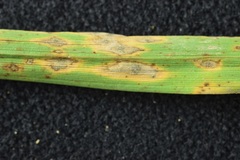 Pyricularia oryzaee0pathogen
- Outcome
- plant growth-promoting traitse0
Organisms pictured · Representative pictures of the matched species, not figures from the paper.
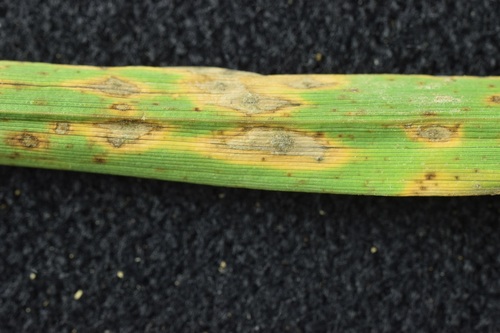
Verbatim
e0“The strains Pantoea sp. S5-1, Pseudomonas sp. S5-38, and Pseudomonas sp. S7-1 were classified as the most promissory to increase rice growth as they demonstrated the presence of multiple plant growth-promoting traits such as the production of auxins, phosphate, and potassium solubilization, the production of siderophores, and the inhibition of the phytopathogen Pyricularia oryzae.”
Claim · model-written summary
Inoculation with Pantoea and Pseudomonas improved rice seedling height, root length, and shoot and root weight after 21 days in hydroponic assays.
- Taxon
- riceOryza sativae0
- Treatment
- inoculation of strains of Pantoea sp. and Pseudomonas spp.e0
- Second interactor
- Pseudomonas spp.
 Pseudomonase0symbiont
- Outcome
- height, root length, fresh weight, and dry weighte0
- Direction
- improvese0
- Setting
- hydroponic assayse0
Not reportedComparator
Organisms pictured · Representative pictures of the matched species, not figures from the paper.

Verbatim
e0“The inoculation of strains of Pantoea sp. and Pseudomonas spp. in rice improves the height, root length, fresh weight, and dry weight of the shoot and root after 21 days post-inoculation in hydroponic assays.”
Claim · model-written summary
The authors selected three strains for development as rice bioinoculants.
- Taxon
- riceOryza sativae0
- Interactor
- Pantoea sp. S5-1e0symbiont
- Outcome
- development of bio-stimulators or bio-inoculantse0
Organisms pictured · Representative pictures of the matched species, not figures from the paper.
Verbatim
e0“Pantoea sp. S5-1, Pseudomonas sp. S5-38, and Pseudomonas sp. S7-1 were selected as the more promising strains for the development of bio-stimulators or bio-inoculants for Cuban rice crops.”
The same questions in other papers
Pantoea · growth · Oryza sativa (rice)Results agree
2 papers in the same direction as this paper
- positive
- positive
Pseudomonas · growth · Oryza sativa (rice)Results agree
9 papers in the same direction as this paper
- positive
- positive
- positive
6 papers more in this group
See all 10 papers →inoculation · growth · Oryza sativa (rice)Positive and negative results
361 papers in the same direction as this paper · 34 in the opposite direction · 3 reporting no difference from an alternative
- positive
- no effect
- negative
395 papers more in this group
See all 399 papers →Claims are grouped by organism, treatment and what was measured or targeted. A paper counts as positive when any of its claims in the group is positive.