Abstract
As agroecology deteriorates, agricultural production is threatened by the combined stressors of exposure to environmental pollutants and pathogenic microbes. Proper agronomic practices for crop growth management and fertilization require understanding plant tolerance strategies. Both rice blast and heavy metals substantially impair rice crops, while silicon (Si) is an effective amendment to alleviate the combined stressors. Herein, this study was conducted to investigate the rice physiology and pathology perspective on the mechanism of Si alleviation against both lead (Pb) toxicity and Magnaporthe oryzae infection, utilizing pot experiments with inoculation of the virulent Magnaporthe oryzae strain. Exogenous Si reduced the phyto-availability and plant absorption of Pb, resulting in a 73.5% reduction in exchangeable Pb concentration in soil and a 40.23% reduction in rice plants. Furthermore, Si addition boosted the plant antioxidant system by increasing the activities of related enzymes, as the activities of catalase, superoxide dismutase, and polyphenol oxidase were significantly improved while the activity of peroxidase in rice panicles decreased. As a result, an improvement in dry matter quantity by 19.19% was observed compared to treatments without Si application, and the panicle blast severity (PBS) was reduced by 0.4-37.52%. Notwithstanding the interaction between the combined stressors, this study revealed that the speciation of Pb formation in the rhizosphere was the primary contributor to the alleviation of abiotic stresses, whereas the regulation of oxidative stress by enzymatic antioxidants played a dominant role in alleviating Magnaporthe oryzae colonization and impairments. The regulation process may reveal the mechanism of siliceous fertilizer functioning in the paddy system. Thereby the role of exogenous Si in anti-fungal, heavy metal toxicology, and plant physiology needs further study to fully elucidate the role of Si amendment, which is proposed to be considered from the perspective of soil chemistry and plant physiology.
Abstract from the paper’s OpenAlex record; open copy licensed cc-by-nc-nd. Read at the source ↗
The text the model read, with the source record’s inline markup (italics, sub- and superscripts) rendered and its character entities decoded; quote offsets refer to the raw text.
Claims 8
Claim · model-written summary
Silicon reduced exchangeable soil Pb concentration by 73.5%.
- Taxon
- plante0
- Treatment
- Exogenous Sie0
- Outcome
- exchangeable Pb concentration in soile0
- Direction
- reductione0
- Value
- 73.5%e0
Not reportedComparator
Verbatim
e0“Exogenous Si reduced the phyto-availability and plant absorption of Pb, resulting in a 73.5% reduction in exchangeable Pb concentration in soil”
Claim · model-written summary
Silicon reduced Pb in rice plants by 40.23%.
- Taxon
- rice
 Oryza sativae0
- Treatment
- Exogenous Sie1
- Outcome
- plant absorption of Pbe1
- Direction
- reductione0
- Value
- 40.23%e0
Not reportedComparator
Organisms pictured · Representative pictures of the matched species, not figures from the paper.

Verbatim
e0“a 40.23% reduction in rice plants”
e1“Exogenous Si reduced the phyto-availability and plant absorption of Pb”
Claim · model-written summary
Silicon significantly increased catalase, superoxide dismutase and polyphenol oxidase activities.
- Taxon
- riceOryza sativat0
- Treatment
- Si additione0
- Outcome
- activities of catalase, superoxide dismutase, and polyphenol oxidasee0
- Direction
- improvede0
Not reportedComparator
Organisms pictured · Representative pictures of the matched species, not figures from the paper.
Verbatim
e0“Si addition boosted the plant antioxidant system by increasing the activities of related enzymes, as the activities of catalase, superoxide dismutase, and polyphenol oxidase were significantly improved”
t0“rice”
Claim · model-written summary
Silicon decreased peroxidase activity in rice panicles.
- Taxon
- riceOryza sativae0
- Organ / stage
- paniclese0
- Treatment
- Si additione1
- Outcome
- activity of peroxidasee0
- Direction
- decreasede0
Not reportedComparator
Organisms pictured · Representative pictures of the matched species, not figures from the paper.
Verbatim
e0“activity of peroxidase in rice panicles decreased”
e1“Si addition boosted the plant antioxidant system”
Claim · model-written summary
Silicon increased dry matter quantity by 19.19% versus no silicon.
- Taxon
- riceOryza sativat0
- Treatment
- Si additione1
- Outcome
- dry matter quantitye0
- Direction
- improvemente0
- Value
- 19.19%e0
- Comparator
- treatments without Si applicatione0
Organisms pictured · Representative pictures of the matched species, not figures from the paper.
Verbatim
e0“an improvement in dry matter quantity by 19.19% was observed compared to treatments without Si application”
e1“Si addition boosted the plant antioxidant system”
t0“rice”
Claim · model-written summary
Silicon reduced panicle blast severity by 0.4-37.52%.
- Taxon
- riceOryza sativat0
- Treatment
- Si additione1
- Interactor
- Magnaporthe oryzae
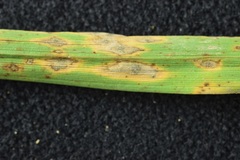 Pyricularia oryzaet0pathogen
- Outcome
- panicle blast severity (PBS)e0
- Direction
- reducede0
- Value
- 0.4-37.52%e0
Not reportedComparator
Organisms pictured · Representative pictures of the matched species, not figures from the paper.
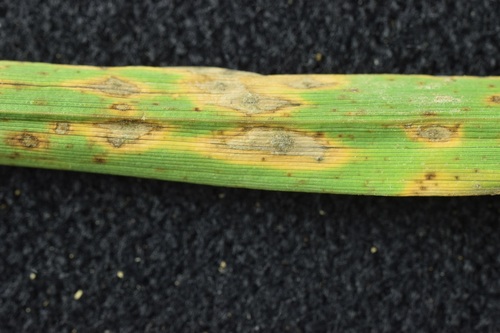
Verbatim
e0“the panicle blast severity (PBS) was reduced by 0.4-37.52%”
e1“Si addition boosted the plant antioxidant system”
t0“rice: Lead pollution and blast fungus (Magnaporthe oryzae) infection”
Claim · model-written summary
Rhizosphere Pb speciation was identified as the main contributor to abiotic stress alleviation.
- Taxon
- riceOryza sativat0
- Outcome
- alleviation of abiotic stressese0
- Qualifier
- speciation of Pb formation in the rhizospheree0
Organisms pictured · Representative pictures of the matched species, not figures from the paper.
Verbatim
e0“the speciation of Pb formation in the rhizosphere was the primary contributor to the alleviation of abiotic stresses”
t0“rice”
Claim · model-written summary
Enzymatic antioxidant regulation was identified as dominant in alleviating M. oryzae colonization and damage.
- Taxon
- riceOryza sativat0
- Interactor
- Magnaporthe oryzaePyricularia oryzaee0pathogen
- Outcome
- Magnaporthe oryzae colonization and impairmentse0
- Qualifier
- regulation of oxidative stress by enzymatic antioxidantse0
Organisms pictured · Representative pictures of the matched species, not figures from the paper.
Verbatim
e0“the regulation of oxidative stress by enzymatic antioxidants played a dominant role in alleviating Magnaporthe oryzae colonization and impairments”
t0“rice”
The same questions in other papers
silicon atom · physiology: antioxidant enzymes · Oryza sativa (rice)Results differ
36 papers in the same direction as this paper · 4 in the opposite direction
- no effect
- no effect
- no effect
37 papers more in this group
See all 41 papers →silicon atom · growth · Oryza sativa (rice)Results differ
156 papers in the same direction as this paper · 14 in the opposite direction
- positive
- positive
- no effect
167 papers more in this group
See all 171 papers →silicon atom · nutrient: content · Oryza sativa (rice)Results differ
163 papers in the same direction as this paper · 13 in the opposite direction
- positive
- positive
- positive
173 papers more in this group
See all 177 papers →silicon atom · Pyricularia oryzae · Oryza sativa (rice)Positive and negative results
9 papers in the same direction as this paper · 1 in the opposite direction
- positive
- negative
- positive
7 papers more in this group
See all 11 papers →Claims are grouped by organism, treatment and what was measured or targeted. A paper counts as positive when any of its claims in the group is positive.