Abstract
BACKGROUND: Although co-formulants constitute a substantial portion of the total plant protection product (PPP) mass applied to crops, data on residue formation and the behaviour of these substances on plants are scarce. In an earlier study we demonstrated that co-formulants commonly used in PPPs can form considerable residues, i.e., in the low to medium mg/kg range, but normally decline rapidly within few days. In the field trial reported here, we aimed to identify the major decline processes of co-formulants. Residues of co-formulants were therefore monitored in parsley and lettuce grown in an open field as well as under foil tunnels equipped with either an overhead or a drip irrigation system. RESULTS: Dissipation of three anionic surfactants was markedly faster when crops (parsley and lettuce) were exposed to natural rainfall or irrigation from above compared to drip irrigation. In contrast, the decline of three volatile organic solvents was not affected by rain or irrigation, but was dependent on the crop, with much shorter half-lives in lettuce than in parsley. Furthermore, dilution through plant growth contributed significantly to the reduction of residues over time. CONCLUSION: In this work we substantiate earlier findings on the magnitude and dissipation of residues of anionic surfactants and solvents representing the most important co-formulant classes. The chosen experimental setup allowed differentiation between decline processes and we confirm that foliar wash-off is a major dissipation process for anionic surfactants. For volatile organic solvents, dissipation appears to depend on the properties not only of the substance but also of the plant (surface). © 2023 The Authors. Pest Management Science published by John Wiley & Sons Ltd on behalf of Society of Chemical Industry.
Abstract from the paper’s OpenAlex record; open copy licensed cc-by-nc-nd. Read at the source ↗
The text the model read, with the source record’s inline markup (italics, sub- and superscripts) rendered and its character entities decoded; quote offsets refer to the raw text.
Claims 4
Claim · model-written summary
Rainfall or overhead irrigation accelerated anionic surfactant dissipation in parsley and lettuce relative to drip irrigation.
- Taxon
- parsley and lettuce
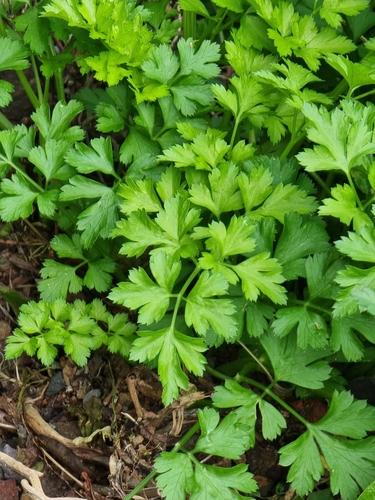
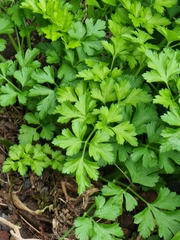 Petroselinum crispum
 Lactuca sativae0
- Treatment
- natural rainfall or irrigation from abovee0
- Outcome
- Dissipation of three anionic surfactantse0
- Direction
- fastere0
- Comparator
- drip irrigatione0
Organisms pictured · Representative pictures of the matched species, not figures from the paper.

Verbatim
e0“Dissipation of three anionic surfactants was markedly faster when crops (parsley and lettuce) were exposed to natural rainfall or irrigation from above compared to drip irrigation.”
Claim · model-written summary
Rain or irrigation did not affect volatile solvent decline.
- Taxon
- lettuce and parsleyPetroselinum crispumLactuca sativat0
- Treatment
- rain or irrigatione0
- Outcome
- decline of three volatile organic solventse0
- Direction
- not affectede0
Not reportedComparator
Organisms pictured · Representative pictures of the matched species, not figures from the paper.
Verbatim
e0“the decline of three volatile organic solvents was not affected by rain or irrigation”
t0“lettuce and parsley”
Claim · model-written summary
Volatile solvent half-lives were shorter in lettuce than parsley.
- Taxon
- lettuceLactuca sativae0
- Outcome
- half-livese0
- Direction
- shortere0
- Comparator
- parsleye0
Organisms pictured · Representative pictures of the matched species, not figures from the paper.
Verbatim
e0“much shorter half-lives in lettuce than in parsley”
Claim · model-written summary
Plant growth dilution significantly reduced residues over time.
- Taxon
- lettuce and parsleyPetroselinum crispumLactuca sativat0
- Outcome
- reduction of residuese0
- Direction
- reductione0
- Qualifier
- dilution through plant growthe0
Organisms pictured · Representative pictures of the matched species, not figures from the paper.
Verbatim
e0“dilution through plant growth contributed significantly to the reduction of residues over time”
t0“lettuce and parsley”
The same questions in other papers
irrigation · molecular: metabolites · Lactuca sativa (garden lettuce)Positive and negative results
1 paper in the same direction as this paper · 3 in the opposite direction
- negative
- negative
- negative
1 paper more in this group
See all 5 papers →Claims are grouped by organism, treatment and what was measured or targeted. A paper counts as positive when any of its claims in the group is positive.