Abstract
Root rot disease of Cuminum cyminum caused by Fusarium solani is one of the most destructive diseases threatening cumin production. The present study investigates the biocontrol potential of some endophytes against F. solani and their effect on the induction of defense-related enzymes in a greenhouse. The results herein presented illustrate the strong biocontrol potential of three (out of twelve) endophytes. During the in vitro assay, three isolates demonstrated strong mycelial growth inhibition of F. solani: isolates 3, 4, and 9, with 87%, 65%, and 80% reductions, respectively, with respect to the control (100%). These isolates were identified as Trichoderma harzianum, T. longibrachiatum, and Chaetomium globosum, which produce siderophore and indole-3-acetic acid (IAA). Cumin seed priming with the culture filtrates of T. harzianum, C. globosum, and T. longibrachiatum positively affected the seed germination, as a higher germination (%) of culture filtrate-treated seeds was observed followed by infected and healthy control/untreated seeds. In the greenhouse, the application of T. harzianum, T. longibrachiatum, and C. globosum caused a reduction in disease severity (67.7%, 58.1%, and 59.3%, respectively) on cumin plants, with a lower disease severity (20%, 26%, and 25%, respectively) recorded in treated plants compared to the infected control (62%). Furthermore, a significant increase in defense-related enzymes in culture filtrate-treated cumin plants was recorded. Higher peroxidase (PO), polyphenoloxidase (PPO), and phenylalanine ammonia-lyase (PAL) activity, and a higher content of phenolic compounds, were found in culture filtrate-treated plants. These results indicate that the culture filtrates of these bioagents not only increased seed germination, but also protected the plants from F. solani infection by acting as important elements of the cellular antioxidant system in plants upon infection, conferring the biocontrol potential of C. globosum and Trichoderma species toward mitigating the root rot disease of cumin plants in a greenhouse.
Abstract from the paper’s OpenAlex record; open copy licensed cc-by. Read at the source ↗
The text the model read, with the source record’s inline markup (italics, sub- and superscripts) rendered and its character entities decoded; quote offsets refer to the raw text.
Claims 11
Claim · model-written summary
Isolate 3 reduced F. solani mycelial growth by 87% relative to control in vitro
- Taxon
- Cuminum cyminum
 Cuminum cyminume0
- Treatment
- three isolatese1
- Interactor
- F. solani
 Fusarium solanie1pathogen
- Outcome
- mycelial growth inhibition of F. solanie1
- Direction
- reductionse1
- Value
- 87%e1
- Comparator
- controle1
Organisms pictured · Representative pictures of the matched species, not figures from the paper.
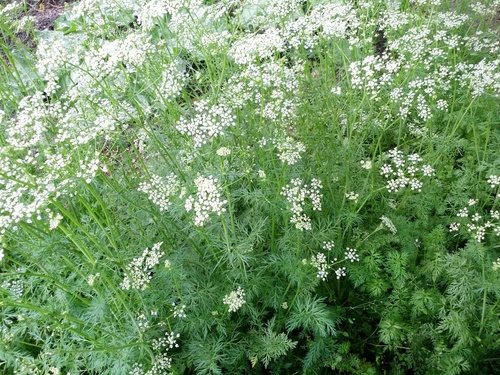

Verbatim
e0“Root rot disease of Cuminum cyminum caused by Fusarium solani”
e1“During the in vitro assay, three isolates demonstrated strong mycelial growth inhibition of F. solani: isolates 3, 4, and 9, with 87%, 65%, and 80% reductions, respectively, with respect to the control (100%)”
Claim · model-written summary
Isolate 4 reduced F. solani mycelial growth by 65% relative to control in vitro
- Taxon
- Cuminum cyminumCuminum cyminume0
- Treatment
- three isolatese1
- Interactor
- F. solaniFusarium solanie1pathogen
- Outcome
- mycelial growth inhibition of F. solanie1
- Direction
- reductionse1
- Value
- 65%e1
- Comparator
- controle1
Organisms pictured · Representative pictures of the matched species, not figures from the paper.
Verbatim
e0“Root rot disease of Cuminum cyminum caused by Fusarium solani”
e1“During the in vitro assay, three isolates demonstrated strong mycelial growth inhibition of F. solani: isolates 3, 4, and 9, with 87%, 65%, and 80% reductions, respectively, with respect to the control (100%)”
Claim · model-written summary
Isolate 9 reduced F. solani mycelial growth by 80% relative to control in vitro
- Taxon
- Cuminum cyminumCuminum cyminume0
- Treatment
- three isolatese1
- Interactor
- F. solaniFusarium solanie1pathogen
- Outcome
- mycelial growth inhibition of F. solanie1
- Direction
- reductionse1
- Value
- 80%e1
- Comparator
- controle1
Organisms pictured · Representative pictures of the matched species, not figures from the paper.
Verbatim
e0“Root rot disease of Cuminum cyminum caused by Fusarium solani”
e1“During the in vitro assay, three isolates demonstrated strong mycelial growth inhibition of F. solani: isolates 3, 4, and 9, with 87%, 65%, and 80% reductions, respectively, with respect to the control (100%)”
Claim · model-written summary
The three isolates were identified as Trichoderma harzianum, T. longibrachiatum and Chaetomium globosum, which produce siderophore and IAA
- Taxon
- Cuminum cyminumCuminum cyminume0
- Interactor
- Trichoderma harzianum
 Trichoderma harzianume2biocontrol_agent
- Second interactor
- Chaetomium globosum
 Chaetomium globosume2biocontrol_agent
- Outcome
- siderophore and indole-3-acetic acid (IAA)e2
Organisms pictured · Representative pictures of the matched species, not figures from the paper.


Verbatim
e0“Root rot disease of Cuminum cyminum caused by Fusarium solani”
e2“These isolates were identified as Trichoderma harzianum, T. longibrachiatum, and Chaetomium globosum, which produce siderophore and indole-3-acetic acid (IAA)”
Claim · model-written summary
Priming cumin seed with culture filtrates of the antagonists increased seed germination relative to untreated seeds
- Taxon
- Cuminum cyminumCuminum cyminume0
- Treatment
- seed priming with the culture filtrates of T. harzianum, C. globosum, and T. longibrachiatume3
- Interactor
- T. harzianumTrichoderma harzianume3biocontrol_agent
- Outcome
- seed germinatione3
- Direction
- highere3
- Comparator
- healthy control/untreated seedse3
Organisms pictured · Representative pictures of the matched species, not figures from the paper.
Verbatim
e0“Root rot disease of Cuminum cyminum caused by Fusarium solani”
e3“Cumin seed priming with the culture filtrates of T. harzianum, C. globosum, and T. longibrachiatum positively affected the seed germination, as a higher germination (%) of culture filtrate-treated seeds was observed followed by infected and healthy control/untreated seeds”
Claim · model-written summary
In the greenhouse, T. harzianum reduced cumin disease severity by 67.7% relative to infected control
- Taxon
- cumin plantsCuminum cyminume4
- Treatment
- application of T. harzianume4
- Interactor
- Fusarium solaniFusarium solanie0pathogen
- Second interactor
- T. harzianumTrichoderma harzianume4biocontrol_agent
- Outcome
- disease severitye4
- Direction
- reductione4
- Value
- 67.7%e4
- Comparator
- infected controle5
- Setting
- greenhousee4
Organisms pictured · Representative pictures of the matched species, not figures from the paper.
Verbatim
e0“Root rot disease of Cuminum cyminum caused by Fusarium solani”
e4“In the greenhouse, the application of T. harzianum, T. longibrachiatum, and C. globosum caused a reduction in disease severity (67.7%, 58.1%, and 59.3%, respectively) on cumin plants”
e5“a lower disease severity (20%, 26%, and 25%, respectively) recorded in treated plants compared to the infected control (62%)”
Claim · model-written summary
In the greenhouse, T. longibrachiatum reduced cumin disease severity by 58.1% relative to infected control
- Taxon
- cumin plantsCuminum cyminume4
- Treatment
- T. longibrachiatume4
- Interactor
- Fusarium solaniFusarium solanie0pathogen
- Second interactor
- T. longibrachiatumTrichoderma longibrachiatume4biocontrol_agent
- Outcome
- disease severitye4
- Direction
- reductione4
- Value
- 58.1%e4
- Comparator
- infected controle5
- Setting
- greenhousee4
Organisms pictured · Representative pictures of the matched species, not figures from the paper.
Verbatim
e0“Root rot disease of Cuminum cyminum caused by Fusarium solani”
e4“In the greenhouse, the application of T. harzianum, T. longibrachiatum, and C. globosum caused a reduction in disease severity (67.7%, 58.1%, and 59.3%, respectively) on cumin plants”
e5“a lower disease severity (20%, 26%, and 25%, respectively) recorded in treated plants compared to the infected control (62%)”
Claim · model-written summary
In the greenhouse, C. globosum reduced cumin disease severity by 59.3% relative to infected control
- Taxon
- cumin plantsCuminum cyminume4
- Treatment
- C. globosume4
- Interactor
- Fusarium solaniFusarium solanie0pathogen
- Second interactor
- C. globosumChaetomium globosume4biocontrol_agent
- Outcome
- disease severitye4
- Direction
- reductione4
- Value
- 59.3%e4
- Comparator
- infected controle5
- Setting
- greenhousee4
Organisms pictured · Representative pictures of the matched species, not figures from the paper.
Verbatim
e0“Root rot disease of Cuminum cyminum caused by Fusarium solani”
e4“In the greenhouse, the application of T. harzianum, T. longibrachiatum, and C. globosum caused a reduction in disease severity (67.7%, 58.1%, and 59.3%, respectively) on cumin plants”
e5“a lower disease severity (20%, 26%, and 25%, respectively) recorded in treated plants compared to the infected control (62%)”
Claim · model-written summary
Culture filtrate treatment significantly increased defence-related enzyme activity in cumin plants
- Taxon
- cumin plantsCuminum cyminume6
- Treatment
- culture filtratee6
- Outcome
- defense-related enzymese6
- Direction
- increasee6
Not reportedComparator
Organisms pictured · Representative pictures of the matched species, not figures from the paper.
Verbatim
e0“Root rot disease of Cuminum cyminum caused by Fusarium solani”
e6“a significant increase in defense-related enzymes in culture filtrate-treated cumin plants was recorded”
Claim · model-written summary
Peroxidase, polyphenoloxidase and phenylalanine ammonia-lyase activity was higher in culture filtrate-treated cumin plants
- Taxon
- Cuminum cyminumCuminum cyminume0
- Treatment
- culture filtratee7
- Outcome
- peroxidase (PO), polyphenoloxidase (PPO), and phenylalanine ammonia-lyase (PAL) activitye7
- Direction
- Highere7
Not reportedComparator
Organisms pictured · Representative pictures of the matched species, not figures from the paper.
Verbatim
e0“Root rot disease of Cuminum cyminum caused by Fusarium solani”
e7“Higher peroxidase (PO), polyphenoloxidase (PPO), and phenylalanine ammonia-lyase (PAL) activity, and a higher content of phenolic compounds, were found in culture filtrate-treated plants”
Claim · model-written summary
Culture filtrate treatment raised the content of phenolic compounds in cumin plants
- Taxon
- Cuminum cyminumCuminum cyminume0
- Treatment
- culture filtratee7
- Compound
- phenolic compoundse7
- Outcome
- content of phenolic compoundse7
- Direction
- highere7
Not reportedComparator
Organisms pictured · Representative pictures of the matched species, not figures from the paper.
Verbatim
e0“Root rot disease of Cuminum cyminum caused by Fusarium solani”
e7“Higher peroxidase (PO), polyphenoloxidase (PPO), and phenylalanine ammonia-lyase (PAL) activity, and a higher content of phenolic compounds, were found in culture filtrate-treated plants”
The same questions in other papers
Trichoderma harzianum · growth · Cuminum cyminum (cumin)Results agree
4 papers in the same direction as this paper
- positive
- positive
- positive
1 paper more in this group
See all 5 papers →seed treatment · growth · Cuminum cyminum (cumin)Results agree
9 papers in the same direction as this paper
- positive
- positive
- positive
6 papers more in this group
See all 10 papers →Claims are grouped by organism, treatment and what was measured or targeted. A paper counts as positive when any of its claims in the group is positive.