Abstract
Two Field experiments were conducted during 2020 and 2021 summer seasons at the Plant Protection Research Station at Qaha, Qalubiya Governorate, to study the effect of Cinnamon Oil, Lupine oil, (ethyl alcohol, acetone and petroleum ether) extracts from Cinnamon and Lupine plants and Pasha (chemical insecticides) for control the Lima Bean Pod Borer, Etiella zinckenella (Treit.). The concentrations of plant oils and extracts (v/w%) used in this investigation were 2, 1 and 0.5% and were used at the recommended concentrations for Pasha. Cinnamon Oil, Lupine oil, petroleum ether extract from the Cinnamon plant and ethyl alcohol extract from Lupine plant (2%) showed maxima reductions in the larval population and Cinnamon Oil and Lupine oil (2%) after the first and second sprays during 2020 and 2021 summer seasons on cowpea green and dry pods, respectively. Ethyl alcohol extract from the Cinnamon plant (2%) recorded the highest percentage of total protein in cowpea grains (15.51 and 16.75% during the two summer seasons, respectively). Also, the highest yield (green and dry pods) was obtained after treatment by Cinnamon oil (2%) (1775 and 1000 kg/fed.) and (1880 and 1100 kg/fed.) in 2020 and 2021 summer seasons, respectively. Cinnamon Oil and ethyl alcohol extract from Cinnamon plant (2%) used in the field resulted in the highest protection from pests during the storage. Reduction in progeny was 99.16 and 97.97 for Cinnamon Oil and ethyl alcohol extract from Cinnamon plant (2%) in seasons 2020 and 2021, respectively. Hence the efficiency of oils and plant extracts in controlling insects leads to a reduction in the damage caused by insect pests in the field and store.
Abstract from the paper’s OpenAlex record; open copy licensed cc-by. Read at the source ↗
The text the model read, with the source record’s inline markup (italics, sub- and superscripts) rendered and its character entities decoded; quote offsets refer to the raw text.
Claims 11
Claim · model-written summary
Cinnamon Oil reduced larval population on cowpea pods.
- Taxon
- Cowpea Crop
 Vigna unguiculatat0
- Treatment
- Cinnamon Oile0
- Interactor
- Etiella zinckenella
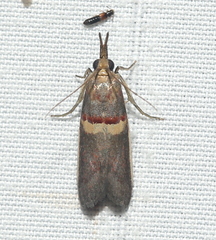 Etiella zinckenellae1peste0
- Outcome
- larval populatione0
- Direction
- reductionse0
Not reportedComparator
Organisms pictured · Representative pictures of the matched species, not figures from the paper.


Verbatim
e0“Cinnamon Oil, Lupine oil, petroleum ether extract from the Cinnamon plant and ethyl alcohol extract from Lupine plant (2%) showed maxima reductions in the larval population and Cinnamon Oil and Lupine oil (2%) after the first and second sprays during 2020 and 2021 summer seasons on cowpea green and dry pods, respectively.”
t0“Cowpea Crop”
e1“the Lima Bean Pod Borer, Etiella zinckenella (Treit.)”
Claim · model-written summary
Lupine oil reduced larval population on cowpea pods.
- Taxon
- Cowpea CropVigna unguiculatat0
- Treatment
- Lupine oile0
- Interactor
- Etiella zinckenellaEtiella zinckenellae1peste0
- Outcome
- larval populatione0
- Direction
- reductionse0
Not reportedComparator
Organisms pictured · Representative pictures of the matched species, not figures from the paper.
Verbatim
e0“Cinnamon Oil, Lupine oil, petroleum ether extract from the Cinnamon plant and ethyl alcohol extract from Lupine plant (2%) showed maxima reductions in the larval population and Cinnamon Oil and Lupine oil (2%) after the first and second sprays during 2020 and 2021 summer seasons on cowpea green and dry pods, respectively.”
t0“Cowpea Crop”
e1“the Lima Bean Pod Borer, Etiella zinckenella (Treit.)”
Claim · model-written summary
petroleum ether extract from the Cinnamon plant reduced larval population on cowpea pods.
- Taxon
- Cowpea CropVigna unguiculatat0
- Treatment
- petroleum ether extract from the Cinnamon plante0
- Interactor
- Etiella zinckenellaEtiella zinckenellae1peste0
- Outcome
- larval populatione0
- Direction
- reductionse0
Not reportedComparator
Organisms pictured · Representative pictures of the matched species, not figures from the paper.
Verbatim
e0“Cinnamon Oil, Lupine oil, petroleum ether extract from the Cinnamon plant and ethyl alcohol extract from Lupine plant (2%) showed maxima reductions in the larval population and Cinnamon Oil and Lupine oil (2%) after the first and second sprays during 2020 and 2021 summer seasons on cowpea green and dry pods, respectively.”
t0“Cowpea Crop”
e1“the Lima Bean Pod Borer, Etiella zinckenella (Treit.)”
Claim · model-written summary
ethyl alcohol extract from Lupine plant (2%) reduced larval population on cowpea pods.
- Taxon
- Cowpea CropVigna unguiculatat0
- Treatment
- ethyl alcohol extract from Lupine plant (2%)e0
- Interactor
- Etiella zinckenellaEtiella zinckenellae1peste0
- Outcome
- larval populatione0
- Direction
- reductionse0
Not reportedComparator
Organisms pictured · Representative pictures of the matched species, not figures from the paper.
Verbatim
e0“Cinnamon Oil, Lupine oil, petroleum ether extract from the Cinnamon plant and ethyl alcohol extract from Lupine plant (2%) showed maxima reductions in the larval population and Cinnamon Oil and Lupine oil (2%) after the first and second sprays during 2020 and 2021 summer seasons on cowpea green and dry pods, respectively.”
t0“Cowpea Crop”
e1“the Lima Bean Pod Borer, Etiella zinckenella (Treit.)”
Claim · model-written summary
Cinnamon oil at 2% yielded the highest total protein in cowpea grains in the two seasons.
- Taxon
- Cowpea CropVigna unguiculatat0
- Treatment
- Ethyl alcohol extract from the Cinnamon plant (2%)e0
- Outcome
- total protein in cowpea grainse0
- Direction
- higheste0
- Value
- 15.51 and 16.75%e0
Not reportedComparator
Organisms pictured · Representative pictures of the matched species, not figures from the paper.
Verbatim
e0“Ethyl alcohol extract from the Cinnamon plant (2%) recorded the highest percentage of total protein in cowpea grains (15.51 and 16.75% during the two summer seasons, respectively).”
t0“Cowpea Crop”
Claim · model-written summary
Cinnamon oil at 2% gave the highest green and dry pod yield in 2020.
- Taxon
- Cowpea CropVigna unguiculatat0
- Treatment
- Cinnamon oil (2%)e0
- Outcome
- yield (green and dry pods)e0
- Direction
- higheste0
- Value
- 1775 and 1000 kg/fed.e0
- Setting
- 2020e0
Not reportedComparator
Organisms pictured · Representative pictures of the matched species, not figures from the paper.
Verbatim
e0“the highest yield (green and dry pods) was obtained after treatment by Cinnamon oil (2%) (1775 and 1000 kg/fed.) and (1880 and 1100 kg/fed.) in 2020 and 2021 summer seasons, respectively.”
t0“Cowpea Crop”
Claim · model-written summary
Cinnamon oil at 2% gave the highest green and dry pod yield in 2021.
- Taxon
- Cowpea CropVigna unguiculatat0
- Treatment
- Cinnamon oil (2%)e0
- Outcome
- yield (green and dry pods)e0
- Direction
- higheste0
- Value
- 1880 and 1100 kg/fed.e0
- Setting
- 2021e0
Not reportedComparator
Organisms pictured · Representative pictures of the matched species, not figures from the paper.
Verbatim
e0“the highest yield (green and dry pods) was obtained after treatment by Cinnamon oil (2%) (1775 and 1000 kg/fed.) and (1880 and 1100 kg/fed.) in 2020 and 2021 summer seasons, respectively.”
t0“Cowpea Crop”
Claim · model-written summary
Cinnamon Oil provided high storage pest protection.
- Taxon
- Cowpea CropVigna unguiculatat0
- Treatment
- Cinnamon Oile0
- Interactor
- pestse0pest
- Outcome
- protection from pests during the storagee0
- Direction
- higheste0
Not reportedComparator
Organisms pictured · Representative pictures of the matched species, not figures from the paper.
Verbatim
e0“Cinnamon Oil and ethyl alcohol extract from Cinnamon plant (2%) used in the field resulted in the highest protection from pests during the storage.”
t0“Cowpea Crop”
Claim · model-written summary
ethyl alcohol extract from Cinnamon plant (2%) provided high storage pest protection.
- Taxon
- Cowpea CropVigna unguiculatat0
- Treatment
- ethyl alcohol extract from Cinnamon plant (2%)e0
- Interactor
- pestse0pest
- Outcome
- protection from pests during the storagee0
- Direction
- higheste0
Not reportedComparator
Organisms pictured · Representative pictures of the matched species, not figures from the paper.
Verbatim
e0“Cinnamon Oil and ethyl alcohol extract from Cinnamon plant (2%) used in the field resulted in the highest protection from pests during the storage.”
t0“Cowpea Crop”
Claim · model-written summary
Cinnamon Oil reduced pest progeny by 99.16 in 2020.
- Taxon
- Cowpea CropVigna unguiculatat0
- Treatment
- Cinnamon Oile0
- Interactor
- Callosobruchus maculatus
 Callosobruchus maculatust1peste0
- Outcome
- progenye0
- Direction
- Reductione0
- Value
- 99.16e0
- Setting
- 2020e0
Not reportedComparator
Organisms pictured · Representative pictures of the matched species, not figures from the paper.

Verbatim
e0“Reduction in progeny was 99.16 and 97.97 for Cinnamon Oil and ethyl alcohol extract from Cinnamon plant (2%) in seasons 2020 and 2021, respectively.”
t0“Cowpea Crop”
t1“Callosobruchus maculatus”
Claim · model-written summary
ethyl alcohol extract from Cinnamon plant (2%) reduced pest progeny by 97.97 in 2021.
- Taxon
- Cowpea CropVigna unguiculatat0
- Treatment
- ethyl alcohol extract from Cinnamon plant (2%)e0
- Interactor
- Callosobruchus maculatusCallosobruchus maculatust1peste0
- Outcome
- progenye0
- Direction
- Reductione0
- Value
- 97.97e0
- Setting
- 2021e0
Not reportedComparator
Organisms pictured · Representative pictures of the matched species, not figures from the paper.
Verbatim
e0“Reduction in progeny was 99.16 and 97.97 for Cinnamon Oil and ethyl alcohol extract from Cinnamon plant (2%) in seasons 2020 and 2021, respectively.”
t0“Cowpea Crop”
t1“Callosobruchus maculatus”
The same questions in other papers
Cinnamomum verum · Callosobruchus maculatus · Vigna unguiculata (cowpea)Positive and negative results
1 paper in the same direction as this paper · 1 in the opposite direction
- negative
- positive
ethanol · pest · Vigna unguiculata (cowpea)Results agree
2 papers in the same direction as this paper
- positive
- positive
ethanol · Callosobruchus maculatus · Vigna unguiculata (cowpea)Results agree
4 papers in the same direction as this paper
- positive
- positive
- positive
1 paper more in this group
See all 5 papers →botanical · quality: protein · Vigna unguiculata (cowpea)Positive and negative results
3 papers in the same direction as this paper · 1 in the opposite direction
- negative
- positive
- positive
1 paper more in this group
See all 5 papers →botanical · pest · Vigna unguiculata (cowpea)Positive and negative results
122 papers in the same direction as this paper · 2 in the opposite direction · 1 reporting no difference from an alternative
- positive
- no effect
- no effect
122 papers more in this group
See all 126 papers →botanical · Callosobruchus maculatus · Vigna unguiculata (cowpea)Positive and negative results
157 papers in the same direction as this paper · 4 in the opposite direction · 1 reporting no difference from an alternative
- no effect
- no effect
- negative
159 papers more in this group
See all 163 papers →botanical · Etiella zinckenella · Vigna unguiculata (cowpea)Results agree
1 paper in the same direction as this paper
- positive
Claims are grouped by organism, treatment and what was measured or targeted. A paper counts as positive when any of its claims in the group is positive.