Abstract
Phosphorus (P) is an essential nutrient for plant growth and productivity. Due to soil fixation, however, phosphorus availability in soil is rarely sufficient to sustain high crop yields. The overuse of fertilizers to circumvent the limited bioavailability of phosphate (Pi) has led to a scenario of excessive soil P in agricultural soils. Whereas adaptive responses to Pi deficiency have been deeply studied, less is known about how plants adapt to Pi excess and how Pi excess might affect disease resistance. We show that high Pi fertilization, and subsequent Pi accumulation, enhances susceptibility to infection by the fungal pathogen Magnaporthe oryzae in rice. This fungus is the causal agent of the blast disease, one of the most damaging diseases of cultivated rice worldwide. Equally, MIR399f overexpression causes an increase in Pi content in rice leaves, which results in enhanced susceptibility to M. oryzae. During pathogen infection, a weaker activation of defence-related genes occurs in rice plants over-accumulating Pi in leaves, which is in agreement with the phenotype of blast susceptibility observed in these plants. These data support that Pi, when in excess, compromises defence mechanisms in rice while demonstrating that miR399 functions as a negative regulator of rice immunity. The two signalling pathways, Pi signalling and defence signalling, must operate in a coordinated manner in controlling disease resistance. This information provides a basis to understand the molecular mechanisms involved in immunity in rice plants under high Pi fertilization, an aspect that should be considered in management of the rice blast disease.
Abstract from the paper’s OpenAlex record, shown for indexing and research. Copyright remains with the authors or the publisher. Read at the source ↗
The text the model read, with the source record’s inline markup (italics, sub- and superscripts) rendered and its character entities decoded; quote offsets refer to the raw text.
Claims 6
Claim · model-written summary
High phosphate fertilization and accumulation increased rice susceptibility to Magnaporthe oryzae infection.
- Taxon
- rice
 Oryza sativae0
- Treatment
- high Pi fertilizatione0
- Interactor
- Magnaporthe oryzae
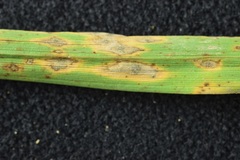 Pyricularia oryzaee0pathogen
- Outcome
- susceptibility to infection by the fungal pathogen Magnaporthe oryzaee0
- Direction
- enhancese0
Not reportedComparator
Organisms pictured · Representative pictures of the matched species, not figures from the paper.

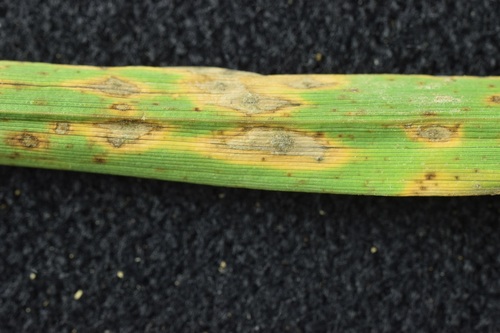
Verbatim
e0“high Pi fertilization, and subsequent Pi accumulation, enhances susceptibility to infection by the fungal pathogen Magnaporthe oryzae in rice”
Claim · model-written summary
MIR399f overexpression increased phosphate content in rice leaves.
- Taxon
- riceOryza sativae0
- Organ / stage
- leavese0
- Treatment
- MIR399f overexpressione0
- Gene
- MIR399fe0
- Outcome
- Pi contente0
- Direction
- increasee0
Not reportedComparator
Organisms pictured · Representative pictures of the matched species, not figures from the paper.
Verbatim
e0“MIR399f overexpression causes an increase in Pi content in rice leaves”
Claim · model-written summary
MIR399f overexpression enhanced rice susceptibility to M. oryzae.
- Taxon
- riceOryza sativae0
- Treatment
- MIR399f overexpressione0
- Interactor
- M. oryzaePyricularia oryzaee0pathogen
- Gene
- MIR399fe0
- Outcome
- susceptibility to M. oryzaee0
- Direction
- enhancede0
Not reportedComparator
Organisms pictured · Representative pictures of the matched species, not figures from the paper.
Verbatim
e0“MIR399f overexpression causes an increase in Pi content in rice leaves, which results in enhanced susceptibility to M. oryzae”
Claim · model-written summary
Rice with excess leaf phosphate showed weaker activation of defense-related genes during pathogen infection.
- Taxon
- riceOryza sativae0
- Organ / stage
- leavese0
- Treatment
- over-accumulating Pie0
- Outcome
- activation of defence-related genese0
- Direction
- weakere0
- Qualifier
- During pathogen infectione0
Organisms pictured · Representative pictures of the matched species, not figures from the paper.
Verbatim
e0“During pathogen infection, a weaker activation of defence-related genes occurs in rice plants over-accumulating Pi in leaves”
Claim · model-written summary
The authors infer that excess phosphate compromises rice defense mechanisms.
- Taxon
- riceOryza sativae0
- Compound
- Pie0
- Outcome
- defence mechanismse0
- Qualifier
- when in excesse0
Organisms pictured · Representative pictures of the matched species, not figures from the paper.
Verbatim
e0“Pi, when in excess, compromises defence mechanisms in rice”
Claim · model-written summary
The authors identify miR399 as a negative regulator of rice immunity.
- Taxon
- riceOryza sativae0
- Gene
- miR399e0
- Outcome
- rice immunitye0
- Direction
- negative regulatore0
Organisms pictured · Representative pictures of the matched species, not figures from the paper.
Verbatim
e0“miR399 functions as a negative regulator of rice immunity”
The same questions in other papers
fertilization · Pyricularia oryzae · Oryza sativa (rice)Positive and negative results
2 papers in the same direction as this paper · 2 in the opposite direction
- positive
- positive
- negative
1 paper more in this group
See all 5 papers →Claims are grouped by organism, treatment and what was measured or targeted. A paper counts as positive when any of its claims in the group is positive.