Abstract
In Australia, efforts are under way to revive the pigeonpea (Cajanus cajan (L.) Millsp.) industry, which has high export potential because of an increased demand in the international market. However, weeds are a major constraint to achieve high yield in pigeonpea. This study was designed to assess the effect of row arrangement and herbicide treatment on weed suppression and pigeonpea grain yield. Row arrangements included row spacing (narrow, 25 cm; wide, 50 cm) and paired rows (rows 25 cm apart within a pair, each pair separated from the next by 75 cm). Herbicide treatments were: untreated control; pre-emergent pendimethalin at 910 g a.i. ha–1; post-emergent imazapic at 84 g a.i. ha–1; and pre-emergent pendimethalin followed by post-emergent imazapic (rates as above). In the first year, Trianthema portulacastrum was the dominant weed, and infestation was 100% in the non-treated control plots. In the second year, other weeds (Setaria viridis, Eragrostis cilianensis and Chloris virgata) comprised 30% of the weed population. Averaged over row arrangements, grain yield varied from 2088 to 2689 kg ha–1 in 2017 and from 835 to 2145 kg ha–1 in 2018, and was lowest in the untreated control and highest in the plots treated with the sequential application of pendimethalin and imazapic. Averaged over years and herbicide treatments, yield was lower in paired rows (1850 kg ha–1) than in narrow (2225 kg ha–1) and wide (2165 kg ha–1) row spacings. In the first year, all herbicide treatments provided >50% control of T. portulacastrum in the narrow and wide row spacings and increased yield by >22% over the untreated control. In the second year, the single application of imazapic proved inferior for controlling weeds, resulting in a 21% reduction in grain yield compared with sequential application of pendimethalin and imazapic. In both years, grain yield was similar for the single application of pendimethalin and sequential application of pendimethalin and imazapic. Despite the complex weed flora in 2018, the single application of imazapic provided acceptable weed control only when the crop was planted at 25 cm row spacing. Our results suggest that the single application of pendimethalin was effective on T. portulacastrum. However, in a complex weed flora situation, the sequential application of pendimethalin and imazapic provided effective weed control and resulted in improved yield.
Abstract from the paper’s OpenAlex record, shown for indexing and research. Copyright remains with the authors or the publisher. Read at the source ↗
The text the model read, with the source record’s inline markup (italics, sub- and superscripts) rendered and its character entities decoded; quote offsets refer to the raw text.
Claims 17
Claim · model-written summary
Grain yield was lowest in the untreated control and highest with the sequential application of pendimethalin and imazapic.
- Taxon
- pigeonpea
 Cajanus cajane0
- Treatment
- sequential application of pendimethalin and imazapice1
- Outcome
- grain yielde1
- Direction
- higheste1
- Comparator
- untreated controle1
- Setting
- Australiae0
Organisms pictured · Representative pictures of the matched species, not figures from the paper.

Verbatim
e0“In Australia, efforts are under way to revive the pigeonpea (Cajanus cajan (L.) Millsp.) industry”
e1“grain yield varied from 2088 to 2689 kg ha–1 in 2017 and from 835 to 2145 kg ha–1 in 2018, and was lowest in the untreated control and highest in the plots treated with the sequential application of pendimethalin and imazapic”
Claim · model-written summary
Grain yield in 2017 varied from 2088 to 2689 kg ha–1 across row arrangements.
- Taxon
- pigeonpeaCajanus cajane0
- Outcome
- grain yielde1
- Value
- 2088 to 2689 kg ha–1e1
- Qualifier
- in 2017e1
- Setting
- Australiae0
Organisms pictured · Representative pictures of the matched species, not figures from the paper.
Verbatim
e0“In Australia, efforts are under way to revive the pigeonpea (Cajanus cajan (L.) Millsp.) industry”
e1“grain yield varied from 2088 to 2689 kg ha–1 in 2017 and from 835 to 2145 kg ha–1 in 2018”
Claim · model-written summary
Grain yield in 2018 varied from 835 to 2145 kg ha–1 across row arrangements.
- Taxon
- pigeonpeaCajanus cajane0
- Outcome
- grain yielde1
- Value
- 835 to 2145 kg ha–1e1
- Qualifier
- in 2018e1
- Setting
- Australiae0
Organisms pictured · Representative pictures of the matched species, not figures from the paper.
Verbatim
e0“In Australia, efforts are under way to revive the pigeonpea (Cajanus cajan (L.) Millsp.) industry”
e1“grain yield varied from 2088 to 2689 kg ha–1 in 2017 and from 835 to 2145 kg ha–1 in 2018”
Claim · model-written summary
Averaged over years and herbicide treatments, grain yield was lower in paired rows (1850 kg ha–1) than in narrow rows (2225 kg ha–1).
- Taxon
- pigeonpeaCajanus cajane0
- Treatment
- paired rowse2
- Outcome
- yielde2
- Direction
- lowere2
- Value
- 1850 kg ha–1e2
- Qualifier
- 2225 kg ha–1e2
- Comparator
- narrowe2
- Setting
- Australiae0
Organisms pictured · Representative pictures of the matched species, not figures from the paper.
Verbatim
e0“In Australia, efforts are under way to revive the pigeonpea (Cajanus cajan (L.) Millsp.) industry”
e2“yield was lower in paired rows (1850 kg ha–1) than in narrow (2225 kg ha–1) and wide (2165 kg ha–1) row spacings”
Claim · model-written summary
Averaged over years and herbicide treatments, grain yield was lower in paired rows (1850 kg ha–1) than in wide rows (2165 kg ha–1).
- Taxon
- pigeonpeaCajanus cajane0
- Treatment
- paired rowse2
- Outcome
- yielde2
- Direction
- lowere2
- Value
- 1850 kg ha–1e2
- Qualifier
- 2165 kg ha–1e2
- Comparator
- widee2
- Setting
- Australiae0
Organisms pictured · Representative pictures of the matched species, not figures from the paper.
Verbatim
e0“In Australia, efforts are under way to revive the pigeonpea (Cajanus cajan (L.) Millsp.) industry”
e2“yield was lower in paired rows (1850 kg ha–1) than in narrow (2225 kg ha–1) and wide (2165 kg ha–1) row spacings”
Claim · model-written summary
In the first year, all herbicide treatments provided more than 50% control of Trianthema portulacastrum in narrow and wide row spacings.
- Taxon
- pigeonpeaCajanus cajane0
- Treatment
- all herbicide treatmentse3
- Interactor
- T. portulacastrum
 Trianthema portulacastrume3weed
- Outcome
- control of T. portulacastrume3
- Direction
- increasee3
- Value
- >50%e3
- Qualifier
- in the narrow and wide row spacingse3
- Setting
- Australiae0
Not reportedComparator
Organisms pictured · Representative pictures of the matched species, not figures from the paper.

Verbatim
e0“In Australia, efforts are under way to revive the pigeonpea (Cajanus cajan (L.) Millsp.) industry”
e3“In the first year, all herbicide treatments provided >50% control of T. portulacastrum in the narrow and wide row spacings and increased yield by >22% over the untreated control”
Claim · model-written summary
In the first year, all herbicide treatments increased pigeonpea yield by more than 22% over the untreated control.
- Taxon
- pigeonpeaCajanus cajane0
- Treatment
- all herbicide treatmentse3
- Outcome
- yielde3
- Direction
- increasede3
- Value
- >22%e3
- Qualifier
- In the first yeare3
- Comparator
- untreated controle3
- Setting
- Australiae0
Organisms pictured · Representative pictures of the matched species, not figures from the paper.
Verbatim
e0“In Australia, efforts are under way to revive the pigeonpea (Cajanus cajan (L.) Millsp.) industry”
e3“In the first year, all herbicide treatments provided >50% control of T. portulacastrum in the narrow and wide row spacings and increased yield by >22% over the untreated control”
Claim · model-written summary
In the second year, the single application of imazapic was inferior for controlling weeds.
- Taxon
- pigeonpeaCajanus cajane0
- Treatment
- single application of imazapice4
- Interactor
- weedse4weed
- Outcome
- controlling weedse4
- Direction
- inferiore4
- Setting
- Australiae0
Not reportedComparator
Organisms pictured · Representative pictures of the matched species, not figures from the paper.
Verbatim
e0“In Australia, efforts are under way to revive the pigeonpea (Cajanus cajan (L.) Millsp.) industry”
e4“In the second year, the single application of imazapic proved inferior for controlling weeds, resulting in a 21% reduction in grain yield compared with sequential application of pendimethalin and imazapic”
Claim · model-written summary
In the second year, the single application of imazapic reduced grain yield by 21% compared with the sequential application of pendimethalin and imazapic.
- Taxon
- pigeonpeaCajanus cajane0
- Treatment
- single application of imazapice4
- Outcome
- grain yielde4
- Direction
- reductione4
- Value
- 21%e4
- Comparator
- sequential application of pendimethalin and imazapice4
- Setting
- Australiae0
Organisms pictured · Representative pictures of the matched species, not figures from the paper.
Verbatim
e0“In Australia, efforts are under way to revive the pigeonpea (Cajanus cajan (L.) Millsp.) industry”
e4“In the second year, the single application of imazapic proved inferior for controlling weeds, resulting in a 21% reduction in grain yield compared with sequential application of pendimethalin and imazapic”
Claim · model-written summary
In both years, grain yield was similar for the single application of pendimethalin and the sequential application of pendimethalin and imazapic.
- Taxon
- pigeonpeaCajanus cajane0
- Treatment
- single application of pendimethaline5
- Outcome
- grain yielde5
- Direction
- similare5
- Qualifier
- In both yearse5
- Comparator
- sequential application of pendimethalin and imazapice5
- Setting
- Australiae0
Organisms pictured · Representative pictures of the matched species, not figures from the paper.
Verbatim
e0“In Australia, efforts are under way to revive the pigeonpea (Cajanus cajan (L.) Millsp.) industry”
e5“In both years, grain yield was similar for the single application of pendimethalin and sequential application of pendimethalin and imazapic”
Claim · model-written summary
The single application of imazapic gave acceptable weed control only when the crop was planted at 25 cm row spacing, despite the complex weed flora in 2018.
- Taxon
- pigeonpeaCajanus cajane0
- Treatment
- single application of imazapice6
- Outcome
- weed controle6
- Direction
- increaseinferrede6
- Qualifier
- only when the crop was planted at 25 cm row spacinge6
- Setting
- Australiae0
Not reportedComparator
Organisms pictured · Representative pictures of the matched species, not figures from the paper.
Verbatim
e0“In Australia, efforts are under way to revive the pigeonpea (Cajanus cajan (L.) Millsp.) industry”
e6“Despite the complex weed flora in 2018, the single application of imazapic provided acceptable weed control only when the crop was planted at 25 cm row spacing”
Claim · model-written summary
The single application of pendimethalin was effective on Trianthema portulacastrum.
- Taxon
- pigeonpeaCajanus cajane0
- Treatment
- single application of pendimethaline7
- Interactor
- T. portulacastrumTrianthema portulacastrume7weed
- Outcome
- effective on T. portulacastrume7
- Direction
- increaseinferrede7
- Setting
- Australiae0
Not reportedComparator
Organisms pictured · Representative pictures of the matched species, not figures from the paper.
Verbatim
e0“In Australia, efforts are under way to revive the pigeonpea (Cajanus cajan (L.) Millsp.) industry”
e7“the single application of pendimethalin was effective on T. portulacastrum”
Claim · model-written summary
In a complex weed flora, the sequential application of pendimethalin and imazapic provided effective weed control.
- Taxon
- pigeonpeaCajanus cajane0
- Treatment
- sequential application of pendimethalin and imazapice2
- Outcome
- weed controle2
- Direction
- increaseinferrede2
- Qualifier
- in a complex weed flora situatione2
- Setting
- Australiae0
Not reportedComparator
Organisms pictured · Representative pictures of the matched species, not figures from the paper.
Verbatim
e0“In Australia, efforts are under way to revive the pigeonpea (Cajanus cajan (L.) Millsp.) industry”
e2“However, in a complex weed flora situation, the sequential application of pendimethalin and imazapic provided effective weed control and resulted in improved yield”
Claim · model-written summary
In a complex weed flora, the sequential application of pendimethalin and imazapic resulted in improved yield.
- Taxon
- pigeonpeaCajanus cajane0
- Treatment
- sequential application of pendimethalin and imazapice2
- Outcome
- yielde2
- Direction
- improvede2
- Qualifier
- in a complex weed flora situatione2
- Setting
- Australiae0
Not reportedComparator
Organisms pictured · Representative pictures of the matched species, not figures from the paper.
Verbatim
e0“In Australia, efforts are under way to revive the pigeonpea (Cajanus cajan (L.) Millsp.) industry”
e2“However, in a complex weed flora situation, the sequential application of pendimethalin and imazapic provided effective weed control and resulted in improved yield”
Claim · model-written summary
In the first year, Trianthema portulacastrum was the dominant weed.
- Taxon
- pigeonpeaCajanus cajane0
- Interactor
- Trianthema portulacastrumTrianthema portulacastrume2weed
- Outcome
- dominant weede2
- Qualifier
- In the first yeare2
- Setting
- Australiae0
Organisms pictured · Representative pictures of the matched species, not figures from the paper.
Verbatim
e0“In Australia, efforts are under way to revive the pigeonpea (Cajanus cajan (L.) Millsp.) industry”
e2“In the first year, Trianthema portulacastrum was the dominant weed, and infestation was 100% in the non-treated control plots”
Claim · model-written summary
In the first year, Trianthema portulacastrum infestation was 100% in the non-treated control plots.
- Taxon
- pigeonpeaCajanus cajane0
- Interactor
- Trianthema portulacastrumTrianthema portulacastrume2weed
- Outcome
- infestatione2
- Value
- 100%e2
- Qualifier
- non-treated control plotse2
- Setting
- Australiae0
Organisms pictured · Representative pictures of the matched species, not figures from the paper.
Verbatim
e0“In Australia, efforts are under way to revive the pigeonpea (Cajanus cajan (L.) Millsp.) industry”
e2“In the first year, Trianthema portulacastrum was the dominant weed, and infestation was 100% in the non-treated control plots”
Claim · model-written summary
In the second year, other weeds comprised 30% of the weed population, with Setaria viridis and Eragrostis cilianensis as the main species.
- Taxon
- pigeonpeaCajanus cajane0
- Interactor
- Setaria viridis
 Setaria viridise2weed
- Second interactor
- Eragrostis cilianensis
 Eragrostis cilianensise2weed
- Outcome
- weed populatione2
- Value
- 30%e2
- Qualifier
- Chloris virgatae2
- Setting
- Australiae0
Organisms pictured · Representative pictures of the matched species, not figures from the paper.

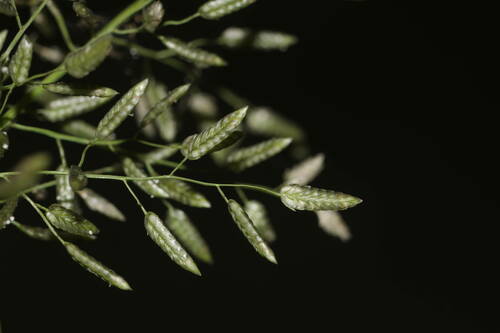
Verbatim
e0“In Australia, efforts are under way to revive the pigeonpea (Cajanus cajan (L.) Millsp.) industry”
e2“In the second year, other weeds (Setaria viridis, Eragrostis cilianensis and Chloris virgata) comprised 30% of the weed population”
The same questions in other papers
pendimethalin · yield · Cajanus cajan (pigeon pea)Positive and negative results
17 papers in the same direction as this paper · 1 in the opposite direction · 2 reporting no difference from an alternative
- positive
- no effect
- no effect
17 papers more in this group
See all 21 papers →imazapic · yield · Cajanus cajan (pigeon pea)Results agree
1 paper in the same direction as this paper
- positive
pendimethalin · weed · Cajanus cajan (pigeon pea)Results agree
20 papers in the same direction as this paper
- positive
- positive
- positive
17 papers more in this group
See all 21 papers →herbicide · yield · Cajanus cajan (pigeon pea)Positive and negative results
27 papers in the same direction as this paper · 2 in the opposite direction
- no effect
- no effect
- positive
26 papers more in this group
See all 30 papers →herbicide · Trianthema portulacastrum · Cajanus cajan (pigeon pea)Results agree
1 paper in the same direction as this paper
- positive
Claims are grouped by organism, treatment and what was measured or targeted. A paper counts as positive when any of its claims in the group is positive.