Abstract
Cadmium (Cd) pollution is becoming increasingly prevalent, posing a global environmental hazard due to its negative effects on plants growth and human health. Phytoremediation is a green technology that involves uptake of Cd from the soil by a combination of plants and associated microbes. The objective of this study was to investigate the role of Aspergillus aculeatus in perennial ryegrass Cd tolerance. This fungus produced indole-3-acetic acid, siderophores, and 1-aminocyclopropane-1-carboxylate deaminase. Physiological traits including growth rate, turf quality and chlorophyll content were measured to evaluate the physiological responses of perennial ryegrass to Cd stress. These physiological traits were improved after inoculated with A. aculeatus. Inoculation of A. aculeatus actively reduced DTPA-Cd concentration in the soil and Cd translocation to plant shoots. Chlorophyll a fluorescence transient and the C/N ratio in shoots were elevated by A. aculeatus, which implied that the fungus could protect the photosystem II against Cd stress and increase the photosynthetic efficiency. These results suggested that A. aculeatus is beneficial in improving Cd tolerance of perennial ryegrass and reducing Cd-induced injuries, thus, it has promising potential for application of phytostabilization in Cd contaminated soil.
Abstract from the paper’s OpenAlex record; open copy licensed cc-by. Read at the source ↗
The text the model read, with the source record’s inline markup (italics, sub- and superscripts) rendered and its character entities decoded; quote offsets refer to the raw text.
Claims 4
Claim · model-written summary
The fungus produced indole-3-acetic acid, siderophores and ACC deaminase.
- Taxon
- Perennial Ryegrass
 Lolium perennet0
- Outcome
- fungus produced indole-3-acetic acid, siderophores, and 1-aminocyclopropane-1-carboxylate deaminasee0
Organisms pictured · Representative pictures of the matched species, not figures from the paper.

Verbatim
t0“Perennial Ryegrass”
e0“This fungus produced indole-3-acetic acid, siderophores, and 1-aminocyclopropane-1-carboxylate deaminase.”
Claim · model-written summary
Inoculation improved growth rate, turf quality and chlorophyll content under cadmium stress.
- Taxon
- perennial ryegrassLolium perennee0
- Treatment
- inoculated with A. aculeatuse0
- Interactor
- A. aculeatus
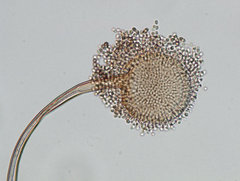 Aspergillus aculeatuse0symbiont
- Outcome
- growth rate, turf quality and chlorophyll contente0
- Direction
- improvede0
Not reportedComparator
Organisms pictured · Representative pictures of the matched species, not figures from the paper.

Verbatim
t0“Perennial Ryegrass”
e0“Physiological traits including growth rate, turf quality and chlorophyll content were measured to evaluate the physiological responses of perennial ryegrass to Cd stress. These physiological traits were improved after inoculated with A. aculeatus.”
Claim · model-written summary
Inoculation reduced DTPA-Cd concentration in soil and cadmium translocation to shoots.
- Taxon
- Perennial RyegrassLolium perennet0
- Treatment
- Inoculation of A. aculeatuse0
- Interactor
- A. aculeatusAspergillus aculeatuse0symbiont
- Outcome
- DTPA-Cd concentration in the soil and Cd translocation to plant shootse0
- Direction
- reducede0
Not reportedComparator
Organisms pictured · Representative pictures of the matched species, not figures from the paper.
Verbatim
t0“Perennial Ryegrass”
e0“Inoculation of A. aculeatus actively reduced DTPA-Cd concentration in the soil and Cd translocation to plant shoots.”
Claim · model-written summary
The fungus raised chlorophyll fluorescence and the shoot carbon to nitrogen ratio.
- Taxon
- Perennial RyegrassLolium perennet0
- Treatment
- A. aculeatuse0
- Interactor
- A. aculeatusAspergillus aculeatuse0symbiont
- Outcome
- Chlorophyll a fluorescence transient and the C/N ratio in shootse0
- Direction
- elevatede0
Not reportedComparator
Organisms pictured · Representative pictures of the matched species, not figures from the paper.
Verbatim
t0“Perennial Ryegrass”
e0“Chlorophyll a fluorescence transient and the C/N ratio in shoots were elevated by A. aculeatus”
The same questions in other papers
inoculation · physiology: pigments · Lolium perenne (perennial ryegrass)Positive and negative results
4 papers in the same direction as this paper · 1 in the opposite direction
- negative
- positive
- positive
2 papers more in this group
See all 6 papers →inoculation · nutrient: content · Lolium perenne (perennial ryegrass)Results agree
10 papers in the same direction as this paper
- positive
- positive
- positive
7 papers more in this group
See all 11 papers →Claims are grouped by organism, treatment and what was measured or targeted. A paper counts as positive when any of its claims in the group is positive.