Abstract
Sensitivity to soil salinity during beet seed germination is among the main tackles for plant deployment in fields. To study this, a research was conducted in greenhouse in a factorial experiment based on randomized complete blocks design with three replications. The first factor included stress levels and the second factor included genotypes. To apply salinity stress sodium chloride 16 dS/m was used. Seeds were planted in plastic pots in greenhouse conditions and plants irrigation was done by Hoagland nutrient solution. The proline and chlorophyll of shoots were measured by the end of growth stage. Results suggested that genotype No. 4 with a mean of 19.25 had the highest rate of chlorophyll and genotype No. 1 with mean of 13.25 had the lowest chlorophyll rate. Also, genotype No. 3 with a mean of 5.86 had the highest proline rate. Results indicated that salinity stress application could decrease chlorophyll rate while it increases proline rate. Decrease in plant chlorophyll decreases the photosynthetic activity. Increase in proline along with increase in salinity level specifies the osmotic balance maintenance in low water potential. Results generally showed that increase in proline production as an osmotic regulatory mechanism in high salinity levels which decreases the seedling growth.
Abstract from the paper’s OpenAlex record, shown for indexing and research. Copyright remains with the authors or the publisher. Read at the source ↗
The text the model read, with the source record’s inline markup (italics, sub- and superscripts) rendered and its character entities decoded; quote offsets refer to the raw text.
Claims 6
Claim · model-written summary
Beet genotype No. 4 had the highest chlorophyll rate (19.25) under greenhouse salinity
- Taxon
- beet
 Beta vulgarise1
- Material
- genotype No. 4e2
- Outcome
- rate of chlorophylle2
- Direction
- higheste2
- Value
- 19.25e2
- Setting
- greenhouse conditionse0
Organisms pictured · Representative pictures of the matched species, not figures from the paper.
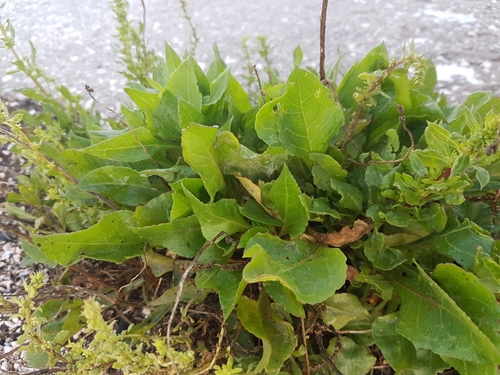
Verbatim
e0“Seeds were planted in plastic pots in greenhouse conditions”
e1“Sensitivity to soil salinity during beet seed germination”
e2“genotype No. 4 with a mean of 19.25 had the highest rate of chlorophyll”
Claim · model-written summary
Beet genotype No. 1 had the lowest chlorophyll rate (13.25)
- Taxon
- beetBeta vulgarise1
- Material
- genotype No. 1e3
- Outcome
- chlorophyll ratee3
- Direction
- loweste3
- Value
- 13.25e3
Organisms pictured · Representative pictures of the matched species, not figures from the paper.
Verbatim
e1“Sensitivity to soil salinity during beet seed germination”
e3“genotype No. 1 with mean of 13.25 had the lowest chlorophyll rate”
Claim · model-written summary
Beet genotype No. 3 had the highest proline rate (5.86)
Organisms pictured · Representative pictures of the matched species, not figures from the paper.
Verbatim
e1“Sensitivity to soil salinity during beet seed germination”
e4“genotype No. 3 with a mean of 5.86 had the highest proline rate”
Claim · model-written summary
Salinity stress decreased chlorophyll rate in beet
- Taxon
- beetBeta vulgarise1
- Treatment
- salinity stress applicatione5
- Outcome
- chlorophyll ratee5
- Direction
- decreasee5
Not reportedComparator
Organisms pictured · Representative pictures of the matched species, not figures from the paper.
Verbatim
e1“Sensitivity to soil salinity during beet seed germination”
e5“salinity stress application could decrease chlorophyll rate while it increases proline rate”
Claim · model-written summary
Salinity stress increased proline rate in beet
- Taxon
- beetBeta vulgarise1
- Treatment
- salinity stress applicatione5
- Outcome
- proline ratee5
- Direction
- increasese5
Not reportedComparator
Organisms pictured · Representative pictures of the matched species, not figures from the paper.
Verbatim
e1“Sensitivity to soil salinity during beet seed germination”
e5“salinity stress application could decrease chlorophyll rate while it increases proline rate”
Claim · model-written summary
Increased proline production under high salinity is an osmotic regulatory mechanism that decreases beet seedling growth
- Taxon
- beetBeta vulgarise1
- Treatment
- high salinity levelse6
- Compound
- prolinee6
- Outcome
- seedling growthe6
- Qualifier
- osmotic regulatory mechanisme6
Organisms pictured · Representative pictures of the matched species, not figures from the paper.
Verbatim
e1“Sensitivity to soil salinity during beet seed germination”
e6“increase in proline production as an osmotic regulatory mechanism in high salinity levels which decreases the seedling growth”
The same questions in other papers
salinity · physiology: pigments · Beta vulgaris (beet)Results differ
4 papers in the same direction as this paper · 1 in the opposite direction
- positive
- no effect
- negative
2 papers more in this group
See all 6 papers →Claims are grouped by organism, treatment and what was measured or targeted. A paper counts as positive when any of its claims in the group is positive.