Abstract
Apart from their biocontrol potential, Trichoderma rhizosphere-competent strains stimulate plants growth via several direct mechanisms that affect various growth parameters. In this study, effect of five indigenous isolates (T. harzianum T 969, T. harzianum T 447, T. hamatum T 614, Trichoderma sp. isolate T and Gliocladium virens G525.) on wheat (variety Moghan 3) seed germination, seedling vigor and plant growth was examined through seeds treatment by the conidia and culture filtrate of the isolates. In the field experiments various growth parameters including rootlet and shoot length, stem height and weight, root length and weight, total leaf area, head and tiller number and 1000 grain weight as well as the plant total chlorophyll content and stomata conductance response were evaluated. In overall, seed germination rate was increased. The highest seed germination rate (95.8%) was observed for T. harzianum T969 non-sterilized cultural filtrate treatment and after 96 hours. The isolate G. virens G525 spore treatment decreased the rate by 54.5%. Although all isolates colonized on rootlets but no significant effect on the seedlings growth was observed. Isolate T. hamatum T614 caused necrotic reaction on rootlets, revealing its parasitic rather than symbiotic activity. In the field experiments, the isolates had significant effect on parameters such as stomata conductance, 1000 grain weight, ear fresh and dry weights, ear length and stem and root dry weight but they showed no significant effect on other evaluated parameters. Some isolates improved the affected parameters and some had negative effects which are discussed.
Abstract from the paper’s OpenAlex record, shown for indexing and research. Copyright remains with the authors or the publisher. Read at the source ↗
The text the model read, with the source record’s inline markup (italics, sub- and superscripts) rendered and its character entities decoded; quote offsets refer to the raw text.
Claims 11
Claim · model-written summary
Seed treatment with Trichoderma isolates increased wheat seed germination rate.
- Taxon
- wheat
 Triticum aestivumt0
- Material
- variety Moghan 3e0
- Treatment
- seeds treatment by the conidia and culture filtrate of the isolatese0
- Interactor
- Trichoderma isolatest0symbiont
- Outcome
- seed germination ratee1
- Direction
- increasede1
Not reportedComparator
Organisms pictured · Representative pictures of the matched species, not figures from the paper.

Verbatim
t0“indigenous Trichoderma isolates on wheat seed germination, seedling growth and yield”
e0“wheat (variety Moghan 3) seed germination, seedling vigor and plant growth was examined through seeds treatment by the conidia and culture filtrate of the isolates”
e1“In overall, seed germination rate was increased”
Claim · model-written summary
T. harzianum T969 non-sterilized culture filtrate gave the highest wheat seed germination rate (95.8%), after 96 hours.
- Taxon
- wheatTriticum aestivumt0
- Treatment
- T. harzianum T969 non-sterilized cultural filtrate treatmente2
- Interactor
- T. harzianum T969
 Trichoderma harzianume2symbiont
- Outcome
- seed germination ratee2
- Direction
- higheste2
- Value
- 95.8%e2
- Qualifier
- after 96 hourse2
Not reportedComparator
Organisms pictured · Representative pictures of the matched species, not figures from the paper.

Verbatim
t0“indigenous Trichoderma isolates on wheat seed germination, seedling growth and yield”
e2“The highest seed germination rate (95.8%) was observed for T. harzianum T969 non-sterilized cultural filtrate treatment and after 96 hours”
Claim · model-written summary
G. virens G525 spore treatment decreased the wheat germination rate by 54.5%.
- Taxon
- wheatTriticum aestivumt0
- Treatment
- G. virens G525 spore treatmente3
- Interactor
- G. virens G525Trichoderma virense3symbiont
- Outcome
- ratee3
- Direction
- decreasede3
- Value
- 54.5%e3
Not reportedComparator
Organisms pictured · Representative pictures of the matched species, not figures from the paper.
Verbatim
t0“indigenous Trichoderma isolates on wheat seed germination, seedling growth and yield”
e3“The isolate G. virens G525 spore treatment decreased the rate by 54.5%”
Claim · model-written summary
All isolates colonized wheat rootlets.
- Taxon
- wheatTriticum aestivumt0
- Organ / stage
- rootletse4
- Interactor
- isolatese4symbiont
- Outcome
- colonized on rootletse4
Organisms pictured · Representative pictures of the matched species, not figures from the paper.
Verbatim
t0“indigenous Trichoderma isolates on wheat seed germination, seedling growth and yield”
e4“Although all isolates colonized on rootlets but no significant effect on the seedlings growth was observed”
Claim · model-written summary
Trichoderma isolates had no significant effect on wheat seedling growth.
- Taxon
- wheatTriticum aestivumt0
- Treatment
- isolatese4
- Outcome
- seedlings growthe4
- Direction
- no significant effecte4
Not reportedComparator
Organisms pictured · Representative pictures of the matched species, not figures from the paper.
Verbatim
t0“indigenous Trichoderma isolates on wheat seed germination, seedling growth and yield”
e4“Although all isolates colonized on rootlets but no significant effect on the seedlings growth was observed”
Claim · model-written summary
Isolate T. hamatum T614 caused necrotic reaction on wheat rootlets, indicating a parasitic rather than symbiotic activity.
- Taxon
- wheatTriticum aestivumt0
- Organ / stage
- rootletse5
- Interactor
- T. hamatum T614
 Trichoderma hamatume5parasite
- Outcome
- necrotic reaction on rootletse5
- Qualifier
- parasitic rather than symbiotic activitye5
Organisms pictured · Representative pictures of the matched species, not figures from the paper.
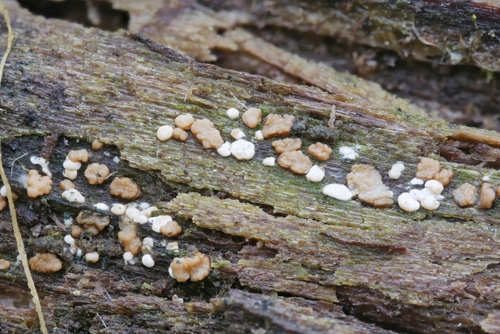
Verbatim
t0“indigenous Trichoderma isolates on wheat seed germination, seedling growth and yield”
e5“Isolate T. hamatum T614 caused necrotic reaction on rootlets, revealing its parasitic rather than symbiotic activity”
Claim · model-written summary
In field experiments, the isolates significantly affected wheat stomata conductance and 1000 grain weight.
- Taxon
- wheatTriticum aestivumt0
- Treatment
- isolatese6
- Outcome
- stomata conductance, 1000 grain weighte6
- Setting
- field experimentse6
Not reportedComparatorDirection
Organisms pictured · Representative pictures of the matched species, not figures from the paper.
Verbatim
t0“indigenous Trichoderma isolates on wheat seed germination, seedling growth and yield”
e6“In the field experiments, the isolates had significant effect on parameters such as stomata conductance, 1000 grain weight, ear fresh and dry weights, ear length and stem and root dry weight but they showed no significant effect on other evaluated parameters”
Claim · model-written summary
In field experiments, the isolates significantly affected wheat ear fresh and dry weights and ear length.
- Taxon
- wheatTriticum aestivumt0
- Treatment
- isolatese6
- Outcome
- ear fresh and dry weights, ear lengthe6
- Setting
- field experimentse6
Not reportedComparatorDirection
Organisms pictured · Representative pictures of the matched species, not figures from the paper.
Verbatim
t0“indigenous Trichoderma isolates on wheat seed germination, seedling growth and yield”
e6“In the field experiments, the isolates had significant effect on parameters such as stomata conductance, 1000 grain weight, ear fresh and dry weights, ear length and stem and root dry weight but they showed no significant effect on other evaluated parameters”
Claim · model-written summary
In field experiments, the isolates significantly affected wheat stem and root dry weight.
- Taxon
- wheatTriticum aestivumt0
- Treatment
- isolatese6
- Outcome
- stem and root dry weighte6
- Setting
- field experimentse6
Not reportedComparatorDirection
Organisms pictured · Representative pictures of the matched species, not figures from the paper.
Verbatim
t0“indigenous Trichoderma isolates on wheat seed germination, seedling growth and yield”
e6“In the field experiments, the isolates had significant effect on parameters such as stomata conductance, 1000 grain weight, ear fresh and dry weights, ear length and stem and root dry weight but they showed no significant effect on other evaluated parameters”
Claim · model-written summary
Some Trichoderma isolates improved the affected field parameters.
- Taxon
- wheatTriticum aestivumt0
- Treatment
- Some isolatese7
- Outcome
- affected parameterse7
- Direction
- improvede7
Not reportedComparator
Organisms pictured · Representative pictures of the matched species, not figures from the paper.
Verbatim
t0“indigenous Trichoderma isolates on wheat seed germination, seedling growth and yield”
e7“Some isolates improved the affected parameters and some had negative effects”
Claim · model-written summary
Some Trichoderma isolates had negative effects on the affected field parameters.
- Taxon
- wheatTriticum aestivumt0
- Treatment
- Some isolatese7
- Outcome
- affected parameterse7
- Direction
- negative effectse7
Not reportedComparator
Organisms pictured · Representative pictures of the matched species, not figures from the paper.
Verbatim
t0“indigenous Trichoderma isolates on wheat seed germination, seedling growth and yield”
e7“Some isolates improved the affected parameters and some had negative effects”
The same questions in other papers
Trichoderma harzianum · growth · Triticum aestivum (wheat)Positive and negative results
10 papers in the same direction as this paper · 3 in the opposite direction
- negative
- negative
- negative
10 papers more in this group
See all 14 papers →pathogen product · growth · Triticum aestivum (wheat)Positive and negative results
9 papers in the same direction as this paper · 12 in the opposite direction
- negative
- no effect
- negative
18 papers more in this group
See all 22 papers →Claims are grouped by organism, treatment and what was measured or targeted. A paper counts as positive when any of its claims in the group is positive.