Abstract
The effects of water deficit stress and recovery on growth, photosynthesis, physiological and biochemical parameters were investigated in the cultivated Beta vulgaris and in two Tunisian provenances (Soliman and Enfidha) of its wild relative B. macrocarpa. Seedlings were cultivated for 4 weeks under optimal or limiting water supply (respectively, 100% and 25% of field capacity, FC). After 2 weeks of treatment, a lot of stressed plants were rehydrated to 100% FC. In the Control, B. vulgaris was more productive than B. macrocarpa, whereas Enfidha provenance showed the highest biomass production (1.6- and 3-fold compared with B. vulgaris and Soliman, respectively), under water deficit stress. A partial re-establishment of growth occurred in both species upon recovery at 100% FC. The sensitivity of B. vulgaris and Soliman provenance to drought was associated with the disturbance of leaf water status and the sharp decrease in net CO2 assimilation (–66% and –82% as compared with the Control, respectively). On the contrary, the better behaviour of Enfidha provenance was related to its better photosynthetic capacity and leaf relative water content, along with a higher accumulation of amino acids (proline, glycine, and glutamine) implied in the osmotic adjustment. Leaf hexose concentration increased significantly under drought stress in both species whereas leaf sucrose concentration declined only in drought-stressed B. vulgaris and Soliman provenance. Leaf glutamate dehydrogenase activity increased under water deficit in both species despite to a higher extent in B. vulgaris. As glutamate dehydrogenase is implied in catabolism of glutamate to oxoglutarate, it might contribute to provide stressed plants with carbon skeletons. Enfidha provenance of the spontaneous species B. macrocarpa could be used in the marginal arid ecosystems in order to limit the deficit in fodder and to improve the pastoral value of these regions. In addition, this species could serve as a source of genes for genetic improvement to water deficit stress.
Abstract from the paper’s OpenAlex record, shown for indexing and research. Copyright remains with the authors or the publisher. Read at the source ↗
The text the model read, with the source record’s inline markup (italics, sub- and superscripts) rendered and its character entities decoded; quote offsets refer to the raw text.
Claims 14
Claim · model-written summary
Control B. vulgaris was more productive than B. macrocarpa.
- Taxon
- B. vulgaris
 Beta vulgarise0
- Outcome
- productivee0
- Direction
- moree0
- Comparator
- B. macrocarpae0
Organisms pictured · Representative pictures of the matched species, not figures from the paper.
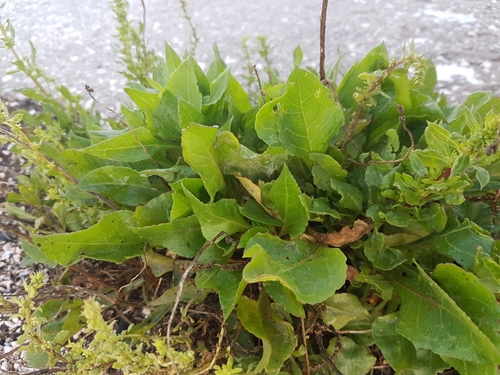
Verbatim
e0“In the Control, B. vulgaris was more productive than B. macrocarpa”
Claim · model-written summary
Under water deficit, Enfidha had 1.6-fold biomass relative to B. vulgaris.
- Taxon
- B. macrocarpa
 Beta macrocarpae0
- Material
- Enfidhae1
- Treatment
- water deficit stresse1
- Outcome
- biomass productione1
- Direction
- higheste1
- Value
- 1.6-e1
- Comparator
- B. vulgarise1
Organisms pictured · Representative pictures of the matched species, not figures from the paper.

Verbatim
e0“its wild relative B. macrocarpa”
e1“Enfidha provenance showed the highest biomass production (1.6- and 3-fold compared with B. vulgaris and Soliman, respectively), under water deficit stress”
Claim · model-written summary
Under water deficit, Enfidha had threefold biomass relative to Soliman.
- Taxon
- B. macrocarpaBeta macrocarpae0
- Material
- Enfidhae1
- Treatment
- water deficit stresse1
- Outcome
- biomass productione1
- Direction
- higheste1
- Value
- 3-folde1
- Comparator
- Solimane1
Organisms pictured · Representative pictures of the matched species, not figures from the paper.
Verbatim
e0“its wild relative B. macrocarpa”
e1“Enfidha provenance showed the highest biomass production (1.6- and 3-fold compared with B. vulgaris and Soliman, respectively), under water deficit stress”
Claim · model-written summary
Both species partly restored growth after rehydration to 100% field capacity.
- Taxon
- Beta vulgarisBeta vulgarise0
- Treatment
- recovery at 100% FCe1
- Outcome
- growthe1
- Direction
- re-establishmente1
Not reportedComparator
Organisms pictured · Representative pictures of the matched species, not figures from the paper.
Verbatim
e0“The effects of water deficit stress and recovery on growth, photosynthesis, physiological and biochemical parameters were investigated in the cultivated Beta vulgaris and in two Tunisian provenances (Soliman and Enfidha) of its wild relative B. macrocarpa”
e1“A partial re-establishment of growth occurred in both species upon recovery at 100% FC”
Claim · model-written summary
Drought lowered net CO2 assimilation by 66% in B. vulgaris relative to control.
- Taxon
- B. vulgarisBeta vulgarise0e1
- Treatment
- droughte1
- Outcome
- net CO2 assimilatione1
- Direction
- decreasee1
- Value
- –66%e1
- Comparator
- Controle1
Organisms pictured · Representative pictures of the matched species, not figures from the paper.
Verbatim
e0“The sensitivity of B. vulgaris and Soliman provenance to drought”
e1“The sensitivity of B. vulgaris and Soliman provenance to drought was associated with the disturbance of leaf water status and the sharp decrease in net CO2 assimilation (–66% and –82% as compared with the Control, respectively)”
Claim · model-written summary
Drought lowered net CO2 assimilation by 82% in Soliman relative to control.
- Taxon
- B. macrocarpaBeta macrocarpae0
- Material
- Solimane1
- Treatment
- droughte1
- Outcome
- net CO2 assimilatione1
- Direction
- decreasee1
- Value
- –82%e1
- Comparator
- Controle1
Organisms pictured · Representative pictures of the matched species, not figures from the paper.
Verbatim
e0“its wild relative B. macrocarpa”
e1“The sensitivity of B. vulgaris and Soliman provenance to drought was associated with the disturbance of leaf water status and the sharp decrease in net CO2 assimilation (–66% and –82% as compared with the Control, respectively)”
Claim · model-written summary
Enfidha better drought behavior was related to higher photosynthetic capacity and leaf relative water content.
- Taxon
- B. macrocarpaBeta macrocarpae0
- Material
- Enfidhae1
- Organ / stage
- leafe1
- Outcome
- photosynthetic capacity and leaf relative water contente1
- Direction
- bettere1
Organisms pictured · Representative pictures of the matched species, not figures from the paper.
Verbatim
e0“its wild relative B. macrocarpa”
e1“the better behaviour of Enfidha provenance was related to its better photosynthetic capacity and leaf relative water content”
Claim · model-written summary
Enfidha accumulated more proline, glycine, and glutamine with better drought behavior.
- Taxon
- B. macrocarpaBeta macrocarpae0
- Material
- Enfidhae1
- Outcome
- accumulation of amino acids (proline, glycine, and glutamine)e1
- Direction
- highere1
Organisms pictured · Representative pictures of the matched species, not figures from the paper.
Verbatim
e0“its wild relative B. macrocarpa”
e1“the better behaviour of Enfidha provenance was related to its better photosynthetic capacity and leaf relative water content, along with a higher accumulation of amino acids (proline, glycine, and glutamine) implied in the osmotic adjustment”
Claim · model-written summary
Drought significantly increased leaf hexose concentration in both species.
- Taxon
- Beta vulgarisBeta vulgarise0
- Treatment
- drought stresse1
- Outcome
- Leaf hexose concentratione1
- Direction
- increasede1
Not reportedComparator
Organisms pictured · Representative pictures of the matched species, not figures from the paper.
Verbatim
e0“The effects of water deficit stress and recovery on growth, photosynthesis, physiological and biochemical parameters were investigated in the cultivated Beta vulgaris and in two Tunisian provenances (Soliman and Enfidha) of its wild relative B. macrocarpa”
e1“Leaf hexose concentration increased significantly under drought stress in both species”
Claim · model-written summary
Drought lowered leaf sucrose concentration in B. vulgaris.
- Taxon
- B. vulgarisBeta vulgarise0e1
- Treatment
- drought-stressede1
- Outcome
- leaf sucrose concentratione1
- Direction
- declinede1
Not reportedComparator
Organisms pictured · Representative pictures of the matched species, not figures from the paper.
Verbatim
e0“The sensitivity of B. vulgaris and Soliman provenance to drought”
e1“leaf sucrose concentration declined only in drought-stressed B. vulgaris and Soliman provenance”
Claim · model-written summary
Drought lowered leaf sucrose concentration in Soliman.
- Taxon
- B. macrocarpaBeta macrocarpae0
- Material
- Solimane1
- Treatment
- drought-stressede1
- Outcome
- leaf sucrose concentratione1
- Direction
- declinede1
Not reportedComparator
Organisms pictured · Representative pictures of the matched species, not figures from the paper.
Verbatim
e0“its wild relative B. macrocarpa”
e1“leaf sucrose concentration declined only in drought-stressed B. vulgaris and Soliman provenance”
Claim · model-written summary
Water deficit increased leaf glutamate dehydrogenase activity in both species, more in B. vulgaris.
- Taxon
- Beta vulgarisBeta vulgarise0
- Treatment
- water deficite1
- Gene
- glutamate dehydrogenasee1
- Outcome
- Leaf glutamate dehydrogenase activitye1
- Direction
- increasede1
Not reportedComparator
Organisms pictured · Representative pictures of the matched species, not figures from the paper.
Verbatim
e0“The effects of water deficit stress and recovery on growth, photosynthesis, physiological and biochemical parameters were investigated in the cultivated Beta vulgaris and in two Tunisian provenances (Soliman and Enfidha) of its wild relative B. macrocarpa”
e1“Leaf glutamate dehydrogenase activity increased under water deficit in both species despite to a higher extent in B. vulgaris”
Claim · model-written summary
The authors propose Enfidha B. macrocarpa for marginal arid ecosystems to improve pastoral value.
- Taxon
- B. macrocarpaBeta macrocarpae0
- Material
- Enfidhae1
- Outcome
- limit the deficit in fodder and to improve the pastoral valuee0
- Setting
- marginal arid ecosystemse0
Organisms pictured · Representative pictures of the matched species, not figures from the paper.
Verbatim
e0“B. macrocarpa could be used in the marginal arid ecosystems in order to limit the deficit in fodder and to improve the pastoral value of these regions”
e1“Enfidha provenance of the spontaneous species B. macrocarpa”
Claim · model-written summary
The authors propose B. macrocarpa as a gene source for breeding water deficit tolerance.
- Taxon
- B. macrocarpaBeta macrocarpae0
- Outcome
- source of genes for genetic improvement to water deficit stresse1
Organisms pictured · Representative pictures of the matched species, not figures from the paper.
Verbatim
e0“its wild relative B. macrocarpa”
e1“this species could serve as a source of genes for genetic improvement to water deficit stress”
The same questions in other papers
rewatering · growth · Beta vulgaris (beet)Results agree
3 papers in the same direction as this paper
- positive
- positive
- positive
drought · physiology: photosynthesis · Beta vulgaris (beet)Results agree
8 papers in the same direction as this paper
- negative
- no effect
- negative
5 papers more in this group
See all 9 papers →Claims are grouped by organism, treatment and what was measured or targeted. A paper counts as positive when any of its claims in the group is positive.