Abstract
Residual insecticidal activity of Bacillus thuringiensis Berliner encapsulated B in cornstarch was determined by using two separate tests. In the first test, granules with various additives were placed in whorls of corn plants in the field, collected over time, and bioassayed against neonate Ostrinia nubilalis (Hübner). During a wet year (1990) when 10 cm rain fell during the exposure time, insecticidal activity of B. thuringiensis encapsulated in starch granules was higher than that of B. thuringiensis in a commercial formulation. In a dry year (1989), we observed no significant differences in activity. In 1991, when 3 cm rain fell midway through the study, the commercial formulation had less activity than two of the starch formulations. In the second test, field efficacy was measured at two locations. In this study, we examined the effect of an early versus a late application of toxicants when whorl-stage plants were infested with laboratory-reared O. nubilalis larvae over a 10-d period. Granules were applied either on the 1st d of insect infestation (early) or after the 7th d of infestation (late). The late application was significantly more efficacious than the early application. B. thuringiensis granules consistently prevented damage by O. nubilalis as well as or better than a chemical insecticide for the length of the study.
Abstract from the paper’s OpenAlex record, shown for indexing and research. Copyright remains with the authors or the publisher. Read at the source ↗
The text the model read, with the source record’s inline markup (italics, sub- and superscripts) rendered and its character entities decoded; quote offsets refer to the raw text.
Claims 5
Claim · model-written summary
In a wet year, starch granules retained higher insecticidal activity than a commercial formulation.
- Taxon
- corn plants
 Zea mays subsp. mayse1
- Treatment
- B. thuringiensis encapsulated in starch granulese0
- Interactor
- B. thuringiensis
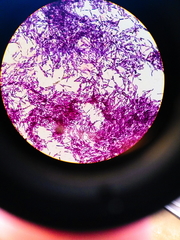 Bacillus thuringiensise0biocontrol_agent
- Outcome
- insecticidal activitye0
- Direction
- highere0
- Comparator
- B. thuringiensis in a commercial formulatione0
- Setting
- wet year (1990)e0
Organisms pictured · Representative pictures of the matched species, not figures from the paper.

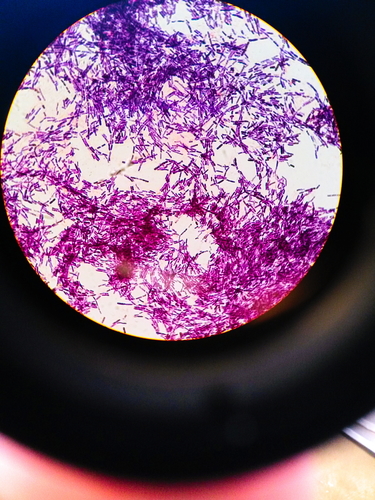
Verbatim
e0“During a wet year (1990) when 10 cm rain fell during the exposure time, insecticidal activity of B. thuringiensis encapsulated in starch granules was higher than that of B. thuringiensis in a commercial formulation”
t0“Residual Activity of Granular Starch-Encapsulated Bacillus thuringiensis”
e1“whorls of corn plants in the field”
Claim · model-written summary
In the dry year, formulation activities did not differ significantly.
- Taxon
- corn plantsZea mays subsp. mayse1
- Outcome
- activitye0
- Direction
- no significant differencese0
- Setting
- dry year (1989)e0
Not reportedTreatmentComparator
Organisms pictured · Representative pictures of the matched species, not figures from the paper.
Verbatim
e0“In a dry year (1989), we observed no significant differences in activity”
t0“Residual Activity of Granular Starch-Encapsulated Bacillus thuringiensis”
e1“whorls of corn plants in the field”
Claim · model-written summary
In 1991, the commercial formulation had less activity than two starch formulations.
- Taxon
- corn plantsZea mays subsp. mayse1
- Treatment
- two of the starch formulationse0
- Outcome
- activitye0
- Direction
- lesse0
- Comparator
- the commercial formulatione0
- Setting
- In 1991e0
Organisms pictured · Representative pictures of the matched species, not figures from the paper.
Verbatim
e0“In 1991, when 3 cm rain fell midway through the study, the commercial formulation had less activity than two of the starch formulations”
t0“Residual Activity of Granular Starch-Encapsulated Bacillus thuringiensis”
e1“whorls of corn plants in the field”
Claim · model-written summary
Late application was significantly more efficacious than early application.
- Taxon
- corn plantsZea mays subsp. mayse1
- Treatment
- late applicatione0
- Outcome
- efficaciouse0
- Direction
- more efficaciouse0
- Comparator
- early applicatione0
Organisms pictured · Representative pictures of the matched species, not figures from the paper.
Verbatim
e0“The late application was significantly more efficacious than the early application”
t0“Residual Activity of Granular Starch-Encapsulated Bacillus thuringiensis”
e1“whorls of corn plants in the field”
Claim · model-written summary
B. thuringiensis granules prevented pest damage as well as or better than chemical insecticide.
- Taxon
- corn plantsZea mays subsp. mayse1
- Treatment
- B. thuringiensis granulese0
- Interactor
- O. nubilalis
 Ostrinia nubilalise0pest
- Second interactor
- B. thuringiensisBacillus thuringiensise0biocontrol_agent
- Outcome
- damage by O. nubilalise0
- Direction
- as well as or better thane0
- Comparator
- a chemical insecticidee0
Organisms pictured · Representative pictures of the matched species, not figures from the paper.

Verbatim
e0“B. thuringiensis granules consistently prevented damage by O. nubilalis as well as or better than a chemical insecticide for the length of the study”
t0“Residual Activity of Granular Starch-Encapsulated Bacillus thuringiensis”
e1“whorls of corn plants in the field”
The same questions in other papers
Bacillus thuringiensis · Ostrinia nubilalis · Zea mays (maize)Positive and negative results
3 papers in the same direction as this paper · 2 reporting no difference from an alternative
- no effect
- no effect
- positive
2 papers more in this group
See all 6 papers →Bacillus thuringiensis · pest · Zea mays (maize)Positive and negative results
8 papers in the same direction as this paper · 1 in the opposite direction
- no effect
- positive
- positive
6 papers more in this group
See all 10 papers →Claims are grouped by organism, treatment and what was measured or targeted. A paper counts as positive when any of its claims in the group is positive.