Abstract
Bemisiatabaci Genn is a primary soybean pest in Indonesia. This pest infests soybean leaves, causing direct damage in the form of wilting leaves and necrosis, and indirect damage by the formation of powdery mildew and viral infections which decreases soybean production. Pest control using pesticide has diminishing effectiveness and also causes collateral pollution, which necessitate an alternative method of controlling B. tabaci. One such method is the use of entomopathogenic fungi Lecanicilliumlecanii. This research aims to find the effect of conidia density of the entomophatogenic fungiVerticillium(=Lecanicillium) lecanii (Hypocreales:Clavicipitaceae) Zimm towards Bemisiatabaci Genn under field conditions. This research uses the split plot method, with two factors, six treatments, and three replications. The treatment was done by spraying L. lecanii 107conidia/ml or 109conidia/ml every week or two weeks on soybean leaves. The results showed that L. lecanii application significantly decreased B. tabaci population. Conidia density of 109conidia/ ml per week resulted the most significantly effective decreasing of B. tabaci population. Keywords: Bemisiatabaci.Lecaniclilliumlecanii, Ethomopathogenic fungi, Soybean
Abstract from the paper’s OpenAlex record; open copy licensed cc-by-nc-nd. Read at the source ↗
The text the model read, with the source record’s inline markup (italics, sub- and superscripts) rendered and its character entities decoded; quote offsets refer to the raw text.
Claims 2
Claim · model-written summary
Lecanicillium application significantly reduced B. tabaci population on soybean.
- Taxon
- SOYBEAN
 Glycine maxt0
- Treatment
- L. lecanii applicatione0
- Interactor
- B. tabacie0pest
- Second interactor
- L. lecanii
 Akanthomyces lecaniie0biocontrol_agent
- Outcome
- B. tabaci populatione0
- Direction
- decreasede0
Not reportedComparator
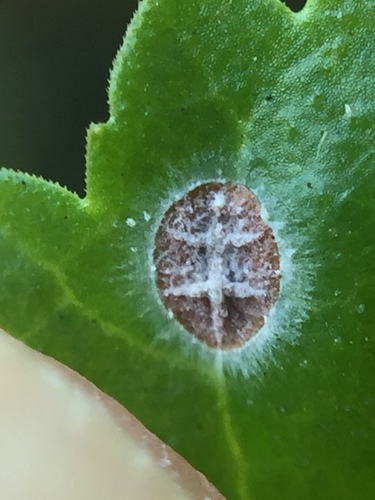
Organisms pictured · Representative pictures of the matched species, not figures from the paper.

Verbatim
e0“The results showed that L. lecanii application significantly decreased B. tabaci population.”
t0“SOYBEAN”
Claim · model-written summary
Weekly application at 109 conidia/ml was most effective at lowering B. tabaci population.
- Taxon
- SOYBEANGlycine maxt0
- Treatment
- 109conidia/ ml per weeke0
- Interactor
- B. tabacie0pest
- Outcome
- B. tabaci populatione0
- Direction
- decreasinge0
Not reportedComparator
Organisms pictured · Representative pictures of the matched species, not figures from the paper.
Verbatim
e0“Conidia density of 109conidia/ ml per week resulted the most significantly effective decreasing of B. tabaci population.”
t0“SOYBEAN”
The same questions in other papers
Akanthomyces lecanii · pest · Glycine max (soybean)Results agree
2 papers in the same direction as this paper
- positive
- positive
Claims are grouped by organism, treatment and what was measured or targeted. A paper counts as positive when any of its claims in the group is positive.