Abstract
High percent of medicines are used in developed countries have herbal origin. With regard to the development of saline lands and the shortage of agricultural lands, it comes into great importance to make use of salt tolerant plant. Cultivation of plants in hydroponic environment is a reliable and economical method in order to select the salt tolerant plant. An experiment was carried out in order to study the effect of different salinity levels on Cuminum cyminum and Valeriana officinalis in germination and seedling stages in a completely randomized design with four replications. The seed genotypes used were Mashhad, Serayan and Torbat-e-Jam. Salinity levels applied were zero (control), 50, 100, 150, 200 and 250 mM. The result showed that by increasing salinity level percentage of germination, root length, shoot length, root dry weight, shoot dry weight, biomass, and shoot/root ratio decreased. This decrease was different among the studied plants and there was significant different between concentrations of salinity (p0.01). C. cyminum had a high tolerance to salinity in their germination and seedling stages phase, but V. officinalis showed sensitive to increased salinity in this phase. In this experiment, Serayan genotype was more salt tolerant than other genotypes.
Abstract from the paper’s OpenAlex record, shown for indexing and research. Copyright remains with the authors or the publisher. Read at the source ↗
The text the model read, with the source record’s inline markup (italics, sub- and superscripts) rendered and its character entities decoded; quote offsets refer to the raw text.
Claims 11
Claim · model-written summary
Increasing salinity decreased percentage of germination in Cuminum cyminum.
- Taxon
- Cuminum cyminum
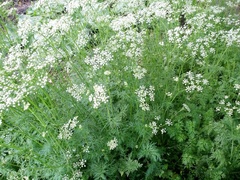 Cuminum cyminumt0
- Treatment
- increasing salinity levele0
- Outcome
- percentage of germinatione0
- Direction
- decreasede0
Not reportedComparator
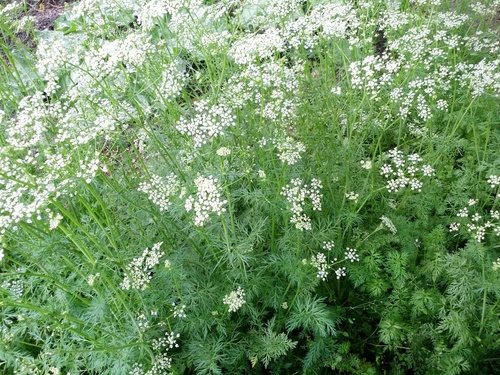
Organisms pictured · Representative pictures of the matched species, not figures from the paper.
Verbatim
e0“The result showed that by increasing salinity level percentage of germination, root length, shoot length, root dry weight, shoot dry weight, biomass, and shoot/root ratio decreased.”
t0“Cuminum cyminum”
Claim · model-written summary
Increasing salinity decreased root length, shoot length in Cuminum cyminum.
- Taxon
- Cuminum cyminumCuminum cyminumt0
- Treatment
- increasing salinity levele0
- Outcome
- root length, shoot lengthe0
- Direction
- decreasede0
Not reportedComparator
Organisms pictured · Representative pictures of the matched species, not figures from the paper.
Verbatim
e0“The result showed that by increasing salinity level percentage of germination, root length, shoot length, root dry weight, shoot dry weight, biomass, and shoot/root ratio decreased.”
t0“Cuminum cyminum”
Claim · model-written summary
Increasing salinity decreased root dry weight, shoot dry weight, biomass in Cuminum cyminum.
- Taxon
- Cuminum cyminumCuminum cyminumt0
- Treatment
- increasing salinity levele0
- Outcome
- root dry weight, shoot dry weight, biomasse0
- Direction
- decreasede0
Not reportedComparator
Organisms pictured · Representative pictures of the matched species, not figures from the paper.
Verbatim
e0“The result showed that by increasing salinity level percentage of germination, root length, shoot length, root dry weight, shoot dry weight, biomass, and shoot/root ratio decreased.”
t0“Cuminum cyminum”
Claim · model-written summary
Increasing salinity decreased shoot/root ratio in Cuminum cyminum.
- Taxon
- Cuminum cyminumCuminum cyminumt0
- Treatment
- increasing salinity levele0
- Outcome
- shoot/root ratioe0
- Direction
- decreasede0
Not reportedComparator
Organisms pictured · Representative pictures of the matched species, not figures from the paper.
Verbatim
e0“The result showed that by increasing salinity level percentage of germination, root length, shoot length, root dry weight, shoot dry weight, biomass, and shoot/root ratio decreased.”
t0“Cuminum cyminum”
Claim · model-written summary
Increasing salinity decreased percentage of germination in Valeriana officinalis.
- Taxon
- Valeriana officinalis
 Valeriana officinalist0
- Treatment
- increasing salinity levele0
- Outcome
- percentage of germinatione0
- Direction
- decreasede0
Not reportedComparator
Organisms pictured · Representative pictures of the matched species, not figures from the paper.

Verbatim
e0“The result showed that by increasing salinity level percentage of germination, root length, shoot length, root dry weight, shoot dry weight, biomass, and shoot/root ratio decreased.”
t0“Valeriana officinalis”
Claim · model-written summary
Increasing salinity decreased root length, shoot length in Valeriana officinalis.
- Taxon
- Valeriana officinalisValeriana officinalist0
- Treatment
- increasing salinity levele0
- Outcome
- root length, shoot lengthe0
- Direction
- decreasede0
Not reportedComparator
Organisms pictured · Representative pictures of the matched species, not figures from the paper.
Verbatim
e0“The result showed that by increasing salinity level percentage of germination, root length, shoot length, root dry weight, shoot dry weight, biomass, and shoot/root ratio decreased.”
t0“Valeriana officinalis”
Claim · model-written summary
Increasing salinity decreased root dry weight, shoot dry weight, biomass in Valeriana officinalis.
- Taxon
- Valeriana officinalisValeriana officinalist0
- Treatment
- increasing salinity levele0
- Outcome
- root dry weight, shoot dry weight, biomasse0
- Direction
- decreasede0
Not reportedComparator
Organisms pictured · Representative pictures of the matched species, not figures from the paper.
Verbatim
e0“The result showed that by increasing salinity level percentage of germination, root length, shoot length, root dry weight, shoot dry weight, biomass, and shoot/root ratio decreased.”
t0“Valeriana officinalis”
Claim · model-written summary
Increasing salinity decreased shoot/root ratio in Valeriana officinalis.
- Taxon
- Valeriana officinalisValeriana officinalist0
- Treatment
- increasing salinity levele0
- Outcome
- shoot/root ratioe0
- Direction
- decreasede0
Not reportedComparator
Organisms pictured · Representative pictures of the matched species, not figures from the paper.
Verbatim
e0“The result showed that by increasing salinity level percentage of germination, root length, shoot length, root dry weight, shoot dry weight, biomass, and shoot/root ratio decreased.”
t0“Valeriana officinalis”
Claim · model-written summary
C. cyminum had high salinity tolerance during germination and seedling stages.
- Taxon
- C. cyminumCuminum cyminume0
- Organ / stage
- germination and seedling stagese0
- Outcome
- high tolerance to salinitye0
Organisms pictured · Representative pictures of the matched species, not figures from the paper.
Verbatim
e0“C. cyminum had a high tolerance to salinity in their germination and seedling stages phase”
Claim · model-written summary
V. officinalis was sensitive to increased salinity at germination and seedling stages.
- Taxon
- V. officinalisValeriana officinalise0
- Outcome
- sensitive to increased salinitye0
Organisms pictured · Representative pictures of the matched species, not figures from the paper.
Verbatim
e0“V. officinalis showed sensitive to increased salinity in this phase”
Claim · model-written summary
Serayan genotype was more salt tolerant than other genotypes.
Not reportedTaxon
Verbatim
e0“Serayan genotype was more salt tolerant than other genotypes”
The same questions in other papers
salinity · growth · Cuminum cyminum (cumin)Results agree
5 papers in the same direction as this paper
- negative
- negative
- negative
2 papers more in this group
See all 6 papers →Claims are grouped by organism, treatment and what was measured or targeted. A paper counts as positive when any of its claims in the group is positive.