Abstract
Four studies were conducted in Georgia during spring 1999, 2000, 2001, and 2002 to evaluate various management tactics for reducing thrips and thrips-vectored tomato spotted wilt virus (TSWV) in tomato and their interactions relative to fruit yield. Populations of thrips vectors of TSWV, Frankliniella occidentalis (Pergande) and Frankliniella fusca (Hinds), were determined using flower and sticky trap samples. The management practices evaluated were host plant resistance, insecticide treatments, and silver or metallic reflective mulch. Averaged over all tests, the TSWV-resistant tomato 'BHN444' on silver mulch treatment had the largest effect in terms of reducing thrips and spotted wilt and increasing marketable yield. Of the insecticide treatments tested, the imidacloprid soil treatment followed by early applications of a thrips-effective foliar insecticide treatment provided significant increase in yield over other treatments. Tomato yield was negatively correlated with the number of F. fusca and percentage of TSWV incidence. F. occidentalis per blossom was positively correlated with percentage of TSWV incidence, but not with yield. No significant interactions were observed between cultivar reflective mulch main plot treatments and insecticide subplot treatments; thus, treatment seemed to be additive in reducing the economic impact of thrips-vectored TSWV. Control tactics that manage thrips early in the growing season significantly increased tomato yield in years when the incidence of TSWV was high (>17%).
Abstract from the paper’s OpenAlex record, shown for indexing and research. Copyright remains with the authors or the publisher. Read at the source ↗
The text the model read, with the source record’s inline markup (italics, sub- and superscripts) rendered and its character entities decoded; quote offsets refer to the raw text.
Claims 10
Claim · model-written summary
The TSWV-resistant tomato 'BHN444' on silver mulch had the largest effect in reducing thrips and spotted wilt.
- Taxon
- tomato
 Solanum lycopersicume0
- Treatment
- TSWV-resistant tomato 'BHN444' on silver mulch treatmente0
- Outcome
- thrips and spotted wilte0
- Direction
- reducinge0
 Thrips
Not reportedComparator
Organisms pictured · Representative pictures of the matched species, not figures from the paper.


Verbatim
e0“Averaged over all tests, the TSWV-resistant tomato 'BHN444' on silver mulch treatment had the largest effect in terms of reducing thrips and spotted wilt and increasing marketable yield”
Claim · model-written summary
The TSWV-resistant tomato 'BHN444' on silver mulch had the largest effect in increasing marketable yield.
- Taxon
- tomatoSolanum lycopersicume0
- Treatment
- TSWV-resistant tomato 'BHN444' on silver mulch treatmente0
- Outcome
- marketable yielde0
- Direction
- increasinge0
Not reportedComparator
Organisms pictured · Representative pictures of the matched species, not figures from the paper.
Verbatim
e0“Averaged over all tests, the TSWV-resistant tomato 'BHN444' on silver mulch treatment had the largest effect in terms of reducing thrips and spotted wilt and increasing marketable yield”
Claim · model-written summary
The imidacloprid soil treatment followed by early thrips-effective foliar insecticide applications significantly increased yield over other treatments.
- Taxon
- tomatoSolanum lycopersicume1
- Treatment
- imidacloprid soil treatment followed by early applications of a thrips-effective foliar insecticide treatmente0
- Outcome
- yielde0
- Direction
- increasee0
- Comparator
- other treatmentse0
Organisms pictured · Representative pictures of the matched species, not figures from the paper.
Verbatim
e0“the imidacloprid soil treatment followed by early applications of a thrips-effective foliar insecticide treatment provided significant increase in yield over other treatments”
e1“in tomato and their interactions relative to fruit yield”
Claim · model-written summary
Tomato yield was negatively correlated with the number of Frankliniella fusca.
- Taxon
- TomatoSolanum lycopersicume0
- Interactor
- F. fusca
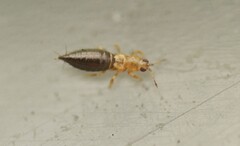 Frankliniella fuscae0pest
- Outcome
- Tomato yielde0
- Direction
- negatively correlatede0
Organisms pictured · Representative pictures of the matched species, not figures from the paper.
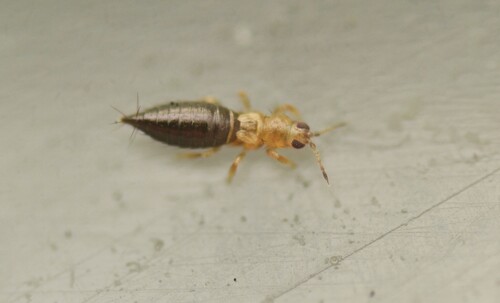
Verbatim
e0“Tomato yield was negatively correlated with the number of F. fusca and percentage of TSWV incidence”
Claim · model-written summary
Tomato yield was negatively correlated with the percentage of TSWV incidence.
- Taxon
- TomatoSolanum lycopersicume0
- Interactor
- TSWV
 Orthotospovirus tomatomaculaee0pathogen
- Outcome
- Tomato yielde0
- Direction
- negatively correlatede0
Organisms pictured · Representative pictures of the matched species, not figures from the paper.

Verbatim
e0“Tomato yield was negatively correlated with the number of F. fusca and percentage of TSWV incidence”
Claim · model-written summary
Frankliniella occidentalis per blossom was positively correlated with the percentage of TSWV incidence.
- Taxon
- tomatoSolanum lycopersicume1
- Interactor
- F. occidentalis
 Frankliniella occidentalise0pest
- Outcome
- percentage of TSWV incidencee0
- Direction
- positively correlatede0
Organisms pictured · Representative pictures of the matched species, not figures from the paper.

Verbatim
e0“F. occidentalis per blossom was positively correlated with percentage of TSWV incidence, but not with yield”
e1“in tomato and their interactions relative to fruit yield”
Claim · model-written summary
Frankliniella occidentalis per blossom was not correlated with yield.
- Taxon
- tomatoSolanum lycopersicume1
- Interactor
- F. occidentalisFrankliniella occidentalise0pest
- Outcome
- yielde0
- Direction
- no_changeinferrede0
Organisms pictured · Representative pictures of the matched species, not figures from the paper.
Verbatim
e0“F. occidentalis per blossom was positively correlated with percentage of TSWV incidence, but not with yield”
e1“in tomato and their interactions relative to fruit yield”
Claim · model-written summary
No significant interactions were observed between cultivar reflective mulch main plot treatments and insecticide subplot treatments.
- Taxon
- tomatoSolanum lycopersicume1
- Treatment
- cultivar reflective mulch main plot treatmentse0
- Outcome
- interactionse0
- Direction
- No significante0
- Comparator
- insecticide subplot treatmentse0
Organisms pictured · Representative pictures of the matched species, not figures from the paper.
Verbatim
e0“No significant interactions were observed between cultivar reflective mulch main plot treatments and insecticide subplot treatments”
e1“in tomato and their interactions relative to fruit yield”
Claim · model-written summary
The treatments seemed to be additive in reducing the economic impact of thrips-vectored TSWV.
- Taxon
- tomatoSolanum lycopersicume1
- Outcome
- economic impact of thrips-vectored TSWVe0
- Qualifier
- additivee0
Organisms pictured · Representative pictures of the matched species, not figures from the paper.
Verbatim
e0“treatment seemed to be additive in reducing the economic impact of thrips-vectored TSWV”
e1“in tomato and their interactions relative to fruit yield”
Claim · model-written summary
Control tactics that manage thrips early in the season significantly increased tomato yield in years when TSWV incidence was high (>17%).
- Taxon
- tomatoSolanum lycopersicume0
- Treatment
- Control tactics that manage thrips early in the growing seasone0
- Outcome
- tomato yielde0
- Direction
- increasede0
- Qualifier
- years when the incidence of TSWV was high (>17%)e0
Not reportedComparator
Organisms pictured · Representative pictures of the matched species, not figures from the paper.
Verbatim
e0“Control tactics that manage thrips early in the growing season significantly increased tomato yield in years when the incidence of TSWV was high (>17%)”
The same questions in other papers
imidacloprid · yield · Solanum lycopersicum (tomato)Positive and negative results
3 papers in the same direction as this paper · 1 in the opposite direction
- negative
- positive
- positive
1 paper more in this group
See all 5 papers →silver atom · quality: postharvest · Solanum lycopersicum (tomato)Positive and negative results
4 papers in the same direction as this paper · 2 in the opposite direction
- negative
- negative
- positive
3 papers more in this group
See all 7 papers →silver atom · Thrips · Solanum lycopersicum (tomato)Results agree
1 paper in the same direction as this paper
- positive
Thrips · yield · Solanum lycopersicum (tomato)Results agree
1 paper in the same direction as this paper
- positive
insecticide · yield · Solanum lycopersicum (tomato)Results differ
21 papers in the same direction as this paper · 7 in the opposite direction
- positive
- no effect
- no effect
25 papers more in this group
See all 29 papers →mulching · Thrips · Solanum lycopersicum (tomato)Positive and negative results
6 papers in the same direction as this paper · 1 in the opposite direction
- negative
- positive
- positive
4 papers more in this group
See all 8 papers →climate site · yield · Solanum lycopersicum (tomato)Positive and negative results
12 papers in the same direction as this paper · 10 in the opposite direction
- negative
- negative
- negative
19 papers more in this group
See all 23 papers →mulching · quality: postharvest · Solanum lycopersicum (tomato)Positive and negative results
43 papers in the same direction as this paper · 9 in the opposite direction · 2 reporting no difference from an alternative
- positive
- negative
- negative
51 papers more in this group
See all 55 papers →8 of 9 groups shown: named compounds and organisms first, then groups whose results differ (checked claim by claim), then those with positive and negative results, then the smaller groups.
Claims are grouped by organism, treatment and what was measured or targeted. A paper counts as positive when any of its claims in the group is positive.