Abstract
Salt stress is one of the most serious factors limiting the productivity of rice, the staple diet in many countries. Gibberellic acid has been reported to reduce NaCl-induced growth inhibition in some plants including rice. Most paddy soils have a natural population of Cyanobacteria, prokaryotic photosynthethic microorganisms, which synthesize and liberate plant growth regulators such as gibberellins that could exert a natural beneficial effect on salt stressed rice plants. The aim of this work was to evaluate the effect of the cyanobacterium Scytonema hofmanni extracellular products on the growth of rice seedlings inhibited by NaCl and to compare it with the effect of the gibberellic acid in the same stress condition. Growth (length and weight of the seedlings) and biochemical parameters (5-aminolevulinate dehydratase activity, total free porphyrin and pigments content) were evaluated. Salt exposure negatively affected all parameters measured, with the exception of chlorophyll. Chlrorophyll concentrations nearly doubled upon exposure to high salt. Gibberellic acid counteracted the effect of salt on the length and dry weight of the shoot, and on carotenoid and chlorophyll b contents. Extracellular products nullified the salt effect on shoot dry weight and carotenoid content; partially counteracted the effect on shoot length (from 54% to 38% decrease), root dry weight (from 59% to 41% decrease) and total free porphyrin (from 31 to 13% decrease); reduced by 35% the salt increase of chlorophyll a; had no effect on root length and chlorophyll b. Gibberellic acid and extracellular products increased 5-aminolevulinate dehydratase activity over the control without salt. When coincident with high salinity, exposure to either EP or GA3, resulted in a reversal of shoot-related responses to salt stress. We propose that Scytonema hofmanni extracellular products may counteract altered hormone homeostasis of rice seedlings under salt stress by producing gibberellin-like plant growth regulators.
Abstract from the paper’s OpenAlex record; open copy licensed cc-by. Read at the source ↗
The text the model read, with the source record’s inline markup (italics, sub- and superscripts) rendered and its character entities decoded; quote offsets refer to the raw text.
Claims 12
Claim · model-written summary
Salt exposure negatively affected measured rice seedling growth and biochemical parameters except chlorophyll.
- Taxon
- rice
 Oryza sativae7
- Treatment
- Salt exposuree0
- Outcome
- all parameters measurede0
- Direction
- negatively affectede0
Not reportedComparator
Organisms pictured · Representative pictures of the matched species, not figures from the paper.

Verbatim
e0“Salt exposure negatively affected all parameters measured, with the exception of chlorophyll.”
e7“rice seedlings inhibited by NaCl”
Claim · model-written summary
High salt nearly doubled chlorophyll concentrations.
- Taxon
- riceOryza sativae7
- Treatment
- high salte0
- Outcome
- Chlrorophyll concentrationse0
- Direction
- nearly doublede0
Not reportedComparator
Organisms pictured · Representative pictures of the matched species, not figures from the paper.
Verbatim
e0“Chlrorophyll concentrations nearly doubled upon exposure to high salt.”
e7“rice seedlings inhibited by NaCl”
Claim · model-written summary
Gibberellic acid counteracted salt effects on shoot length, shoot dry weight, carotenoid and chlorophyll b content.
- Taxon
- riceOryza sativae7
- Treatment
- Gibberellic acide0
- Outcome
- length and dry weight of the shoote0
- Direction
- counteractede0
- Comparator
- salte0
Organisms pictured · Representative pictures of the matched species, not figures from the paper.
Verbatim
e0“Gibberellic acid counteracted the effect of salt on the length and dry weight of the shoot, and on carotenoid and chlorophyll b contents.”
e7“rice seedlings inhibited by NaCl”
Claim · model-written summary
Extracellular products nullified salt effects on shoot dry weight and carotenoid content.
- Taxon
- riceOryza sativae7
- Treatment
- Extracellular productse0
- Outcome
- shoot dry weight and carotenoid contente0
- Direction
- nullifiede0
- Comparator
- salte0
Organisms pictured · Representative pictures of the matched species, not figures from the paper.
Verbatim
e0“Extracellular products nullified the salt effect on shoot dry weight and carotenoid content”
e7“rice seedlings inhibited by NaCl”
Claim · model-written summary
Extracellular products partially counteracted salt induced shoot length decline from 54% to 38%.
- Taxon
- riceOryza sativae7
- Treatment
- Extracellular productst0
- Outcome
- shoot lengthe0
- Direction
- partially counteractede0
- Value
- from 54% to 38% decreasee0
- Comparator
- salte6
Organisms pictured · Representative pictures of the matched species, not figures from the paper.
Verbatim
e0“partially counteracted the effect on shoot length (from 54% to 38% decrease)”
e7“rice seedlings inhibited by NaCl”
e6“Salt exposure negatively affected all parameters measured”
t0“Effects of cyanobacterial extracellular products and gibberellic acid on salinity tolerance in Oryza sativaL”
Claim · model-written summary
Extracellular products partially counteracted salt induced root dry weight decline from 59% to 41%.
- Taxon
- riceOryza sativae7
- Treatment
- Extracellular productst0
- Outcome
- root dry weighte0
- Direction
- decreasee0
- Value
- from 59% to 41% decreasee0
- Comparator
- salte6
Organisms pictured · Representative pictures of the matched species, not figures from the paper.
Verbatim
e0“root dry weight (from 59% to 41% decrease)”
e7“rice seedlings inhibited by NaCl”
e6“Salt exposure negatively affected all parameters measured”
t0“Effects of cyanobacterial extracellular products and gibberellic acid on salinity tolerance in Oryza sativaL”
Claim · model-written summary
Extracellular products partially counteracted salt induced total free porphyrin decline from 31 to 13%.
- Taxon
- riceOryza sativae7
- Treatment
- Extracellular productst0
- Outcome
- total free porphyrine0
- Direction
- decreasee0
- Value
- from 31 to 13% decreasee0
- Comparator
- salte6
Organisms pictured · Representative pictures of the matched species, not figures from the paper.
Verbatim
e0“total free porphyrin (from 31 to 13% decrease)”
e7“rice seedlings inhibited by NaCl”
e6“Salt exposure negatively affected all parameters measured”
t0“Effects of cyanobacterial extracellular products and gibberellic acid on salinity tolerance in Oryza sativaL”
Claim · model-written summary
Extracellular products reduced the salt induced increase of chlorophyll a by 35%.
- Taxon
- riceOryza sativae7
- Treatment
- Extracellular productst0
- Outcome
- chlorophyll ae0
- Direction
- reducede0
- Value
- 35%e0
- Comparator
- salte0
Organisms pictured · Representative pictures of the matched species, not figures from the paper.
Verbatim
e0“reduced by 35% the salt increase of chlorophyll a”
e7“rice seedlings inhibited by NaCl”
t0“Effects of cyanobacterial extracellular products and gibberellic acid on salinity tolerance in Oryza sativaL”
Claim · model-written summary
Extracellular products had no effect on root length and chlorophyll b under salt.
- Taxon
- riceOryza sativae7
- Treatment
- Extracellular productst0
- Outcome
- root length and chlorophyll be0
- Direction
- no effecte0
Not reportedComparator
Organisms pictured · Representative pictures of the matched species, not figures from the paper.
Verbatim
e0“had no effect on root length and chlorophyll b”
e7“rice seedlings inhibited by NaCl”
t0“Effects of cyanobacterial extracellular products and gibberellic acid on salinity tolerance in Oryza sativaL”
Claim · model-written summary
Gibberellic acid increased 5-aminolevulinate dehydratase activity over unsalted control.
- Taxon
- riceOryza sativae7
- Treatment
- Gibberellic acide0
- Outcome
- 5-aminolevulinate dehydratase activitye0
- Direction
- increasede0
- Comparator
- control without salte0
Organisms pictured · Representative pictures of the matched species, not figures from the paper.
Verbatim
e0“Gibberellic acid and extracellular products increased 5-aminolevulinate dehydratase activity over the control without salt.”
e7“rice seedlings inhibited by NaCl”
Claim · model-written summary
Extracellular products increased 5-aminolevulinate dehydratase activity over unsalted control.
- Taxon
- riceOryza sativae7
- Treatment
- extracellular productse0
- Outcome
- 5-aminolevulinate dehydratase activitye0
- Direction
- increasede0
- Comparator
- control without salte0
Organisms pictured · Representative pictures of the matched species, not figures from the paper.
Verbatim
e0“Gibberellic acid and extracellular products increased 5-aminolevulinate dehydratase activity over the control without salt.”
e7“rice seedlings inhibited by NaCl”
Claim · model-written summary
The authors propose that Scytonema hofmanni products may counteract hormone imbalance in salt stressed rice through gibberellin like regulators.
- Taxon
- riceOryza sativae0
- Treatment
- Scytonema hofmanni extracellular productse0
- Interactor
- Scytonema hofmanni
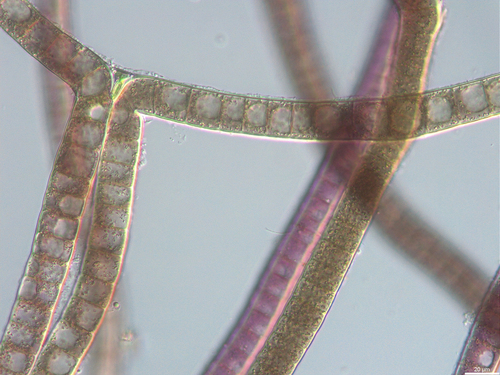
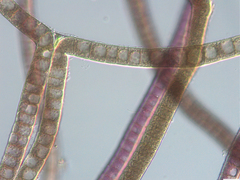 Scytonema hofmanniie0symbiont
- Outcome
- altered hormone homeostasise0
- Qualifier
- by producing gibberellin-like plant growth regulatorse0
Organisms pictured · Representative pictures of the matched species, not figures from the paper.
Verbatim
e0“We propose that Scytonema hofmanni extracellular products may counteract altered hormone homeostasis of rice seedlings under salt stress by producing gibberellin-like plant growth regulators.”
The same questions in other papers
Gibberellic acid · growth · Oryza sativa (rice)Results differ
85 papers in the same direction as this paper · 16 in the opposite direction · 2 reporting no difference from an alternative
- no effect
- negative
- negative
100 papers more in this group
See all 104 papers →Claims are grouped by organism, treatment and what was measured or targeted. A paper counts as positive when any of its claims in the group is positive.