Abstract
Seed-borne fungi of sorghum and pearl millet in Burkina Faso were surveyed. A total of 188 seed samples from various locations, collected in 1989 (42) and 2002 (146), were tested, using the blotter, dry inspection and washing methods. Infection experiments were carried out with the major fungi recorded on each crop by the blotter test. Six essential oils of plants were investigated for their inhibitory activity against eight pathogenic fungi. Thirty four and 27 fungal species were found in seed samples of sorghum and pearl millet, respectively. Phoma sp. and Fusarium moniliforme infected 95 to 100% of the seed samples of both sorghum and pearl millet. Sphacelotheca sorghi and Tolyposporium ehrenbergii were encountered in respectively, 75 and 33% of seed samples of sorghum. T. penicillariae, Sclerospora graminicola and Claviceps fusiformis were present in 88, 41 and 32% of seed samples of pearl millet, respectively. Seeds inoculated with Acremonium strictum, Curvularia oryzae, F. equiseti, F. moniliforme and F. subglutinans and sown in sterilized soil, showed considerable mortality of the seedlings. Three essential oils inhibited in vitro the mycelial growth of all the fungi used by 85 to 100% and reduced significantly sorghum and pearl millet seed infection rates of Phoma sp., Fusarium sp., Curvularia sp., Colletotrichum graminicola and Exserohilum sp. Presence of many pathogenic fungi in considerable number of seed samples indicates the need of field surveys for these and other pathogens. Development of plant extracts for the control of seed-borne pathogens and public awareness on seed-borne diseases management measures for maintaining quality seed should be increased.
Abstract from the paper’s OpenAlex record, shown for indexing and research. Copyright remains with the authors or the publisher. Read at the source ↗
The text the model read, with the source record’s inline markup (italics, sub- and superscripts) rendered and its character entities decoded; quote offsets refer to the raw text.
Claims 18
Claim · model-written summary
Sorghum seed samples contained 34 fungal species.
Organisms pictured · Representative pictures of the matched species, not figures from the paper.

Verbatim
e0“Thirty four and 27 fungal species were found in seed samples of sorghum and pearl millet, respectively.”
Claim · model-written summary
Pearl millet seed samples contained 27 fungal species.
- Taxon
- pearl millet
 Cenchrus americanuse0
- Outcome
- fungal speciese0
- Value
- 27e0
Organisms pictured · Representative pictures of the matched species, not figures from the paper.

Verbatim
e0“Thirty four and 27 fungal species were found in seed samples of sorghum and pearl millet, respectively.”
Claim · model-written summary
Phoma sp. infected 95 to 100% of sorghum and pearl millet seed samples.
- Taxon
- sorghum and pearl milletCenchrus americanus
 Sorghume0
- Outcome
- infectede0
- Value
- 95 to 100%e0
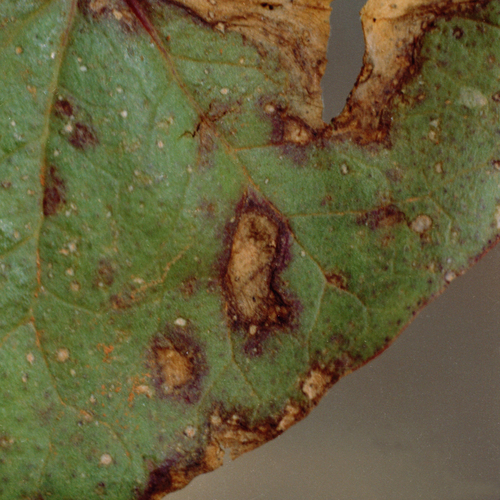
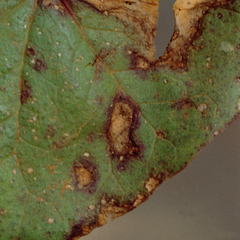 Phoma
Organisms pictured · Representative pictures of the matched species, not figures from the paper.
Verbatim
e0“Phoma sp. and Fusarium moniliforme infected 95 to 100% of the seed samples of both sorghum and pearl millet.”
Claim · model-written summary
Fusarium moniliforme infected 95 to 100% of sorghum and pearl millet seed samples.
- Taxon
- sorghum and pearl milletCenchrus americanusSorghume0
- Interactor
- Fusarium moniliforme
 Fusarium verticillioidese0pathogen
- Outcome
- infectede0
- Value
- 95 to 100%e0
Organisms pictured · Representative pictures of the matched species, not figures from the paper.

Verbatim
e0“Phoma sp. and Fusarium moniliforme infected 95 to 100% of the seed samples of both sorghum and pearl millet.”
Claim · model-written summary
Sphacelotheca sorghi occurred in 75% of sorghum seed samples.
Organisms pictured · Representative pictures of the matched species, not figures from the paper.
Verbatim
e0“Sphacelotheca sorghi and Tolyposporium ehrenbergii were encountered in respectively, 75 and 33% of seed samples of sorghum.”
Claim · model-written summary
Tolyposporium ehrenbergii occurred in 33% of sorghum seed samples.
Organisms pictured · Representative pictures of the matched species, not figures from the paper.
Verbatim
e0“Sphacelotheca sorghi and Tolyposporium ehrenbergii were encountered in respectively, 75 and 33% of seed samples of sorghum.”
Claim · model-written summary
T. penicillariae occurred in 88% of pearl millet seed samples.
- Taxon
- pearl milletCenchrus americanuse0
- Interactor
- T. penicillariaeMoesziomyces penicillariaee0pathogen
- Outcome
- were presente0
- Value
- 88e0
Organisms pictured · Representative pictures of the matched species, not figures from the paper.
Verbatim
e0“T. penicillariae, Sclerospora graminicola and Claviceps fusiformis were present in 88, 41 and 32% of seed samples of pearl millet, respectively.”
Claim · model-written summary
Sclerospora graminicola occurred in 41% of pearl millet seed samples.
- Taxon
- pearl milletCenchrus americanuse0
- Interactor
- Sclerospora graminicola
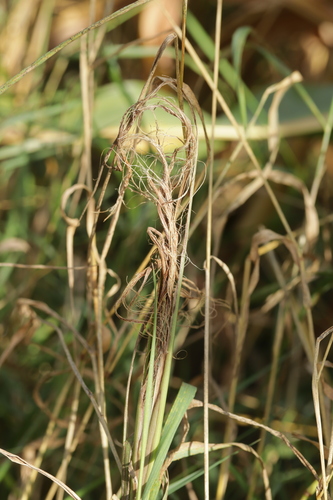
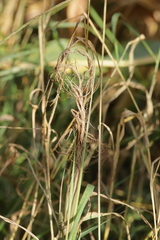 Sclerospora graminicolae0pathogen
- Outcome
- were presente0
- Value
- 41e0
Organisms pictured · Representative pictures of the matched species, not figures from the paper.
Verbatim
e0“T. penicillariae, Sclerospora graminicola and Claviceps fusiformis were present in 88, 41 and 32% of seed samples of pearl millet, respectively.”
Claim · model-written summary
Claviceps fusiformis occurred in 32% of pearl millet seed samples.
- Taxon
- pearl milletCenchrus americanuse0
- Interactor
- Claviceps fusiformisClaviceps fusiformise0pathogen
- Outcome
- were presente0
- Value
- 32%e0
Organisms pictured · Representative pictures of the matched species, not figures from the paper.
Verbatim
e0“T. penicillariae, Sclerospora graminicola and Claviceps fusiformis were present in 88, 41 and 32% of seed samples of pearl millet, respectively.”
Claim · model-written summary
Inoculation with Acremonium strictum caused considerable seedling mortality.
- Taxon
- sorghum and pearl milletCenchrus americanusSorghumt0
- Treatment
- inoculated with Acremonium strictume0
- Interactor
- Acremonium strictum
 Sarocladium strictume0pathogen
- Outcome
- mortality of the seedlingse0
- Direction
- considerablee0
Not reportedComparator
Organisms pictured · Representative pictures of the matched species, not figures from the paper.

Verbatim
e0“Seeds inoculated with Acremonium strictum, Curvularia oryzae, F. equiseti, F. moniliforme and F. subglutinans and sown in sterilized soil, showed considerable mortality of the seedlings.”
t0“Sorghum and Pearl Millet”
Claim · model-written summary
Inoculation with Curvularia oryzae caused considerable seedling mortality.
- Taxon
- Sorghum and Pearl MilletCenchrus americanusSorghumt0
- Treatment
- Curvularia oryzaee0
- Interactor
- Curvularia oryzae
 Curvularia oryzaee0pathogen
- Outcome
- mortality of the seedlingse0
- Direction
- considerablee0
Not reportedComparator
Organisms pictured · Representative pictures of the matched species, not figures from the paper.

Verbatim
e0“Seeds inoculated with Acremonium strictum, Curvularia oryzae, F. equiseti, F. moniliforme and F. subglutinans and sown in sterilized soil, showed considerable mortality of the seedlings.”
t0“Sorghum and Pearl Millet”
Claim · model-written summary
Inoculation with F. equiseti caused considerable seedling mortality.
- Taxon
- Sorghum and Pearl MilletCenchrus americanusSorghumt0
- Treatment
- F. equisetie0
- Interactor
- F. equisetiFusarium equisetie0pathogen
- Outcome
- mortality of the seedlingse0
- Direction
- considerablee0
Not reportedComparator
Organisms pictured · Representative pictures of the matched species, not figures from the paper.
Verbatim
e0“Seeds inoculated with Acremonium strictum, Curvularia oryzae, F. equiseti, F. moniliforme and F. subglutinans and sown in sterilized soil, showed considerable mortality of the seedlings.”
t0“Sorghum and Pearl Millet”
Claim · model-written summary
Inoculation with F. moniliforme caused considerable seedling mortality.
- Taxon
- Sorghum and Pearl MilletCenchrus americanusSorghumt0
- Treatment
- F. moniliformee0
- Interactor
- F. moniliformeFusarium verticillioidese0pathogen
- Outcome
- mortality of the seedlingse0
- Direction
- considerablee0
Not reportedComparator
Organisms pictured · Representative pictures of the matched species, not figures from the paper.
Verbatim
e0“Seeds inoculated with Acremonium strictum, Curvularia oryzae, F. equiseti, F. moniliforme and F. subglutinans and sown in sterilized soil, showed considerable mortality of the seedlings.”
t0“Sorghum and Pearl Millet”
Claim · model-written summary
Inoculation with F. subglutinans caused considerable seedling mortality.
- Taxon
- Sorghum and Pearl MilletCenchrus americanusSorghumt0
- Treatment
- F. subglutinanse0
- Interactor
- F. subglutinans
 Fusarium subglutinanse0pathogen
- Outcome
- mortality of the seedlingse0
- Direction
- considerablee0
Not reportedComparator
Organisms pictured · Representative pictures of the matched species, not figures from the paper.

Verbatim
e0“Seeds inoculated with Acremonium strictum, Curvularia oryzae, F. equiseti, F. moniliforme and F. subglutinans and sown in sterilized soil, showed considerable mortality of the seedlings.”
t0“Sorghum and Pearl Millet”
Claim · model-written summary
Three essential oils inhibited in vitro mycelial growth of all tested fungi by 85 to 100%.
- Taxon
- Sorghum and Pearl MilletCenchrus americanusSorghumt0
- Treatment
- Three essential oilse0
- Outcome
- mycelial growth of all the fungie0
- Direction
- inhibitede0
- Value
- 85 to 100%e0
Not reportedComparator
Organisms pictured · Representative pictures of the matched species, not figures from the paper.
Verbatim
e0“Three essential oils inhibited in vitro the mycelial growth of all the fungi used by 85 to 100%”
t0“Sorghum and Pearl Millet”
Claim · model-written summary
Three essential oils significantly reduced sorghum and pearl millet seed infection by the named fungi.
- Taxon
- sorghum and pearl milletCenchrus americanusSorghume0
- Treatment
- Three essential oilst0
- Outcome
- seed infection ratese0
- Direction
- reducede0
- Qualifier
- Fusarium sp., Curvularia sp., Colletotrichum graminicola and Exserohilum sp.e0
Not reportedComparator
Organisms pictured · Representative pictures of the matched species, not figures from the paper.
Verbatim
e0“reduced significantly sorghum and pearl millet seed infection rates of Phoma sp., Fusarium sp., Curvularia sp., Colletotrichum graminicola and Exserohilum sp.”
t0“Three essential oils inhibited in vitro the mycelial growth”
Claim · model-written summary
The authors recommend field surveys for seed-borne pathogens.
- Taxon
- Sorghum and Pearl MilletCenchrus americanusSorghumt0
- Outcome
- field surveys for these and other pathogense0
Organisms pictured · Representative pictures of the matched species, not figures from the paper.
Verbatim
e0“Presence of many pathogenic fungi in considerable number of seed samples indicates the need of field surveys for these and other pathogens.”
t0“Sorghum and Pearl Millet”
Claim · model-written summary
The authors recommend increasing development of plant extracts for seed-borne pathogen control and public awareness of disease management.
- Taxon
- Sorghum and Pearl MilletCenchrus americanusSorghumt0
- Outcome
- Development of plant extracts for the control of seed-borne pathogens and public awareness on seed-borne diseases management measures for maintaining quality seede0
Organisms pictured · Representative pictures of the matched species, not figures from the paper.
Verbatim
e0“Development of plant extracts for the control of seed-borne pathogens and public awareness on seed-borne diseases management measures for maintaining quality seed should be increased.”
t0“Sorghum and Pearl Millet”
The same questions in other papers
inoculation · pest · Cenchrus americanus (pearl millet)Positive and negative results
1 paper in the same direction as this paper · 1 in the opposite direction
- positive
- no effect
inoculation · pest · SorghumPositive and negative results
1 paper in the same direction as this paper · 5 in the opposite direction
- negative
- positive
- positive
3 papers more in this group
See all 7 papers →botanical · disease · SorghumPositive and negative results
6 papers in the same direction as this paper · 1 in the opposite direction
- negative
- positive
- positive
4 papers more in this group
See all 8 papers →botanical · disease · Cenchrus americanus (pearl millet)Results agree
4 papers in the same direction as this paper
- positive
- positive
- positive
1 paper more in this group
See all 5 papers →Claims are grouped by organism, treatment and what was measured or targeted. A paper counts as positive when any of its claims in the group is positive.