Abstract
Six Trichoderma isolates, Trichoderma atroviride strain 3A, T. atroviride strain 6,Trichoderma harzianum, strain SY, Trichoderma pseudokoningii, an unidentified strain Trichoderma sp. strain 2F and T. harzianum strain kmd and three Bacillus subtilis isolates, B. subtilis B69, B. subtilis B77 and B. subtilis B81, were tested in vivo, singly and each in combination for growth promotion of dry beans and biological control of damping-off caused by Rhizoctonia solani in cucumber. All fungal and bacterial isolates were applied as seed treatments in greenhouse and rhizotron studies. Greenhouse trials showed that combined inoculations of T.atroviride strain 6 and B. subtilis B69 gave the highest growth promotion of bean in terms of seedling dry biomass (43.0% over uninoculated control). Rhizotron studies supported these findings, where it was shown that root biomass and root area were increased. However, results obtained for bean yield trials were inconsistent and had no correlation with the seedling trials (P = 0.87 and P = 0.35). No increase was obtained in protein or fat content of bean seed for any of the selected isolates and/or their combinations tested in two separate greenhouse yield trials. In the biological control trials, single inoculations of T. harzianum strain kmd, T. atroviride strain 3A and T. harzianum strain SY gave the highest percentage survival of cucumber plants in the greenhouse. None of the Trichoderma plus Bacillus combinations were better than the single inoculations of T. harzianum strain kmd, T. atroviride strain 3A and T. harzianum strain SY. The performances, particularly of B. subtilis B69 and B81 were enhanced when combined with T. atroviride strain 3A, T. atroviride strain 6, T. harzianum strain SY or T. harzianum strain kmd. The performance of each of the Trichoderma and Bacillus combinations was better than the Bacillus isolates used alone. This study showed that there was potential in using mixtures ofTrichoderma and Bacillus for improving plant growth and disease control. Key words: Bacillus, dry bean, plant growth promotion, Trichoderma.
Abstract from the paper’s OpenAlex record; open copy licensed cc-by. Read at the source ↗
The text the model read, with the source record’s inline markup (italics, sub- and superscripts) rendered and its character entities decoded; quote offsets refer to the raw text.
Claims 8
Claim · model-written summary
Combined T. atroviride strain 6 and B. subtilis B69 inoculation produced the highest bean seedling dry biomass, 43.0% above uninoculated control.
- Taxon
- beane0
- Treatment
- combined inoculations of T.atroviride strain 6 and B. subtilis B69e0
- Interactor
- T.atroviride strain 6
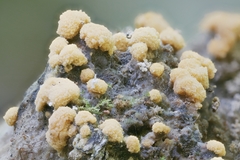 Trichoderma atroviridee0biocontrol_agent
- Second interactor
- B. subtilis B69
 Bacillus subtilise0biocontrol_agent
- Outcome
- seedling dry biomasse0
- Direction
- higheste0
- Value
- 43.0%e0
- Comparator
- uninoculated controle0
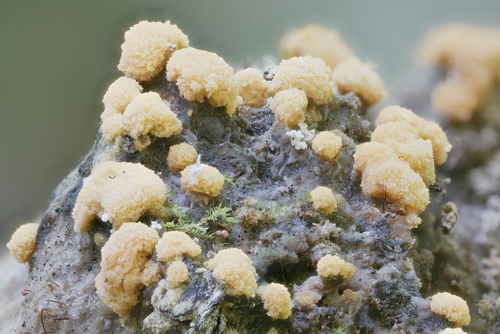
Organisms pictured · Representative pictures of the matched species, not figures from the paper.

Verbatim
e0“combined inoculations of T.atroviride strain 6 and B. subtilis B69 gave the highest growth promotion of bean in terms of seedling dry biomass (43.0% over uninoculated control).”
Claim · model-written summary
Bean root biomass and root area increased in rhizotron studies.
- Taxon
- beane1
- Treatment
- combined inoculations of T.atroviride strain 6 and B. subtilis B69e1
- Outcome
- root biomass and root areae0
- Direction
- increasede0
Not reportedComparator
Verbatim
e0“Rhizotron studies supported these findings, where it was shown that root biomass and root area were increased.”
e1“combined inoculations of T.atroviride strain 6 and B. subtilis B69 gave the highest growth promotion of bean”
Claim · model-written summary
Bean yield trial results were inconsistent and uncorrelated with seedling trials.
Verbatim
e0“results obtained for bean yield trials were inconsistent and had no correlation with the seedling trials (P = 0.87 and P = 0.35).”
Claim · model-written summary
No increase in bean seed protein or fat content was obtained with the selected isolates or combinations.
- Taxon
- beane0
- Treatment
- selected isolates and/or their combinationse0
- Outcome
- protein or fat content of bean seede0
- Direction
- No increasee0
Not reportedComparator
Verbatim
e0“No increase was obtained in protein or fat content of bean seed for any of the selected isolates and/or their combinations tested in two separate greenhouse yield trials.”
Claim · model-written summary
Single T. harzianum kmd inoculation gave among the highest cucumber survival in damping-off control trials.
- Taxon
- cucumber
 Cucumis sativuse0
- Treatment
- single inoculations of T. harzianum strain kmde0
- Interactor
- Rhizoctonia solani
 Rhizoctonia solanie1pathogen
- Second interactor
- T. harzianum strain kmd
 Trichoderma harzianume0biocontrol_agent
- Outcome
- percentage survivale0
- Direction
- higheste0
Not reportedComparator
Organisms pictured · Representative pictures of the matched species, not figures from the paper.


Verbatim
e0“single inoculations of T. harzianum strain kmd, T. atroviride strain 3A and T. harzianum strain SY gave the highest percentage survival of cucumber plants in the greenhouse.”
e1“damping-off caused by Rhizoctonia solani in cucumber”
Claim · model-written summary
Trichoderma plus Bacillus combinations did not outperform the leading single inoculations for cucumber survival.
- Taxon
- cucumberCucumis sativuse1
- Treatment
- Trichoderma plus Bacillus combinationse0
- Outcome
- percentage survivale1
- Direction
- None of the Trichoderma plus Bacillus combinations were bettere0
- Comparator
- single inoculations of T. harzianum strain kmd, T. atroviride strain 3A and T. harzianum strain SYe0
Organisms pictured · Representative pictures of the matched species, not figures from the paper.
Verbatim
e0“None of the Trichoderma plus Bacillus combinations were better than the single inoculations of T. harzianum strain kmd, T. atroviride strain 3A and T. harzianum strain SY.”
e1“percentage survival of cucumber plants”
Claim · model-written summary
The performance of B. subtilis B69 and B81 improved when combined with selected Trichoderma isolates.
- Taxon
- cucumberCucumis sativuse1
- Treatment
- combined with T. atroviride strain 3A, T. atroviride strain 6, T. harzianum strain SY or T. harzianum strain kmde0
- Outcome
- performancese0
- Direction
- enhancede0
- Comparator
- B. subtilis B69 and B81e0
Organisms pictured · Representative pictures of the matched species, not figures from the paper.
Verbatim
e0“The performances, particularly of B. subtilis B69 and B81 were enhanced when combined with T. atroviride strain 3A, T. atroviride strain 6, T. harzianum strain SY or T. harzianum strain kmd.”
e1“cucumber plants”
Claim · model-written summary
Each Trichoderma and Bacillus combination performed better than Bacillus isolates alone.
- Taxon
- cucumberCucumis sativuse1
- Treatment
- Trichoderma and Bacillus combinationse0
- Outcome
- performancee0
- Direction
- bettere0
- Comparator
- Bacillus isolates used alonee0
Organisms pictured · Representative pictures of the matched species, not figures from the paper.
Verbatim
e0“The performance of each of the Trichoderma and Bacillus combinations was better than the Bacillus isolates used alone.”
e1“cucumber plants”
The same questions in other papers
Trichoderma harzianum · Rhizoctonia solani · Cucumis sativus (cucumber)Results agree
1 paper in the same direction as this paper
- positive
Trichoderma atroviride · growth · Phaseolus vulgaris (common bean)Results agree
2 papers in the same direction as this paper
- positive
- positive
Bacillus subtilis · growth · Phaseolus vulgaris (common bean)Results agree
6 papers in the same direction as this paper
- positive
- positive
- positive
3 papers more in this group
See all 7 papers →inoculation · growth · Phaseolus vulgaris (common bean)Results differ
105 papers in the same direction as this paper · 20 in the opposite direction
- negative
- negative
- negative
122 papers more in this group
See all 126 papers →inoculation · Rhizoctonia solani · Cucumis sativus (cucumber)Results agree
6 papers in the same direction as this paper
- positive
- positive
- positive
3 papers more in this group
See all 7 papers →Claims are grouped by organism, treatment and what was measured or targeted. A paper counts as positive when any of its claims in the group is positive.