Abstract
Abstract Humid tropical regions of Costa Rica have ideal environmental conditions for vigorous weed growth. Vegetation management before and after planting requires more time and resources than any other activity in small‐scale maize (Zea mays L.) production. No‐tillage vegetation management systems tested were superior to traditional no‐tillage or mechanised systems. Insect damage to maize from Diabrotica balteata Leconte, Spodoptera frugiperda (J. E. Smith), Cyrtomenus bergi Froeschner and Phyllophaga spp. was significantly less with no‐tillage in contrast to ploughed systems.
Abstract from the paper’s OpenAlex record, shown for indexing and research. Copyright remains with the authors or the publisher. Read at the source ↗
The text the model read, with the source record’s inline markup (italics, sub- and superscripts) rendered and its character entities decoded; quote offsets refer to the raw text.
Claims 6
Claim · model-written summary
Vegetation management requires more time and resources than any other activity in small-scale maize production.
 Zea mays
Organisms pictured · Representative pictures of the matched species, not figures from the paper.

Verbatim
e1“Vegetation management before and after planting requires more time and resources than any other activity in small‐scale maize (Zea mays L.) production”
Claim · model-written summary
No-tillage vegetation management systems were superior to traditional no-tillage or mechanised systems in the humid tropics of Costa Rica.
- Treatment
- No‐tillage vegetation management systemse2
- Outcome
- superiore2
- Direction
- superiore2
- Comparator
- traditional no‐tillage or mechanised systemse2
- Setting
- humid tropics of Costa Ricat0
Organisms pictured · Representative pictures of the matched species, not figures from the paper.
Verbatim
e2“No‐tillage vegetation management systems tested were superior to traditional no‐tillage or mechanised systems”
t0“in the humid tropics of Costa Rica”
e1“Vegetation management before and after planting requires more time and resources than any other activity in small‐scale maize (Zea mays L.) production”
Claim · model-written summary
No-tillage reduced insect damage to maize from Diabrotica balteata compared with ploughed systems.
- Treatment
- no‐tillagee3
- Interactor
- Diabrotica balteata Leconte
 Diabrotica balteatae3pest
- Outcome
- Insect damage to maize from Diabrotica balteata Lecontee3
- Direction
- lesse3
- Comparator
- ploughed systemse3
Organisms pictured · Representative pictures of the matched species, not figures from the paper.

Verbatim
e3“Insect damage to maize from Diabrotica balteata Leconte, Spodoptera frugiperda (J. E. Smith), Cyrtomenus bergi Froeschner and Phyllophaga spp. was significantly less with no‐tillage in contrast to ploughed systems”
Claim · model-written summary
No-tillage reduced insect damage to maize from Spodoptera frugiperda compared with ploughed systems.
- Treatment
- no‐tillagee3
- Interactor
- Spodoptera frugiperda (J. E. Smith)
 Spodoptera frugiperdae3pest
- Outcome
- Insect damage to maizee3
- Direction
- lesse3
- Comparator
- ploughed systemse3
Organisms pictured · Representative pictures of the matched species, not figures from the paper.

Verbatim
e3“Insect damage to maize from Diabrotica balteata Leconte, Spodoptera frugiperda (J. E. Smith), Cyrtomenus bergi Froeschner and Phyllophaga spp. was significantly less with no‐tillage in contrast to ploughed systems”
Claim · model-written summary
No-tillage reduced insect damage to maize from Cyrtomenus bergi compared with ploughed systems.
- Treatment
- no‐tillagee3
- Interactor
- Cyrtomenus bergi Froeschner
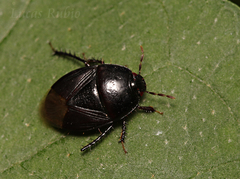 Cyrtomenus bergie3pest
- Outcome
- Insect damage to maizee3
- Direction
- lesse3
- Comparator
- ploughed systemse3
Organisms pictured · Representative pictures of the matched species, not figures from the paper.

Verbatim
e3“Insect damage to maize from Diabrotica balteata Leconte, Spodoptera frugiperda (J. E. Smith), Cyrtomenus bergi Froeschner and Phyllophaga spp. was significantly less with no‐tillage in contrast to ploughed systems”
Claim · model-written summary
No-tillage reduced insect damage to maize from Phyllophaga spp. compared with ploughed systems.
- Treatment
- no‐tillagee3
- Interactor
- Phyllophaga spp.
 Phyllophagae3pest
- Outcome
- Insect damage to maizee3
- Direction
- lesse3
- Comparator
- ploughed systemse3
Organisms pictured · Representative pictures of the matched species, not figures from the paper.

Verbatim
e3“Insect damage to maize from Diabrotica balteata Leconte, Spodoptera frugiperda (J. E. Smith), Cyrtomenus bergi Froeschner and Phyllophaga spp. was significantly less with no‐tillage in contrast to ploughed systems”
The same questions in other papers
tillage · Spodoptera frugiperda · Zea mays (maize)Results agree
1 paper in the same direction as this paper
- positive
Claims are grouped by organism, treatment and what was measured or targeted. A paper counts as positive when any of its claims in the group is positive.