Abstract
Maize ( Zea mays L.) and winged bean [ Psophocarpus tetragonolobus (L.) DC.] have complementary growth habits, biomass production, and protein concentrations. We evaluated yield and protein complementation between maize and winged bean to determine if intercropping can improve the quantity and quality of maize silage. An early and a late‐maturity corn hybrid were intercropped with ‘Tpt1’ winged bean at plant densities of 35 900 and 46 500 plants ha −1 in 1984 and 47 500 plants ha −1 in 1985 near Lexington, KY. In 1984, increased plant density resulted in increased maize vegetation, grain, vegetation N, and grain N yields per hectare (16, 21, 19, and 28%, respectively), while intercropping reduced maize grain yield and grain N yield per hectare by 8% each and reduced winged bean vegetation N concentration by 11% and yield per hectare by 40%. Intercropping winged bean with early maize produced 14% more biomass and 39% more N per hectare than did the reference early maize monoculture at post maize physiological maturity. In 1985, intercropping reduced maize vegetation, grain, and grain N yields per hectare (7, 14, and 14%, respectively), and reduced winged bean vegetation yield, N concentration, and N yield per hectare (58, 7, and 61%, respectively). Intercropping with early maize produced 18% more biomass and 67% more N per hectare, whereas intercropping with late maize produced 11% more biomass and 46% more N per hectare than did the respective monoculture maize. Land equivalency ratios for both dry matter and N yields per area were greater than unity for each plant density and intercropping system. Intercropping of maize with winged bean may provide greater biomass and improved protein content of silage in a temperate climate.
Abstract from the paper’s OpenAlex record, shown for indexing and research. Copyright remains with the authors or the publisher. Read at the source ↗
The text the model read, with the source record’s inline markup (italics, sub- and superscripts) rendered and its character entities decoded; quote offsets refer to the raw text.
Claims 20
Claim · model-written summary
Increased density raised maize vegetation yield by 16% in 1984.
 Zea mays
Not reportedComparator
Organisms pictured · Representative pictures of the matched species, not figures from the paper.

Verbatim
e0“increased plant density resulted in increased maize vegetation, grain, vegetation N, and grain N yields per hectare (16, 21, 19, and 28%, respectively)”
t0“Maize”
Claim · model-written summary
Increased density raised maize grain yield by 21% in 1984.
Not reportedComparator
Organisms pictured · Representative pictures of the matched species, not figures from the paper.
Verbatim
e0“increased plant density resulted in increased maize vegetation, grain, vegetation N, and grain N yields per hectare (16, 21, 19, and 28%, respectively)”
t0“Maize”
Claim · model-written summary
Increased density raised maize vegetation N yield by 19% in 1984.
Not reportedComparator
Organisms pictured · Representative pictures of the matched species, not figures from the paper.
Verbatim
e0“increased plant density resulted in increased maize vegetation, grain, vegetation N, and grain N yields per hectare (16, 21, 19, and 28%, respectively)”
t0“Maize”
Claim · model-written summary
Increased density raised maize grain N yield by 28% in 1984.
Not reportedComparator
Organisms pictured · Representative pictures of the matched species, not figures from the paper.
Verbatim
e0“increased plant density resulted in increased maize vegetation, grain, vegetation N, and grain N yields per hectare (16, 21, 19, and 28%, respectively)”
t0“Maize”
Claim · model-written summary
Intercropping lowered maize grain yield by 8% in 1984.
Not reportedComparator
Organisms pictured · Representative pictures of the matched species, not figures from the paper.
Verbatim
e0“intercropping reduced maize grain yield and grain N yield per hectare by 8% each”
t0“Maize”
Claim · model-written summary
Intercropping lowered maize grain N yield by 8% in 1984.
Not reportedComparator
Organisms pictured · Representative pictures of the matched species, not figures from the paper.
Verbatim
e0“intercropping reduced maize grain yield and grain N yield per hectare by 8% each”
t0“Maize”
Claim · model-written summary
Intercropping lowered winged bean vegetation N concentration by 11%.
- Taxon
- Winged Bean
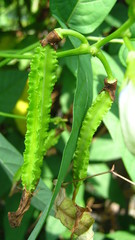 Psophocarpus tetragonolobust0
- Treatment
- intercroppinge1
- Outcome
- winged bean vegetation N concentratione0
- Direction
- reducede0
- Value
- 11%e0
Not reportedComparator
Organisms pictured · Representative pictures of the matched species, not figures from the paper.
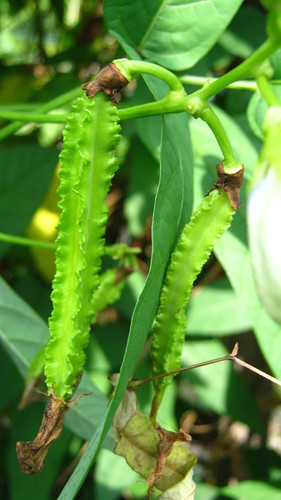
Verbatim
e0“reduced winged bean vegetation N concentration by 11% and yield per hectare by 40%.”
t0“Winged Bean”
e1“intercropping reduced maize grain yield and grain N yield per hectare by 8% each”
Claim · model-written summary
Intercropping lowered winged bean yield by 40%.
- Taxon
- Winged BeanPsophocarpus tetragonolobust0
- Treatment
- intercroppinge1
- Outcome
- yield per hectaree0
- Direction
- reducede0
- Value
- 40%e0
Not reportedComparator
Organisms pictured · Representative pictures of the matched species, not figures from the paper.
Verbatim
e0“reduced winged bean vegetation N concentration by 11% and yield per hectare by 40%.”
t0“Winged Bean”
e1“intercropping reduced maize grain yield and grain N yield per hectare by 8% each”
Claim · model-written summary
Early-maize intercrop produced 14% more biomass than early-maize monoculture in 1984.
- Treatment
- Intercropping winged bean with early maizee0
- Outcome
- biomasse0
- Direction
- moree0
- Value
- 14%e0
- Comparator
- reference early maize monoculturee0
Organisms pictured · Representative pictures of the matched species, not figures from the paper.
Verbatim
e0“Intercropping winged bean with early maize produced 14% more biomass and 39% more N per hectare than did the reference early maize monoculture”
t0“Maize”
Claim · model-written summary
Early-maize intercrop produced 39% more N than early-maize monoculture in 1984.
- Treatment
- Intercropping winged bean with early maizee0
- Outcome
- N per hectaree0
- Direction
- moree0
- Value
- 39%e0
- Comparator
- reference early maize monoculturee0
Organisms pictured · Representative pictures of the matched species, not figures from the paper.
Verbatim
e0“Intercropping winged bean with early maize produced 14% more biomass and 39% more N per hectare than did the reference early maize monoculture”
t0“Maize”
Claim · model-written summary
Intercropping reduced maize vegetation yield by 7% in 1985.
Not reportedComparator
Organisms pictured · Representative pictures of the matched species, not figures from the paper.
Verbatim
e0“intercropping reduced maize vegetation, grain, and grain N yields per hectare (7, 14, and 14%, respectively)”
t0“Maize”
Claim · model-written summary
Intercropping reduced maize grain yield by 14% in 1985.
Not reportedComparator
Organisms pictured · Representative pictures of the matched species, not figures from the paper.
Verbatim
e0“intercropping reduced maize vegetation, grain, and grain N yields per hectare (7, 14, and 14%, respectively)”
t0“Maize”
Claim · model-written summary
Intercropping reduced maize grain N yield by 14% in 1985.
Not reportedComparator
Organisms pictured · Representative pictures of the matched species, not figures from the paper.
Verbatim
e0“intercropping reduced maize vegetation, grain, and grain N yields per hectare (7, 14, and 14%, respectively)”
t0“Maize”
Claim · model-written summary
Intercropping reduced winged bean vegetation yield by 58% in 1985.
- Taxon
- Winged BeanPsophocarpus tetragonolobust0
- Treatment
- intercroppinge1
- Outcome
- winged bean vegetation yielde0
- Direction
- reducede0
- Value
- 58e0
Not reportedComparator
Organisms pictured · Representative pictures of the matched species, not figures from the paper.
Verbatim
e0“reduced winged bean vegetation yield, N concentration, and N yield per hectare (58, 7, and 61%, respectively)”
t0“Winged Bean”
e1“intercropping reduced maize grain yield and grain N yield per hectare by 8% each”
Claim · model-written summary
Intercropping reduced winged bean N concentration by 7% in 1985.
- Taxon
- Winged BeanPsophocarpus tetragonolobust0
- Treatment
- intercroppinge1
- Outcome
- N concentratione0
- Direction
- reducede0
- Value
- 7e0
Not reportedComparator
Organisms pictured · Representative pictures of the matched species, not figures from the paper.
Verbatim
e0“reduced winged bean vegetation yield, N concentration, and N yield per hectare (58, 7, and 61%, respectively)”
t0“Winged Bean”
e1“intercropping reduced maize grain yield and grain N yield per hectare by 8% each”
Claim · model-written summary
Intercropping reduced winged bean N yield by 61% in 1985.
- Taxon
- Winged BeanPsophocarpus tetragonolobust0
- Treatment
- intercroppinge1
- Outcome
- N yield per hectaree0
- Direction
- reducede0
- Value
- 61%e0
Not reportedComparator
Organisms pictured · Representative pictures of the matched species, not figures from the paper.
Verbatim
e0“reduced winged bean vegetation yield, N concentration, and N yield per hectare (58, 7, and 61%, respectively)”
t0“Winged Bean”
e1“intercropping reduced maize grain yield and grain N yield per hectare by 8% each”
Claim · model-written summary
Early-maize intercropping gave 18% more biomass and 67% more N than monoculture in 1985.
Not reportedComparator
Organisms pictured · Representative pictures of the matched species, not figures from the paper.
Verbatim
e0“Intercropping with early maize produced 18% more biomass and 67% more N per hectare”
t0“Maize”
Claim · model-written summary
Late-maize intercropping gave 11% more biomass and 46% more N than monoculture in 1985.
- Treatment
- intercropping with late maizee0
- Outcome
- biomasse0
- Direction
- moree0
- Value
- 11%e0
- Comparator
- respective monoculture maizee0
Organisms pictured · Representative pictures of the matched species, not figures from the paper.
Verbatim
e0“intercropping with late maize produced 11% more biomass and 46% more N per hectare than did the respective monoculture maize.”
t0“Maize”
Claim · model-written summary
Land equivalency ratios for dry matter and N exceeded one under all densities and systems.
- Outcome
- Land equivalency ratios for both dry matter and N yields per areae0
- Direction
- greater than unitye0
Organisms pictured · Representative pictures of the matched species, not figures from the paper.
Verbatim
e0“Land equivalency ratios for both dry matter and N yields per area were greater than unity for each plant density and intercropping system.”
t0“Maize”
Claim · model-written summary
Intercropping may yield more biomass and better silage protein content in a temperate climate.
- Outcome
- Intercropping of maize with winged beane0
Organisms pictured · Representative pictures of the matched species, not figures from the paper.
Verbatim
e0“Intercropping of maize with winged bean may provide greater biomass and improved protein content of silage in a temperate climate.”
t0“Maize”
The same questions in other papers
intercropping · growth · Zea mays (maize)Results differ
137 papers in the same direction as this paper · 40 in the opposite direction · 6 reporting no difference from an alternative
- no effect
- no effect
- negative
180 papers more in this group
See all 184 papers →intercropping · yield · Psophocarpus tetragonolobus (winged bean)Positive and negative results
1 in the opposite direction
- positive
density · organism · Zea mays (maize)Positive and negative results
13 papers in the same direction as this paper · 4 in the opposite direction
- no effect
- no effect
- negative
14 papers more in this group
See all 18 papers →intercropping · organism · Zea mays (maize)Positive and negative results
16 papers in the same direction as this paper · 33 in the opposite direction
- positive
- positive
- positive
46 papers more in this group
See all 50 papers →density · yield · Zea mays (maize)Positive and negative results
518 papers in the same direction as this paper · 132 in the opposite direction · 7 reporting no difference from an alternative
- negative
- negative
- no effect
654 papers more in this group
See all 658 papers →intercropping · yield · Zea mays (maize)Positive and negative results
220 papers in the same direction as this paper · 613 in the opposite direction
- no effect
- positive
- positive
830 papers more in this group
See all 834 papers →intercropping · nutrient: content · Psophocarpus tetragonolobus (winged bean)Results agree
1 paper in the same direction as this paper
- negative
Claims are grouped by organism, treatment and what was measured or targeted. A paper counts as positive when any of its claims in the group is positive.