Abstract
The objective of this study was to evaluate insecticide toxicity on Bemisia tabaci, Tetranychus evansi, Orius insidiosus, Cycloneda sanguinea and Chauliognathus flavipes in tomato plants. The following toxicity treatments were applied: T1: control, T2: chlorpyrifos (Pitcher) 450 EC (1.25 L.ha-1), T3: chlorpyrifos 450 EC (Pitcher) (0.62 L.ha-1), T4: thiamethoxam 100 WG (1.00 L.ha-1), T5: thiamethoxam 250 WG (0.50 L.ha-1), T6: teflubenzuron 150 CS (0.025 L.ha-1) and T7: teflubenzuron 150 CS (0.0125 L.ha-1). For the sub-lethal effect, a tenth of the recommended concentration was used. The insecticide teflubenzuron was effective against whitefly nymphs, while chlorpyrifos and thiamethoxam were efficient against adult whiteflies. Insecticides at the dose and lower dose were not efficient to control the adults and nymphs of mite T. evansi. Teflubenzuron was selective at the two doses tested against C. sanguinea and C. flavipes, while thiamethoxam was selective (lower dose) against these two predators. Chlorpyrifos was selective against C. flavipes (lower dose). All insecticides were selective or moderately selective at 21 days after application. Insecticides were not efficient to control the adults and nymphs of T. evansi. The growth regulating insecticide teflubenzuron was effective against whitefly nymphs. Chlorpyrifos and thiamethoxam were efficient against adult whiteflies. In general, the insecticides neonicotinoid and pyrethroid were selective to three predatory species and had lower sublethal impact compared with the organophosphate.
Abstract from the paper’s OpenAlex record, shown for indexing and research. Copyright remains with the authors or the publisher. Read at the source ↗
The text the model read, with the source record’s inline markup (italics, sub- and superscripts) rendered and its character entities decoded; quote offsets refer to the raw text.
Claims 11
Claim · model-written summary
Teflubenzuron controlled whitefly nymphs.
- Taxon
- Tomato
 Solanum lycopersicumt0
- Treatment
- teflubenzurone0
- Interactor
- whiteflye0pest
- Outcome
- whitefly nymphse0
- Direction
- effectivee0
Not reportedComparator
Organisms pictured · Representative pictures of the matched species, not figures from the paper.

Verbatim
e0“The insecticide teflubenzuron was effective against whitefly nymphs”
t0“Tomato Plants”
Claim · model-written summary
Chlorpyrifos controlled adult whiteflies.
- Taxon
- TomatoSolanum lycopersicumt0
- Treatment
- chlorpyrifose0
- Interactor
- whitefliesAleyrodoideae0pest
- Outcome
- adult whitefliese0
- Direction
- efficiente0
Not reportedComparator
Organisms pictured · Representative pictures of the matched species, not figures from the paper.
Verbatim
e0“chlorpyrifos and thiamethoxam were efficient against adult whiteflies”
t0“Tomato Plants”
Claim · model-written summary
Thiamethoxam controlled adult whiteflies.
- Taxon
- TomatoSolanum lycopersicumt0
- Treatment
- thiamethoxame0
- Interactor
- whitefliesAleyrodoideae0pest
- Outcome
- adult whitefliese0
- Direction
- efficiente0
Not reportedComparator
Organisms pictured · Representative pictures of the matched species, not figures from the paper.
Verbatim
e0“chlorpyrifos and thiamethoxam were efficient against adult whiteflies”
t0“Tomato Plants”
Claim · model-written summary
Tested insecticides did not efficiently control adult or nymph Tetranychus evansi at either dose.
- Taxon
- TomatoSolanum lycopersicumt0
- Treatment
- Insecticides at the dose and lower dosee0
- Interactor
- T. evansi
 Tetranychus evansie0pest
- Outcome
- adults and nymphs of mite T. evansie0
- Direction
- not efficiente0
Not reportedComparator
Organisms pictured · Representative pictures of the matched species, not figures from the paper.

Verbatim
e0“Insecticides at the dose and lower dose were not efficient to control the adults and nymphs of mite T. evansi.”
t0“Tomato Plants”
Claim · model-written summary
Teflubenzuron was selective for Cycloneda sanguinea at both doses.
- Taxon
- TomatoSolanum lycopersicumt0
- Treatment
- Teflubenzurone0
- Interactor
- C. sanguinea
 Cycloneda sanguineae0biocontrol_agent
- Outcome
- selective at the two doses tested against C. sanguineae0
Not reportedComparatorDirection
Organisms pictured · Representative pictures of the matched species, not figures from the paper.

Verbatim
e0“Teflubenzuron was selective at the two doses tested against C. sanguinea and C. flavipes”
t0“Tomato Plants”
Claim · model-written summary
Teflubenzuron was selective for Chauliognathus flavipes at both doses.
- Taxon
- TomatoSolanum lycopersicumt0
- Treatment
- Teflubenzurone0
- Interactor
- C. flavipes
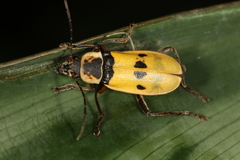 Chauliognathus flavipese0biocontrol_agent
- Outcome
- C. flavipese0
Not reportedComparatorDirection
Organisms pictured · Representative pictures of the matched species, not figures from the paper.
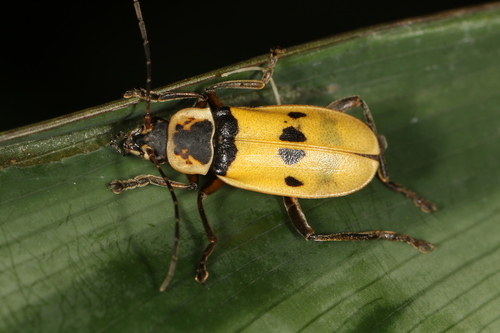
Verbatim
e0“Teflubenzuron was selective at the two doses tested against C. sanguinea and C. flavipes”
t0“Tomato Plants”
Claim · model-written summary
Thiamethoxam at the lower dose was selective for Cycloneda sanguinea.
- Taxon
- TomatoSolanum lycopersicumt0
- Treatment
- thiamethoxame0
- Interactor
- C. sanguineaCycloneda sanguineae1biocontrol_agent
- Outcome
- selective (lower dose) against these two predatorse0
Not reportedComparatorDirection
Organisms pictured · Representative pictures of the matched species, not figures from the paper.
Verbatim
e0“thiamethoxam was selective (lower dose) against these two predators”
e1“Teflubenzuron was selective at the two doses tested against C. sanguinea and C. flavipes”
t0“Tomato Plants”
Claim · model-written summary
Thiamethoxam at the lower dose was selective for Chauliognathus flavipes.
- Taxon
- TomatoSolanum lycopersicumt0
- Treatment
- thiamethoxame0
- Interactor
- C. flavipesChauliognathus flavipese1biocontrol_agent
- Outcome
- selective (lower dose) against these two predatorse0
Not reportedComparatorDirection
Organisms pictured · Representative pictures of the matched species, not figures from the paper.
Verbatim
e0“thiamethoxam was selective (lower dose) against these two predators”
e1“Teflubenzuron was selective at the two doses tested against C. sanguinea and C. flavipes”
t0“Tomato Plants”
Claim · model-written summary
Chlorpyrifos at the lower dose was selective for Chauliognathus flavipes.
- Taxon
- TomatoSolanum lycopersicumt0
- Treatment
- Chlorpyrifose0
- Interactor
- C. flavipesChauliognathus flavipese0biocontrol_agent
- Outcome
- selective against C. flavipese0
Not reportedComparatorDirection
Organisms pictured · Representative pictures of the matched species, not figures from the paper.
Verbatim
e0“Chlorpyrifos was selective against C. flavipes (lower dose).”
t0“Tomato Plants”
Claim · model-written summary
All insecticides were selective or moderately selective 21 days after application.
- Taxon
- TomatoSolanum lycopersicumt0
- Outcome
- selective or moderately selectivee0
- Qualifier
- 21 days after applicatione0
Organisms pictured · Representative pictures of the matched species, not figures from the paper.
Verbatim
e0“All insecticides were selective or moderately selective at 21 days after application.”
t0“Tomato Plants”
Claim · model-written summary
Neonicotinoid and pyrethroid insecticides generally had lower sublethal impact than organophosphate.
- Taxon
- TomatoSolanum lycopersicumt0
- Treatment
- neonicotinoid and pyrethroide0
- Interactor
- predatory speciese0biocontrol_agent
- Outcome
- sublethal impacte0
- Direction
- lowere0
- Comparator
- the organophosphatee0
Organisms pictured · Representative pictures of the matched species, not figures from the paper.
Verbatim
e0“the insecticides neonicotinoid and pyrethroid were selective to three predatory species and had lower sublethal impact compared with the organophosphate.”
t0“Tomato Plants”
The same questions in other papers
thiamethoxam · Aleyrodoidea · Solanum lycopersicum (tomato)Results agree
1 paper in the same direction as this paper
- positive
teflubenzuron · pest · Solanum lycopersicum (tomato)Results agree
2 papers in the same direction as this paper
- positive
- positive
Claims are grouped by organism, treatment and what was measured or targeted. A paper counts as positive when any of its claims in the group is positive.