Abstract
Field experiments were conducted to examine interactions of Heliothis virescens (F.), its natural enemies, and tobacco plants engineered to express low levels of Bacillus thuringiensis Berliner toxin. Survival of H. virescens larvae was measured in response to four treatments: (1) toxin-producing plants exposed to natural enemies, (2) toxin-producing plants caged to exclude enemies, (3) toxin-free plants exposed to enemies, and (4) toxin-free plants caged to exclude enemies. B. thuringiensis toxin mediated resistance caused a significant decrease in first-instar survival, and natural enemies caused a significant decrease in third-instar survival. Survival of uncaged first instars as a proportion of survival of caged first instars was significantly lower on toxic plants than control plants, indicating synergism of resistance and natural enemies. Among collections of artificially infested larvae, parasitism by Campoletis sonorensis (Cameron) was significantly higher on toxic plants than on control plants, another indication of synergism. Among collections of wild larvae and larvae censused in the field, parasitism usually did not differ between plant lines. Larval development of H. virescens was significantly slower on toxic plants than on control plants in two out of five trials. Prolonged vulnerability to natural enemies appeared to provide a mechanism for synergism. However, synergistic increases in mortality and parasitism were detected in two trials when development rates on toxic plants and control plants were equal, indicating existence of another mechanism. B. thuringiensis toxin-mediated partial resistance appeared compatible with natural enemies for control of H. virescens . However, a simulation using a theoretical population genetic model suggested that synergism of the level measured in this study could accelerate pest adaptation to resistant plants.
Abstract from the paper’s OpenAlex record, shown for indexing and research. Copyright remains with the authors or the publisher. Read at the source ↗
The text the model read, with the source record’s inline markup (italics, sub- and superscripts) rendered and its character entities decoded; quote offsets refer to the raw text.
Claims 10
Claim · model-written summary
Toxin-mediated resistance significantly decreased first-instar survival.
- Taxon
- tobacco plants
 Nicotiana tabacume0
- Treatment
- B. thuringiensis toxin mediated resistancee1
- Interactor
- Heliothis virescens
 Heliothis virescense3pest
- Outcome
- first-instar survivale1
- Direction
- decreasee1
- Comparator
- toxin-free plantse2
Organisms pictured · Representative pictures of the matched species, not figures from the paper.


Verbatim
e0“tobacco plants engineered to express low levels of Bacillus thuringiensis Berliner toxin”
e1“B. thuringiensis toxin mediated resistance caused a significant decrease in first-instar survival”
e2“toxin-free plants exposed to enemies”
e3“Heliothis virescens (F.)”
Claim · model-written summary
Natural enemies significantly decreased third-instar survival.
- Taxon
- tobacco plantsNicotiana tabacume0
- Treatment
- natural enemiese1
- Interactor
- Heliothis virescensHeliothis virescense3pest
- Outcome
- third-instar survivale1
- Direction
- decreasee1
- Comparator
- caged to exclude enemiese2
Organisms pictured · Representative pictures of the matched species, not figures from the paper.
Verbatim
e0“tobacco plants”
e1“natural enemies caused a significant decrease in third-instar survival”
e2“toxin-producing plants caged to exclude enemies”
e3“Heliothis virescens (F.)”
Claim · model-written summary
Uncaged first-instar survival relative to caged survival was lower on toxic plants than controls.
- Taxon
- tobacco plantsNicotiana tabacume0
- Treatment
- toxic plantse1
- Interactor
- Heliothis virescensHeliothis virescense3pest
- Outcome
- Survival of uncaged first instars as a proportion of survival of caged first instarse1
- Direction
- lowere1
- Comparator
- control plantse1
Organisms pictured · Representative pictures of the matched species, not figures from the paper.
Verbatim
e0“tobacco plants”
e1“Survival of uncaged first instars as a proportion of survival of caged first instars was significantly lower on toxic plants than control plants”
e3“Heliothis virescens (F.)”
Claim · model-written summary
Campoletis sonorensis parasitism of artificially infested larvae was higher on toxic plants.
- Taxon
- tobacco plantsNicotiana tabacume0
- Treatment
- toxic plantse1
- Interactor
- Heliothis virescensHeliothis virescense3pest
- Second interactor
- Campoletis sonorensis
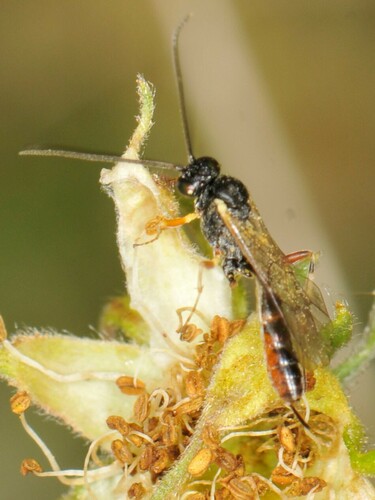
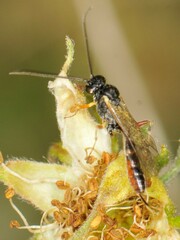 Campoletis sonorensise1biocontrol_agent
- Outcome
- parasitism by Campoletis sonorensise1
- Direction
- highere1
- Comparator
- control plantse1
Organisms pictured · Representative pictures of the matched species, not figures from the paper.
Verbatim
e0“tobacco plants”
e1“parasitism by Campoletis sonorensis (Cameron) was significantly higher on toxic plants than on control plants”
e3“Heliothis virescens (F.)”
Claim · model-written summary
Parasitism of wild and field-censused larvae usually did not differ between plant lines.
- Taxon
- tobacco plantsNicotiana tabacume0
- Interactor
- Heliothis virescensHeliothis virescense3pest
- Outcome
- parasitisme1
- Direction
- did not differe1
Organisms pictured · Representative pictures of the matched species, not figures from the paper.
Verbatim
e0“tobacco plants”
e1“Among collections of wild larvae and larvae censused in the field, parasitism usually did not differ between plant lines”
e3“Heliothis virescens (F.)”
Claim · model-written summary
Heliothis larval development was slower on toxic plants in two of five trials.
- Taxon
- tobacco plantsNicotiana tabacume0
- Treatment
- toxic plantse1
- Interactor
- Heliothis virescensHeliothis virescense3pest
- Outcome
- Larval development of H. virescense1
- Direction
- slowere1
- Qualifier
- in two out of five trialse1
- Comparator
- control plantse1
Organisms pictured · Representative pictures of the matched species, not figures from the paper.
Verbatim
e0“tobacco plants”
e1“Larval development of H. virescens was significantly slower on toxic plants than on control plants in two out of five trials”
e3“Heliothis virescens (F.)”
Claim · model-written summary
Prolonged vulnerability to natural enemies appeared to explain synergism.
- Taxon
- tobacco plantsNicotiana tabacume0
- Interactor
- Heliothis virescensHeliothis virescense3pest
- Outcome
- synergisme1
- Qualifier
- Prolonged vulnerability to natural enemiese1
Organisms pictured · Representative pictures of the matched species, not figures from the paper.
Verbatim
e0“tobacco plants”
e1“Prolonged vulnerability to natural enemies appeared to provide a mechanism for synergism”
e3“Heliothis virescens (F.)”
Claim · model-written summary
Synergistic increases in mortality and parasitism occurred even when development rates were equal in two trials.
- Taxon
- tobacco plantsNicotiana tabacume0
- Interactor
- Heliothis virescensHeliothis virescense3pest
- Outcome
- mortality and parasitisme1
- Direction
- increasese1
- Qualifier
- in two trials when development rates on toxic plants and control plants were equale1
Organisms pictured · Representative pictures of the matched species, not figures from the paper.
Verbatim
e0“tobacco plants”
e1“synergistic increases in mortality and parasitism were detected in two trials when development rates on toxic plants and control plants were equal”
e3“Heliothis virescens (F.)”
Claim · model-written summary
Partial Bt resistance appeared compatible with natural enemies for Heliothis control.
- Taxon
- tobacco plantsNicotiana tabacume0
- Interactor
- Heliothis virescensHeliothis virescense3pest
- Outcome
- compatible with natural enemies for control of H. virescense1
Organisms pictured · Representative pictures of the matched species, not figures from the paper.
Verbatim
e0“tobacco plants”
e1“B. thuringiensis toxin-mediated partial resistance appeared compatible with natural enemies for control of H. virescens”
e3“Heliothis virescens (F.)”
Claim · model-written summary
A theoretical model suggested measured synergism could accelerate pest adaptation to resistant plants.
- Taxon
- tobacco plantsNicotiana tabacume0
- Interactor
- Heliothis virescensHeliothis virescense3pest
- Outcome
- pest adaptation to resistant plantse1
- Direction
- acceleratee1
Organisms pictured · Representative pictures of the matched species, not figures from the paper.
Verbatim
e0“tobacco plants”
e1“a simulation using a theoretical population genetic model suggested that synergism of the level measured in this study could accelerate pest adaptation to resistant plants”
e3“Heliothis virescens (F.)”
The same questions in other papers
Bacillus thuringiensis · Heliothis virescens · Nicotiana tabacum (tobacco)Results agree
1 paper in the same direction as this paper
- positive
biocontrol · Heliothis virescens · Nicotiana tabacum (tobacco)Positive and negative results
1 in the opposite direction
- no effect
Claims are grouped by organism, treatment and what was measured or targeted. A paper counts as positive when any of its claims in the group is positive.