Abstract
The effects of nitrogen and phosphorus fertilizers and winter wheat residue on growth, yield, and common root rot (Cochliobolus sativus (Ito and Kurib.) Drechs. ex Dastur) of barley (Hordeum vulgare L.) are discussed. The deleterious effect on barley yields of incorporating large amounts of crop residue into the soil just before seeding could be partially overcome by application of nitrogen fertilizer. The amount of residue alone had little effect on root-rot severity in 2 of 3 years but severity of infection increased as the rate of applied nitrogen was increased. Applied phosphorus generally had little effect on yield or root-rot severity, although the average number of pathogens, particularly Fusaria spp., isolated from crown pieces grown under heavy residue and high rates of applied phosphorus alone was lower than that from other treatments.
Abstract from the paper’s OpenAlex record, shown for indexing and research. Copyright remains with the authors or the publisher. Read at the source ↗
The text the model read, with the source record’s inline markup (italics, sub- and superscripts) rendered and its character entities decoded; quote offsets refer to the raw text.
Claims 6
Claim · model-written summary
Incorporating large amounts of crop residue before seeding had a deleterious effect on barley yields.
- Taxon
- barley
 Hordeum vulgaree1
- Treatment
- incorporating large amounts of crop residuee1
- Outcome
- barley yieldse1
- Direction
- deleteriouse1
Not reportedComparator
Organisms pictured · Representative pictures of the matched species, not figures from the paper.

Verbatim
e0“common root rot (Cochliobolus sativus (Ito and Kurib.) Drechs. ex Dastur) of barley (Hordeum vulgare L.)”
e1“The deleterious effect on barley yields of incorporating large amounts of crop residue into the soil just before seeding could be partially overcome by application of nitrogen fertilizer”
Claim · model-written summary
Nitrogen fertilizer application partially overcame the deleterious effect of crop residue on barley yields.
- Taxon
- barleyHordeum vulgaree1
- Treatment
- application of nitrogen fertilizere1
- Outcome
- barley yieldse1
- Direction
- partially overcomee1
- Comparator
- incorporating large amounts of crop residuee1
Organisms pictured · Representative pictures of the matched species, not figures from the paper.
Verbatim
e0“common root rot (Cochliobolus sativus (Ito and Kurib.) Drechs. ex Dastur) of barley (Hordeum vulgare L.)”
e1“The deleterious effect on barley yields of incorporating large amounts of crop residue into the soil just before seeding could be partially overcome by application of nitrogen fertilizer”
Claim · model-written summary
The amount of crop residue alone had little effect on common root rot severity in 2 of 3 years.
- Taxon
- barleyHordeum vulgaree0
- Treatment
- amount of residuee2
- Interactor
- Cochliobolus sativus
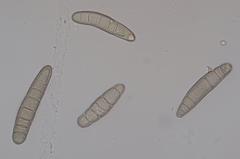 Bipolaris sorokinianae0pathogen
- Outcome
- root-rot severitye2
- Direction
- little effecte2
- Qualifier
- in 2 of 3 yearse2
Organisms pictured · Representative pictures of the matched species, not figures from the paper.
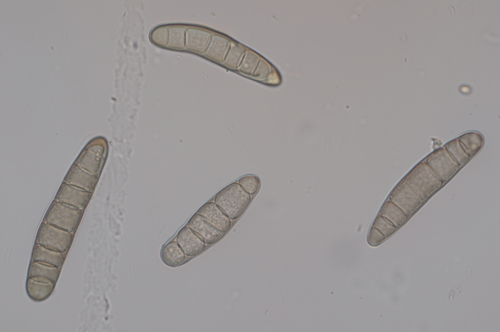
Verbatim
e0“common root rot (Cochliobolus sativus (Ito and Kurib.) Drechs. ex Dastur) of barley (Hordeum vulgare L.)”
e2“The amount of residue alone had little effect on root-rot severity in 2 of 3 years”
Claim · model-written summary
Common root rot infection severity increased as the rate of applied nitrogen increased.
- Taxon
- barleyHordeum vulgaree0
- Treatment
- rate of applied nitrogene3
- Interactor
- Cochliobolus sativusBipolaris sorokinianae0pathogen
- Outcome
- severity of infectione3
- Direction
- increasede3
Organisms pictured · Representative pictures of the matched species, not figures from the paper.
Verbatim
e0“common root rot (Cochliobolus sativus (Ito and Kurib.) Drechs. ex Dastur) of barley (Hordeum vulgare L.)”
e3“severity of infection increased as the rate of applied nitrogen was increased”
Claim · model-written summary
Applied phosphorus generally had little effect on barley yield or root-rot severity.
- Taxon
- barleyHordeum vulgaree0
- Treatment
- Applied phosphoruse4
- Outcome
- yield or root-rot severitye4
- Direction
- little effecte4
Organisms pictured · Representative pictures of the matched species, not figures from the paper.
Verbatim
e0“common root rot (Cochliobolus sativus (Ito and Kurib.) Drechs. ex Dastur) of barley (Hordeum vulgare L.)”
e4“Applied phosphorus generally had little effect on yield or root-rot severity”
Claim · model-written summary
Heavy residue with high applied phosphorus alone gave lower average numbers of pathogens, particularly Fusarium spp., isolated from crown pieces than other treatments.
- Taxon
- barleyHordeum vulgaree0
- Treatment
- heavy residue and high rates of applied phosphorus alonee5
- Interactor
- Fusaria spp.e5pathogen
- Outcome
- average number of pathogense5
- Direction
- lowere5
- Comparator
- other treatmentse5
Organisms pictured · Representative pictures of the matched species, not figures from the paper.
Verbatim
e0“common root rot (Cochliobolus sativus (Ito and Kurib.) Drechs. ex Dastur) of barley (Hordeum vulgare L.)”
e5“the average number of pathogens, particularly Fusaria spp., isolated from crown pieces grown under heavy residue and high rates of applied phosphorus alone was lower than that from other treatments”
The same questions in other papers
organic · yield · Hordeum vulgare (barley)Positive and negative results
6 papers in the same direction as this paper · 29 in the opposite direction
- positive
- positive
- positive
32 papers more in this group
See all 36 papers →fertilization · yield · Hordeum vulgare (barley)Positive and negative results
472 papers in the same direction as this paper · 66 in the opposite direction · 11 reporting no difference from an alternative
- negative
- no effect
- negative
546 papers more in this group
See all 550 papers →Claims are grouped by organism, treatment and what was measured or targeted. A paper counts as positive when any of its claims in the group is positive.