Abstract
This study aims to confirm the potential of bio-pesticide application under field conditions in combination with chemical pesticides against the pest moth Maruca vitrata on yard-long bean. Four field trials were conducted at two locations (AVRDC East and Southeast Asia Regional Research and Training Station, and farmers’ fields in Kamphaeng Saen, Thailand) from March to May 2012 and May to August 2012. The yard-long bean pod damage by M. vitrata was significantly reduced by 23–85%, with substantial yield increases (22–190%) in Bacillus thuringiensis-based treatments in combination with cypermethrin, when compared with the untreated check. Although the combined effect of cypermethrin with Beauveria bassiana or neem-based treatments was better than the untreated check, the pod damage was still higher in these treatments, recording up to 26.87% compared with B. thuringiensis subsp. aizawai-treated plots. Based on these results, B. thuringiensis is a promising component for integrated pest management strategies against M. vitrata on yard-long bean in Thailand.
Abstract from the paper’s OpenAlex record, shown for indexing and research. Copyright remains with the authors or the publisher. Read at the source ↗
The text the model read, with the source record’s inline markup (italics, sub- and superscripts) rendered and its character entities decoded; quote offsets refer to the raw text.
Claims 5
Claim · model-written summary
Bacillus thuringiensis-based treatments combined with cypermethrin significantly reduced Maruca vitrata pod damage on yard-long bean by 23–85% compared with the untreated check.
- Taxon
- yard-long bean
 Vigna unguiculata subsp. sesquipedalise0
- Treatment
- Bacillus thuringiensis-based treatments in combination with cypermethrine1
- Interactor
- M. vitrata
 Maruca vitratae1pest
- Second interactor
- Bacillus thuringiensis
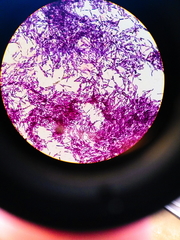 Bacillus thuringiensise1biocontrol_agent
- Outcome
- pod damagee1
- Direction
- reducede1
- Value
- 23–85%e1
- Comparator
- untreated checke1
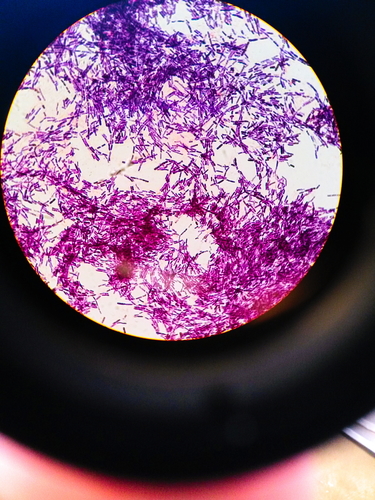
Organisms pictured · Representative pictures of the matched species, not figures from the paper.


Verbatim
e0“against the pest moth Maruca vitrata on yard-long bean”
e1“The yard-long bean pod damage by M. vitrata was significantly reduced by 23–85%, with substantial yield increases (22–190%) in Bacillus thuringiensis-based treatments in combination with cypermethrin, when compared with the untreated check”
Claim · model-written summary
Bacillus thuringiensis-based treatments combined with cypermethrin increased yield of yard-long bean by 22–190% compared with the untreated check.
- Taxon
- yard-long beanVigna unguiculata subsp. sesquipedalise0
- Treatment
- Bacillus thuringiensis-based treatments in combination with cypermethrine1
- Interactor
- M. vitrataMaruca vitratae1pest
- Second interactor
- Bacillus thuringiensisBacillus thuringiensise1biocontrol_agent
- Outcome
- yielde1
- Direction
- increasese1
- Value
- 22–190%e1
- Comparator
- untreated checke1
Organisms pictured · Representative pictures of the matched species, not figures from the paper.
Verbatim
e0“against the pest moth Maruca vitrata on yard-long bean”
e1“The yard-long bean pod damage by M. vitrata was significantly reduced by 23–85%, with substantial yield increases (22–190%) in Bacillus thuringiensis-based treatments in combination with cypermethrin, when compared with the untreated check”
Claim · model-written summary
The combined effect of cypermethrin with Beauveria bassiana or neem-based treatments was better than the untreated check on Maruca vitrata pod damage.
- Taxon
- yard-long beanVigna unguiculata subsp. sesquipedalise0
- Treatment
- cypermethrin with Beauveria bassiana or neem-based treatmentse2
- Interactor
- Maruca vitrataMaruca vitratae0pest
- Outcome
- combined effecte2
- Direction
- bettere2
- Comparator
- untreated checke2
Organisms pictured · Representative pictures of the matched species, not figures from the paper.
Verbatim
e0“against the pest moth Maruca vitrata on yard-long bean”
e2“Although the combined effect of cypermethrin with Beauveria bassiana or neem-based treatments was better than the untreated check, the pod damage was still higher in these treatments, recording up to 26.87% compared with B. thuringiensis subsp. aizawai-treated plots”
Claim · model-written summary
Pod damage was still higher, up to 26.87%, in cypermethrin with Beauveria bassiana or neem-based treatments than in B. thuringiensis subsp. aizawai-treated plots.
- Taxon
- yard-long beanVigna unguiculata subsp. sesquipedalise0
- Treatment
- cypermethrin with Beauveria bassiana or neem-based treatmentse2
- Interactor
- Maruca vitrataMaruca vitratae0pest
- Outcome
- pod damagee2
- Direction
- highere2
- Value
- 26.87%e2
- Comparator
- B. thuringiensis subsp. aizawai-treated plotse2
Organisms pictured · Representative pictures of the matched species, not figures from the paper.
Verbatim
e0“against the pest moth Maruca vitrata on yard-long bean”
e2“Although the combined effect of cypermethrin with Beauveria bassiana or neem-based treatments was better than the untreated check, the pod damage was still higher in these treatments, recording up to 26.87% compared with B. thuringiensis subsp. aizawai-treated plots”
Claim · model-written summary
Bacillus thuringiensis is recommended as a promising component of integrated pest management against Maruca vitrata on yard-long bean in Thailand.
- Taxon
- yard-long beanVigna unguiculata subsp. sesquipedalise3
- Interactor
- M. vitrataMaruca vitratae3pest
- Outcome
- promising component for integrated pest management strategiese3
Organisms pictured · Representative pictures of the matched species, not figures from the paper.
Verbatim
e3“B. thuringiensis is a promising component for integrated pest management strategies against M. vitrata on yard-long bean in Thailand”
The same questions in other papers
Beauveria bassiana · Maruca vitrata · Vigna unguiculata (cowpea)Results agree
4 papers in the same direction as this paper
- positive
- positive
- positive
1 paper more in this group
See all 5 papers →cypermethrin · Maruca vitrata · Vigna unguiculata (cowpea)Results agree
5 papers in the same direction as this paper
- positive
- positive
- positive
2 papers more in this group
See all 6 papers →botanical · Maruca vitrata · Vigna unguiculata (cowpea)Results agree
13 papers in the same direction as this paper
- positive
- positive
- positive
10 papers more in this group
See all 14 papers →Claims are grouped by organism, treatment and what was measured or targeted. A paper counts as positive when any of its claims in the group is positive.