Abstract
Fungi belonging to the genus Trichoderma, commonly found in soil or colonizing plant roots, exert beneficial effects on plants, including the promotion of growth and the induction of resistance to disease. T. virens and T. atroviride secrete the proteins Sm1 and Epl1, respectively, which elicit local and systemic disease resistance in plants. In this work, we show that these fungi promote growth in tomato (Solanum lycopersicum) plants. T. virens was more effective than T. atroviride in promoting biomass gain, and both fungi were capable of inducing systemic protection in tomato against Alternaria solani, Botrytis cinerea, and Pseudomonas syringae pv. tomato (Pst DC3000). Deletion (KO) of epl1 in T. atroviride resulted in diminished systemic protection against A. solani and B. cinerea, whereas the T. virens sm1 KO strain was less effective in protecting tomato against Pst DC3000 and B. cinerea. Importantly, overexpression (OE) of epl1 and sm1 led to an increase in disease resistance against all tested pathogens. Although the Trichoderma WT strains induced both systemic acquired resistance (SAR)- and induced systemic resistance (ISR)-related genes in tomato, inoculation of plants with OE and KO strains revealed that Epl1 and Sm1 play a minor role in the induction of these genes. However, we found that Epl1 and Sm1 induce the expression of a peroxidase and an α-dioxygenase encoding genes, respectively, which could be important for tomato protection by Trichoderma spp. Altogether, these observations indicate that colonization by beneficial and/or infection by pathogenic microorganisms dictates many of the outcomes in plants, which are more complex than previously thought.
Abstract from the paper’s OpenAlex record; open copy licensed cc-by. Read at the source ↗
The text the model read, with the source record’s inline markup (italics, sub- and superscripts) rendered and its character entities decoded; quote offsets refer to the raw text.
Claims 16
Claim · model-written summary
Trichoderma virens promoted tomato growth.
- Taxon
- tomato
 Solanum lycopersicume0
- Treatment
- T. virense1
- Interactor
- T. virensTrichoderma virense1symbiont
- Outcome
- growthe0
- Direction
- promotee0
Not reportedComparator
Organisms pictured · Representative pictures of the matched species, not figures from the paper.

Verbatim
e0“In this work, we show that these fungi promote growth in tomato (Solanum lycopersicum) plants.”
e1“T. virens and T. atroviride secrete the proteins Sm1 and Epl1, respectively”
Claim · model-written summary
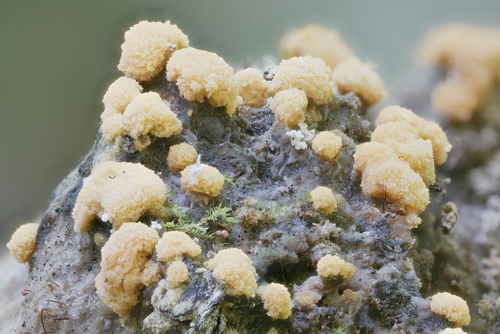
Trichoderma atroviride promoted tomato growth.
- Taxon
- tomatoSolanum lycopersicume0
- Treatment
- T. atroviridee1
- Interactor
- T. atroviride
 Trichoderma atroviridee1symbiont
- Outcome
- growthe0
- Direction
- promotee0
Not reportedComparator
Organisms pictured · Representative pictures of the matched species, not figures from the paper.
Verbatim
e0“In this work, we show that these fungi promote growth in tomato (Solanum lycopersicum) plants.”
e1“T. virens and T. atroviride secrete the proteins Sm1 and Epl1, respectively”
Claim · model-written summary
T. virens promoted more tomato biomass gain than T. atroviride.
- Taxon
- tomatoSolanum lycopersicume1
- Treatment
- T. virense0
- Interactor
- T. virensTrichoderma virense0symbiont
- Outcome
- biomass gaine0
- Direction
- more effectivee0
- Comparator
- T. atroviridee0
Organisms pictured · Representative pictures of the matched species, not figures from the paper.
Verbatim
e0“T. virens was more effective than T. atroviride in promoting biomass gain”
e1“tomato (Solanum lycopersicum) plants”
Claim · model-written summary
Both Trichoderma fungi induced systemic tomato protection against Alternaria solani.
- Taxon
- tomatoSolanum lycopersicume0
- Treatment
- both fungie0
- Interactor
- Alternaria solani
 Alternaria solanie0pathogen
- Outcome
- systemic protectione0
Not reportedComparatorDirection
Organisms pictured · Representative pictures of the matched species, not figures from the paper.

Verbatim
e0“both fungi were capable of inducing systemic protection in tomato against Alternaria solani, Botrytis cinerea, and Pseudomonas syringae pv. tomato (Pst DC3000).”
Claim · model-written summary
Both Trichoderma fungi induced systemic tomato protection against Botrytis cinerea.
- Taxon
- tomatoSolanum lycopersicume0
- Treatment
- both fungie0
- Interactor
- Botrytis cinerea
 Botrytis cinereae0pathogen
- Outcome
- systemic protectione0
Not reportedComparatorDirection
Organisms pictured · Representative pictures of the matched species, not figures from the paper.

Verbatim
e0“both fungi were capable of inducing systemic protection in tomato against Alternaria solani, Botrytis cinerea, and Pseudomonas syringae pv. tomato (Pst DC3000).”
Claim · model-written summary
Both Trichoderma fungi induced systemic tomato protection against Pseudomonas syringae pv. tomato.
- Taxon
- tomatoSolanum lycopersicume0
- Treatment
- both fungie0
- Interactor
- Pseudomonas syringae pv. tomato
 Pseudomonas syringae pv. tomatoe0pathogen
- Outcome
- systemic protectione0
Not reportedComparatorDirection
Organisms pictured · Representative pictures of the matched species, not figures from the paper.

Verbatim
e0“both fungi were capable of inducing systemic protection in tomato against Alternaria solani, Botrytis cinerea, and Pseudomonas syringae pv. tomato (Pst DC3000).”
Claim · model-written summary
Deletion of epl1 in T. atroviride reduced tomato protection against A. solani.
- Taxon
- tomatoSolanum lycopersicume1
- Treatment
- Deletion (KO) of epl1 in T. atroviridee0
- Interactor
- A. solaniAlternaria solanie0pathogen
- Second interactor
- T. atrovirideTrichoderma atroviridee0biocontrol_agent
- Gene
- epl1e0
- Outcome
- systemic protectione0
- Direction
- diminishede0
Not reportedComparator
Organisms pictured · Representative pictures of the matched species, not figures from the paper.
Verbatim
e0“Deletion (KO) of epl1 in T. atroviride resulted in diminished systemic protection against A. solani and B. cinerea”
e1“tomato (Solanum lycopersicum) plants”
Claim · model-written summary
Deletion of epl1 in T. atroviride reduced tomato protection against B. cinerea.
- Taxon
- tomatoSolanum lycopersicume1
- Treatment
- Deletion (KO) of epl1 in T. atroviridee0
- Interactor
- B. cinereaBotrytis cinereae0pathogen
- Second interactor
- T. atrovirideTrichoderma atroviridee0biocontrol_agent
- Gene
- epl1e0
- Outcome
- systemic protectione0
- Direction
- diminishede0
Not reportedComparator
Organisms pictured · Representative pictures of the matched species, not figures from the paper.
Verbatim
e0“Deletion (KO) of epl1 in T. atroviride resulted in diminished systemic protection against A. solani and B. cinerea”
e1“tomato (Solanum lycopersicum) plants”
Claim · model-written summary
The T. virens sm1 KO strain protected tomato less effectively against Pst DC3000.
- Taxon
- tomatoSolanum lycopersicume0
- Treatment
- T. virens sm1 KO straine0
- Interactor
- Pst DC3000e0pathogen
- Second interactor
- T. virensTrichoderma virense0biocontrol_agent
- Gene
- sm1e0
- Outcome
- protecting tomatoe0
- Direction
- less effectivee0
Not reportedComparator
Organisms pictured · Representative pictures of the matched species, not figures from the paper.
Verbatim
e0“the T. virens sm1 KO strain was less effective in protecting tomato against Pst DC3000 and B. cinerea”
Claim · model-written summary
The T. virens sm1 KO strain protected tomato less effectively against B. cinerea.
- Taxon
- tomatoSolanum lycopersicume0
- Treatment
- T. virens sm1 KO straine0
- Interactor
- B. cinereaBotrytis cinereae0pathogen
- Second interactor
- T. virensTrichoderma virense0biocontrol_agent
- Gene
- sm1e0
- Outcome
- protecting tomatoe0
- Direction
- less effectivee0
Not reportedComparator
Organisms pictured · Representative pictures of the matched species, not figures from the paper.
Verbatim
e0“the T. virens sm1 KO strain was less effective in protecting tomato against Pst DC3000 and B. cinerea”
Claim · model-written summary
Overexpression of epl1 increased tomato resistance against all tested pathogens.
- Taxon
- tomatoSolanum lycopersicume1
- Treatment
- overexpression (OE) of epl1e0
- Gene
- epl1e0
- Outcome
- disease resistancee0
- Direction
- increasee0
- Qualifier
- all tested pathogense0
Not reportedComparator
Organisms pictured · Representative pictures of the matched species, not figures from the paper.
Verbatim
e0“overexpression (OE) of epl1 and sm1 led to an increase in disease resistance against all tested pathogens”
e1“tomato (Solanum lycopersicum) plants”
Claim · model-written summary
Overexpression of sm1 increased tomato resistance against all tested pathogens.
- Taxon
- tomatoSolanum lycopersicume1
- Treatment
- overexpression (OE) of epl1 and sm1e0
- Gene
- sm1e0
- Outcome
- disease resistancee0
- Direction
- increasee0
- Qualifier
- all tested pathogense0
Not reportedComparator
Organisms pictured · Representative pictures of the matched species, not figures from the paper.
Verbatim
e0“overexpression (OE) of epl1 and sm1 led to an increase in disease resistance against all tested pathogens”
e1“tomato (Solanum lycopersicum) plants”
Claim · model-written summary
Trichoderma wild-type strains induced tomato SAR- and ISR-related genes.
- Taxon
- tomatoSolanum lycopersicume0
- Treatment
- Trichoderma WT strainse0
- Interactor
- Trichoderma
 Trichodermae0symbiont
- Outcome
- systemic acquired resistance (SAR)- and induced systemic resistance (ISR)-related genese0
- Direction
- inducede0
Not reportedComparator
Organisms pictured · Representative pictures of the matched species, not figures from the paper.

Verbatim
e0“the Trichoderma WT strains induced both systemic acquired resistance (SAR)- and induced systemic resistance (ISR)-related genes in tomato”
Claim · model-written summary
Epl1 and Sm1 played a minor role in induction of the tomato SAR- and ISR-related genes.
- Taxon
- tomatoSolanum lycopersicume1
- Gene
- Epl1 and Sm1e0
- Outcome
- induction of these genese0
- Qualifier
- minor rolee0
Organisms pictured · Representative pictures of the matched species, not figures from the paper.
Verbatim
e0“inoculation of plants with OE and KO strains revealed that Epl1 and Sm1 play a minor role in the induction of these genes”
e1“the Trichoderma WT strains induced both systemic acquired resistance (SAR)- and induced systemic resistance (ISR)-related genes in tomato”
Claim · model-written summary
Epl1 induced expression of a peroxidase-encoding gene in tomato.
- Taxon
- tomatoSolanum lycopersicume1
- Treatment
- Epl1e0
- Gene
- Epl1e0
- Outcome
- expression of a peroxidasee0
- Direction
- inducee0
Not reportedComparator
Organisms pictured · Representative pictures of the matched species, not figures from the paper.
Verbatim
e0“Epl1 and Sm1 induce the expression of a peroxidase and an α-dioxygenase encoding genes, respectively”
e1“tomato (Solanum lycopersicum) plants”
Claim · model-written summary
Sm1 induced expression of an α-dioxygenase-encoding gene in tomato.
- Taxon
- tomatoSolanum lycopersicume1
- Treatment
- Sm1e0
- Gene
- Sm1e0
- Outcome
- an α-dioxygenase encoding genese0
- Direction
- inducee0
Not reportedComparator
Organisms pictured · Representative pictures of the matched species, not figures from the paper.
Verbatim
e0“Epl1 and Sm1 induce the expression of a peroxidase and an α-dioxygenase encoding genes, respectively”
e1“tomato (Solanum lycopersicum) plants”
The same questions in other papers
Trichoderma virens · Botrytis cinerea · Solanum lycopersicum (tomato)Positive and negative results
2 in the opposite direction
- positive
- positive
Trichoderma virens · growth · Solanum lycopersicum (tomato)Results agree
3 papers in the same direction as this paper
- positive
- positive
- positive
Trichoderma atroviride · growth · Solanum lycopersicum (tomato)Results agree
5 papers in the same direction as this paper
- positive
- positive
- positive
2 papers more in this group
See all 6 papers →loss of function · Alternaria solani · Solanum lycopersicum (tomato)Positive and negative results
1 in the opposite direction
- positive
loss of function · Botrytis cinerea · Solanum lycopersicum (tomato)Positive and negative results
17 papers in the same direction as this paper · 8 in the opposite direction
- positive
- positive
- positive
22 papers more in this group
See all 26 papers →Claims are grouped by organism, treatment and what was measured or targeted. A paper counts as positive when any of its claims in the group is positive.