Abstract
Contrary to general concepts, gibberellic acid solution by single foliar spray does not induce the typical „gibberellin effects” on several drug plants. Refractive to a single treatment were found in this study Ricinus communis, Pimpinella anisum, Foeniculum vulgäre, Coriandrum sativum, Sesamum indicum, Plantago spp, Linum usitatissinum, Salvia officinalis, Thymus vulgaris, Lavandula officinalis, and Carthamus tinctorius. The responses of two umbelliferous plants, fennel and coriander under controlled greenhouse conditions are reported in detail. These plants which were refractive to single treatment received foliar sprays of 100 p.p.m. G.A. twice weekly, eliciting a difference of cauline length of 200–300 %. No significant differences were found with respect to yield of fruits, the quality and quantity of volatile oils. The same information has been given for Ricinus communis. In seed germination experiments, great inter– and intra–genus variability of response has been noted. Since the mode of action of gibberellic acid is presently not completely understood, except that it differs in several respects from that of the auxins, might it be that the failure of response of several tested plants is due to a varying natural content of gibberellin or gibberellin–like substances, so that higher external quantities are needed for conventional response? Zusammenfassung Es wird die Reaktion einiger Arzneipflanzenarten auf zweimal wöchentliches Besprühen mit Gibberellinsäure beschrieben.
Abstract from the paper’s OpenAlex record, shown for indexing and research. Copyright remains with the authors or the publisher. Read at the source ↗
The text the model read, with the source record’s inline markup (italics, sub- and superscripts) rendered and its character entities decoded; quote offsets refer to the raw text.
Claims 14
Claim · model-written summary
Ricinus communis was refractive to a single gibberellic acid treatment.
- Taxon
- Ricinus communis
 Ricinus communise1
- Outcome
- Refractive to a single treatmente1
Organisms pictured · Representative pictures of the matched species, not figures from the paper.

Verbatim
e1“Refractive to a single treatment were found in this study Ricinus communis, Pimpinella anisum, Foeniculum vulgäre, Coriandrum sativum, Sesamum indicum, Plantago spp, Linum usitatissinum, Salvia officinalis, Thymus vulgaris, Lavandula officinalis, and Carthamus tinctorius”
Claim · model-written summary
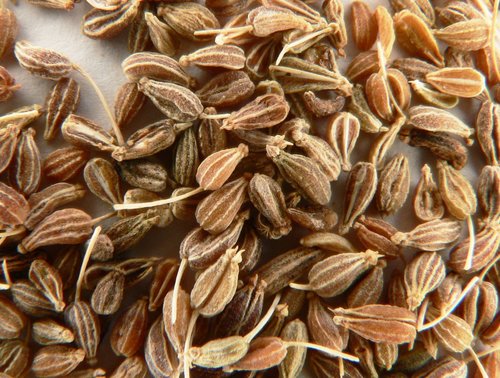
Pimpinella anisum was refractive to a single gibberellic acid treatment.
- Taxon
- Pimpinella anisum
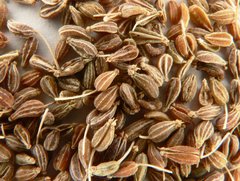 Pimpinella anisume1
- Outcome
- Refractive to a single treatmente1
Organisms pictured · Representative pictures of the matched species, not figures from the paper.
Verbatim
e1“Refractive to a single treatment were found in this study Ricinus communis, Pimpinella anisum, Foeniculum vulgäre, Coriandrum sativum, Sesamum indicum, Plantago spp, Linum usitatissinum, Salvia officinalis, Thymus vulgaris, Lavandula officinalis, and Carthamus tinctorius”
Claim · model-written summary
Foeniculum vulgäre was refractive to a single gibberellic acid treatment.
Verbatim
e1“Refractive to a single treatment were found in this study Ricinus communis, Pimpinella anisum, Foeniculum vulgäre, Coriandrum sativum, Sesamum indicum, Plantago spp, Linum usitatissinum, Salvia officinalis, Thymus vulgaris, Lavandula officinalis, and Carthamus tinctorius”
Claim · model-written summary
Coriandrum sativum was refractive to a single gibberellic acid treatment.
- Taxon
- Coriandrum sativum
 Coriandrum sativume1
- Outcome
- Refractive to a single treatmente1
Organisms pictured · Representative pictures of the matched species, not figures from the paper.

Verbatim
e1“Refractive to a single treatment were found in this study Ricinus communis, Pimpinella anisum, Foeniculum vulgäre, Coriandrum sativum, Sesamum indicum, Plantago spp, Linum usitatissinum, Salvia officinalis, Thymus vulgaris, Lavandula officinalis, and Carthamus tinctorius”
Claim · model-written summary
Sesamum indicum was refractive to a single gibberellic acid treatment.
- Taxon
- Sesamum indicum
 Sesamum indicume1
- Outcome
- Refractive to a single treatmente1
Organisms pictured · Representative pictures of the matched species, not figures from the paper.

Verbatim
e1“Refractive to a single treatment were found in this study Ricinus communis, Pimpinella anisum, Foeniculum vulgäre, Coriandrum sativum, Sesamum indicum, Plantago spp, Linum usitatissinum, Salvia officinalis, Thymus vulgaris, Lavandula officinalis, and Carthamus tinctorius”
Claim · model-written summary
Plantago spp was refractive to a single gibberellic acid treatment.
- Outcome
- Refractive to a single treatmente1
 Plantago
Organisms pictured · Representative pictures of the matched species, not figures from the paper.

Verbatim
e1“Refractive to a single treatment were found in this study Ricinus communis, Pimpinella anisum, Foeniculum vulgäre, Coriandrum sativum, Sesamum indicum, Plantago spp, Linum usitatissinum, Salvia officinalis, Thymus vulgaris, Lavandula officinalis, and Carthamus tinctorius”
Claim · model-written summary
Linum usitatissinum was refractive to a single gibberellic acid treatment.
Verbatim
e1“Refractive to a single treatment were found in this study Ricinus communis, Pimpinella anisum, Foeniculum vulgäre, Coriandrum sativum, Sesamum indicum, Plantago spp, Linum usitatissinum, Salvia officinalis, Thymus vulgaris, Lavandula officinalis, and Carthamus tinctorius”
Claim · model-written summary
Salvia officinalis was refractive to a single gibberellic acid treatment.
- Taxon
- Salvia officinalis
 Salvia officinalise1
- Outcome
- Refractive to a single treatmente1
Organisms pictured · Representative pictures of the matched species, not figures from the paper.

Verbatim
e1“Refractive to a single treatment were found in this study Ricinus communis, Pimpinella anisum, Foeniculum vulgäre, Coriandrum sativum, Sesamum indicum, Plantago spp, Linum usitatissinum, Salvia officinalis, Thymus vulgaris, Lavandula officinalis, and Carthamus tinctorius”
Claim · model-written summary
Thymus vulgaris was refractive to a single gibberellic acid treatment.
- Taxon
- Thymus vulgaris
 Thymus vulgarise1
- Outcome
- Refractive to a single treatmente1
Organisms pictured · Representative pictures of the matched species, not figures from the paper.

Verbatim
e1“Refractive to a single treatment were found in this study Ricinus communis, Pimpinella anisum, Foeniculum vulgäre, Coriandrum sativum, Sesamum indicum, Plantago spp, Linum usitatissinum, Salvia officinalis, Thymus vulgaris, Lavandula officinalis, and Carthamus tinctorius”
Claim · model-written summary
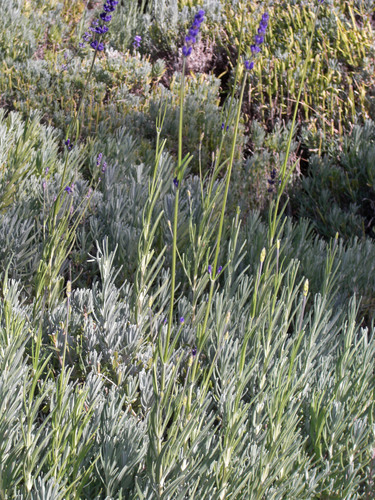
Lavandula officinalis was refractive to a single gibberellic acid treatment.
- Taxon
- Lavandula officinalis
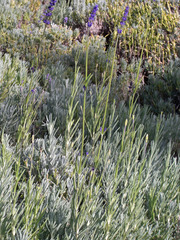 Lavandula angustifoliae1
- Outcome
- Refractive to a single treatmente1
Organisms pictured · Representative pictures of the matched species, not figures from the paper.
Verbatim
e1“Refractive to a single treatment were found in this study Ricinus communis, Pimpinella anisum, Foeniculum vulgäre, Coriandrum sativum, Sesamum indicum, Plantago spp, Linum usitatissinum, Salvia officinalis, Thymus vulgaris, Lavandula officinalis, and Carthamus tinctorius”
Claim · model-written summary
Carthamus tinctorius was refractive to a single gibberellic acid treatment.
- Taxon
- Carthamus tinctorius
 Carthamus tinctoriuse1
- Outcome
- Refractive to a single treatmente1
Organisms pictured · Representative pictures of the matched species, not figures from the paper.

Verbatim
e1“Refractive to a single treatment were found in this study Ricinus communis, Pimpinella anisum, Foeniculum vulgäre, Coriandrum sativum, Sesamum indicum, Plantago spp, Linum usitatissinum, Salvia officinalis, Thymus vulgaris, Lavandula officinalis, and Carthamus tinctorius”
Claim · model-written summary
Two foliar sprays of 100 ppm gibberellic acid per week produced a cauline length difference of 200–300% in fennel and coriander.
- Taxon
- fennel and corianderCoriandrum sativum
 Anethum foeniculume2
- Treatment
- foliar sprays of 100 p.p.m. G.A. twice weeklye3
- Outcome
- cauline lengthe3
- Value
- 200–300 %e3
- Setting
- controlled greenhouse conditionse2
Not reportedComparatorDirection
Organisms pictured · Representative pictures of the matched species, not figures from the paper.

Verbatim
e2“The responses of two umbelliferous plants, fennel and coriander under controlled greenhouse conditions are reported in detail”
e3“These plants which were refractive to single treatment received foliar sprays of 100 p.p.m. G.A. twice weekly, eliciting a difference of cauline length of 200–300 %”
Claim · model-written summary
Foliar gibberellic acid sprays did not change fruit yield or the quality and quantity of volatile oils of fennel and coriander.
- Taxon
- fennel and corianderCoriandrum sativumAnethum foeniculume2
- Treatment
- foliar sprays of 100 p.p.m. G.A. twice weeklye3
- Outcome
- yield of fruitse4
- Direction
- no_changeinferrede4
- Qualifier
- quality and quantity of volatile oilse4
Not reportedComparator
Organisms pictured · Representative pictures of the matched species, not figures from the paper.
Verbatim
e2“The responses of two umbelliferous plants, fennel and coriander under controlled greenhouse conditions are reported in detail”
e3“These plants which were refractive to single treatment received foliar sprays of 100 p.p.m. G.A. twice weekly, eliciting a difference of cauline length of 200–300 %”
e4“No significant differences were found with respect to yield of fruits, the quality and quantity of volatile oils”
Claim · model-written summary
Seed germination responses to gibberellic acid varied greatly between and within genera of drug plants.
Verbatim
e0“Contrary to general concepts, gibberellic acid solution by single foliar spray does not induce the typical „gibberellin effects” on several drug plants”
e5“In seed germination experiments, great inter– and intra–genus variability of response has been noted”
The same questions in other papers
application · yield · Anethum foeniculum (fennel)Positive and negative results
6 in the opposite direction
- positive
- positive
- positive
3 papers more in this group
See all 7 papers →application · yield · Coriandrum sativum (coriander)Positive and negative results
2 papers in the same direction as this paper · 45 in the opposite direction
- positive
- positive
- positive
44 papers more in this group
See all 48 papers →Claims are grouped by organism, treatment and what was measured or targeted. A paper counts as positive when any of its claims in the group is positive.