Abstract
Ralstonia solanacearum and Meloidogyne incognita are two soilborne pathogens that cause serious damage and great losses in the production of tomato. For this purpose, a bacterial isolate, Bacillus thuringiensis CR-371, and an actinomyces isolate, Streptomyces avermectinius NBRC14893, were examined for their ability to protect tomato from root-knot nematode and bacterial wilt diseases under glasshouse conditions. Treatment of tomato roots with B. thuringiensis CR-371 and S. avermectinius NBRC14893 followed by challenge inoculation with R. solanacearum and M. incognita significantly decreased disease severity of bacterial wilt alone, root-knot nematode alone, or mixed infection by both pathogens compared to the control. Furthermore, pretreatment of tomato roots with B. thuringiensis CR-371 and S. avermectinius NBRC14893 significantly reduced bacterial proliferation of R. solanacearum both in pathogen alone inoculated plants and in plants co-inoculated with R. solanacearum and M. incognita. In conclusion, our results suggest that the treatment of tomato roots with B. thuringiensis CR-371 and S. avermectinius NBRC14893 simultaneously suppresses bacterial wilt and root-knot nematode diseases. Therefore, B. thuringiensis CR-371 and S. avermectinius NBRC14893 could provide new options for integrated pest management strategies against plant diseases, especially against bacterial-nematode disease complexes that cause synergistic yield losses.
Abstract from the paper’s OpenAlex record, shown for indexing and research. Copyright remains with the authors or the publisher. Read at the source ↗
The text the model read, with the source record’s inline markup (italics, sub- and superscripts) rendered and its character entities decoded; quote offsets refer to the raw text.
Claims 6
Claim · model-written summary
Combined microbial root treatment reduced bacterial wilt severity versus control.
- Taxon
- tomato
 Solanum lycopersicume0
- Treatment
- B. thuringiensis CR-371 and S. avermectinius NBRC14893e0
- Interactor
- R. solanacearum
 Ralstonia solanacearume0pathogen
- Second interactor
- B. thuringiensis CR-371
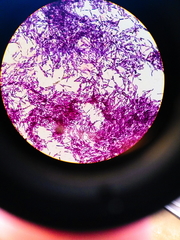 Bacillus thuringiensise0biocontrol_agent
- Outcome
- disease severity of bacterial wilt alonee0
- Direction
- decreasede0
- Comparator
- the controle0
Organisms pictured · Representative pictures of the matched species, not figures from the paper.


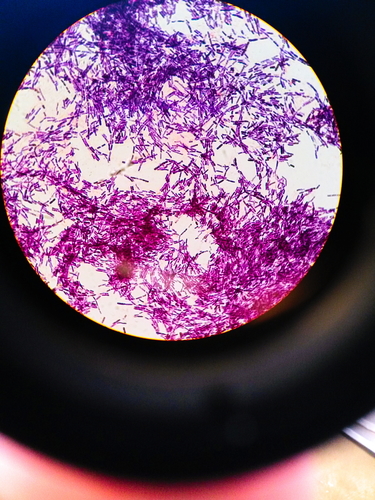
Verbatim
e0“Treatment of tomato roots with B. thuringiensis CR-371 and S. avermectinius NBRC14893 followed by challenge inoculation with R. solanacearum and M. incognita significantly decreased disease severity of bacterial wilt alone, root-knot nematode alone, or mixed infection by both pathogens compared to the control.”
Claim · model-written summary
Combined microbial root treatment reduced root-knot disease severity versus control.
- Taxon
- tomatoSolanum lycopersicume0
- Treatment
- B. thuringiensis CR-371 and S. avermectinius NBRC14893e0
- Interactor
- M. incognita
 Meloidogyne incognitae0pathogen
- Second interactor
- S. avermectinius NBRC14893
 Streptomyces avermitilise0biocontrol_agent
- Outcome
- root-knot nematode alonee0
- Direction
- decreasede0
- Comparator
- the controle0
Organisms pictured · Representative pictures of the matched species, not figures from the paper.


Verbatim
e0“Treatment of tomato roots with B. thuringiensis CR-371 and S. avermectinius NBRC14893 followed by challenge inoculation with R. solanacearum and M. incognita significantly decreased disease severity of bacterial wilt alone, root-knot nematode alone, or mixed infection by both pathogens compared to the control.”
Claim · model-written summary
Combined microbial root treatment reduced severity of mixed infection versus control.
- Taxon
- tomatoSolanum lycopersicume0
- Treatment
- B. thuringiensis CR-371 and S. avermectinius NBRC14893e0
- Interactor
- R. solanacearumRalstonia solanacearume0pathogen
- Second interactor
- M. incognitaMeloidogyne incognitae0pathogen
- Outcome
- mixed infection by both pathogense0
- Direction
- decreasede0
- Comparator
- the controle0
Organisms pictured · Representative pictures of the matched species, not figures from the paper.
Verbatim
e0“Treatment of tomato roots with B. thuringiensis CR-371 and S. avermectinius NBRC14893 followed by challenge inoculation with R. solanacearum and M. incognita significantly decreased disease severity of bacterial wilt alone, root-knot nematode alone, or mixed infection by both pathogens compared to the control.”
Claim · model-written summary
Pretreatment reduced R. solanacearum proliferation in singly inoculated tomato.
- Taxon
- tomatoSolanum lycopersicume0
- Treatment
- B. thuringiensis CR-371 and S. avermectinius NBRC14893e0
- Interactor
- R. solanacearumRalstonia solanacearume0pathogen
- Second interactor
- B. thuringiensis CR-371Bacillus thuringiensise0biocontrol_agent
- Outcome
- bacterial proliferation of R. solanacearume0
- Direction
- reducede0
- Qualifier
- pathogen alone inoculated plantse0
Not reportedComparator
Organisms pictured · Representative pictures of the matched species, not figures from the paper.
Verbatim
e0“pretreatment of tomato roots with B. thuringiensis CR-371 and S. avermectinius NBRC14893 significantly reduced bacterial proliferation of R. solanacearum both in pathogen alone inoculated plants and in plants co-inoculated with R. solanacearum and M. incognita.”
Claim · model-written summary
Pretreatment reduced R. solanacearum proliferation in coinoculated tomato.
- Taxon
- tomatoSolanum lycopersicume0
- Treatment
- B. thuringiensis CR-371 and S. avermectinius NBRC14893e0
- Interactor
- R. solanacearumRalstonia solanacearume0pathogen
- Second interactor
- M. incognitaMeloidogyne incognitae0pathogen
- Outcome
- bacterial proliferation of R. solanacearume0
- Direction
- reducede0
- Qualifier
- plants co-inoculated with R. solanacearum and M. incognitae0
Not reportedComparator
Organisms pictured · Representative pictures of the matched species, not figures from the paper.
Verbatim
e0“pretreatment of tomato roots with B. thuringiensis CR-371 and S. avermectinius NBRC14893 significantly reduced bacterial proliferation of R. solanacearum both in pathogen alone inoculated plants and in plants co-inoculated with R. solanacearum and M. incognita.”
Claim · model-written summary
The authors propose both isolates for integrated management of bacterial–nematode disease complexes.
- Taxon
- tomatoSolanum lycopersicumt0
- Outcome
- integrated pest management strategies against plant diseasese0
Organisms pictured · Representative pictures of the matched species, not figures from the paper.
Verbatim
e0“B. thuringiensis CR-371 and S. avermectinius NBRC14893 could provide new options for integrated pest management strategies against plant diseases, especially against bacterial-nematode disease complexes”
t0“tomato”
The same questions in other papers
Bacillus thuringiensis · Ralstonia solanacearum · Solanum lycopersicum (tomato)Results agree
1 paper in the same direction as this paper
- positive
Bacillus thuringiensis · Meloidogyne incognita · Solanum lycopersicum (tomato)Results agree
4 papers in the same direction as this paper
- positive
- positive
- positive
1 paper more in this group
See all 5 papers →Claims are grouped by organism, treatment and what was measured or targeted. A paper counts as positive when any of its claims in the group is positive.