Abstract
In production of medicinal plants, seed germination is a very important problem. The treated seeds (control, hydropriming and Zn2SO4) of Cumin (Cuminum cyminum L.) were evaluated at germination and seedling growth for tolerance to salt (NaCl and Na2SO4) conditions at the same water potentials of 0.0, –0.3, –0.6, –0.9 and –1.2 MPa. Electrical conductivity (EC) values of the NaCl solutions were 0.0, 6.5, 12.7, 18.4 and 23.5 dS.m-1, respectively. The objective of the study was to determine factors responsible for germination and early seedling growth due to salt toxicity or osmotic effect and to optimize the best priming treatment for these stress conditions. Results revealed that germination delayed in both solutions, having variable germination with different priming treatments. Germination, shoot and weight, root and shoot length were higher but mean germination time and abnormal germination percentage were lower in NaCl than Na2SO4 at the same water potential. The root/shoot weight and R/S length increased with increase in osmotic potential in both NaCl and Na2SO4 solutions. NaCl had less inhibitor effect on seedling growth than the germination. It was concluded that inhibition of germination at the same water potential of NaCl and Na2SO4 resulted from salt toxicity rather than osmotic effect. Hydropriming increased germination and seedling growth under salt stress. This protocol has practical importance and could be recommended to farmers to achieve higher germination and uniform emergence under field conditions.
Abstract from the paper’s OpenAlex record, shown for indexing and research. Copyright remains with the authors or the publisher. Read at the source ↗
The text the model read, with the source record’s inline markup (italics, sub- and superscripts) rendered and its character entities decoded; quote offsets refer to the raw text.
Claims 11
Claim · model-written summary
Germination was delayed in both salt solutions.
- Taxon
- Cumin (Cuminum cyminum L.)
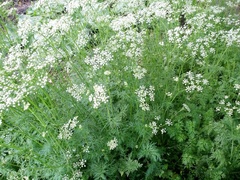 Cuminum cyminumt0
- Treatment
- both solutionse0
- Outcome
- germinatione0
- Direction
- delayede0
Not reportedComparator
Organisms pictured · Representative pictures of the matched species, not figures from the paper.
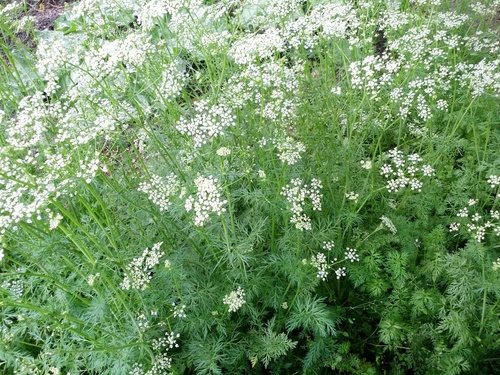
Verbatim
e0“Results revealed that germination delayed in both solutions, having variable germination with different priming treatments.”
t0“cumin (Cuminum cyminum L.)”
Claim · model-written summary
At equal water potential, cumin germination, shoot and root growth measures were higher in NaCl than Na2SO4.
- Taxon
- Cumin (Cuminum cyminum L.)Cuminum cyminumt0
- Treatment
- NaCle0
- Outcome
- Germination, shoot and weight, root and shoot lengthe0
- Direction
- highere0
- Qualifier
- same water potentiale0
- Comparator
- Na2SO4e0
Organisms pictured · Representative pictures of the matched species, not figures from the paper.
Verbatim
e0“Germination, shoot and weight, root and shoot length were higher but mean germination time and abnormal germination percentage were lower in NaCl than Na2SO4 at the same water potential.”
t0“cumin (Cuminum cyminum L.)”
Claim · model-written summary
Mean germination time was lower in NaCl than Na2SO4 at equal water potential.
- Taxon
- Cumin (Cuminum cyminum L.)Cuminum cyminumt0
- Treatment
- NaCle0
- Outcome
- mean germination timee0
- Direction
- lowere0
- Qualifier
- same water potentiale0
- Comparator
- Na2SO4e0
Organisms pictured · Representative pictures of the matched species, not figures from the paper.
Verbatim
e0“mean germination time and abnormal germination percentage were lower in NaCl than Na2SO4 at the same water potential”
t0“cumin (Cuminum cyminum L.)”
Claim · model-written summary
Abnormal germination percentage was lower in NaCl than Na2SO4 at equal water potential.
- Taxon
- Cumin (Cuminum cyminum L.)Cuminum cyminumt0
- Treatment
- NaCle0
- Outcome
- abnormal germination percentagee0
- Direction
- lowere0
- Qualifier
- same water potentiale0
- Comparator
- Na2SO4e0
Organisms pictured · Representative pictures of the matched species, not figures from the paper.
Verbatim
e0“mean germination time and abnormal germination percentage were lower in NaCl than Na2SO4 at the same water potential”
t0“cumin (Cuminum cyminum L.)”
Claim · model-written summary
Root to shoot weight ratio rose with osmotic potential in both salt solutions.
- Taxon
- Cumin (Cuminum cyminum L.)Cuminum cyminumt0
- Treatment
- osmotic potentiale0
- Outcome
- root/shoot weighte0
- Direction
- increasede0
- Qualifier
- both NaCl and Na2SO4 solutionse0
Organisms pictured · Representative pictures of the matched species, not figures from the paper.
Verbatim
e0“The root/shoot weight and R/S length increased with increase in osmotic potential in both NaCl and Na2SO4 solutions.”
t0“cumin (Cuminum cyminum L.)”
Claim · model-written summary
Root to shoot length ratio rose with osmotic potential in both salt solutions.
- Taxon
- Cumin (Cuminum cyminum L.)Cuminum cyminumt0
- Treatment
- osmotic potentiale0
- Outcome
- R/S lengthe0
- Direction
- increasede0
- Qualifier
- both NaCl and Na2SO4 solutionse0
Organisms pictured · Representative pictures of the matched species, not figures from the paper.
Verbatim
e0“The root/shoot weight and R/S length increased with increase in osmotic potential in both NaCl and Na2SO4 solutions.”
t0“cumin (Cuminum cyminum L.)”
Claim · model-written summary
NaCl inhibited cumin seedling growth less than germination.
- Taxon
- Cumin (Cuminum cyminum L.)Cuminum cyminumt0
- Outcome
- seedling growthe0
- Direction
- less inhibitore0
- Comparator
- germinatione0
Organisms pictured · Representative pictures of the matched species, not figures from the paper.
Verbatim
e0“NaCl had less inhibitor effect on seedling growth than the germination.”
t0“cumin (Cuminum cyminum L.)”
Claim · model-written summary
The authors attributed germination inhibition at equal water potential to salt toxicity rather than osmotic effect.
- Taxon
- Cumin (Cuminum cyminum L.)Cuminum cyminumt0
- Outcome
- inhibition of germinatione0
- Qualifier
- salt toxicity rather than osmotic effecte0
Organisms pictured · Representative pictures of the matched species, not figures from the paper.
Verbatim
e0“inhibition of germination at the same water potential of NaCl and Na2SO4 resulted from salt toxicity rather than osmotic effect”
t0“cumin (Cuminum cyminum L.)”
Claim · model-written summary
Hydropriming increased cumin germination under salt stress.
- Taxon
- Cumin (Cuminum cyminum L.)Cuminum cyminumt0
- Treatment
- Hydropriminge0
- Outcome
- germinatione0
- Direction
- increasede0
- Qualifier
- salt stresse0
Not reportedComparator
Organisms pictured · Representative pictures of the matched species, not figures from the paper.
Verbatim
e0“Hydropriming increased germination and seedling growth under salt stress.”
t0“cumin (Cuminum cyminum L.)”
Claim · model-written summary
Hydropriming increased cumin seedling growth under salt stress.
- Taxon
- Cumin (Cuminum cyminum L.)Cuminum cyminumt0
- Treatment
- Hydropriminge0
- Outcome
- seedling growthe0
- Direction
- increasede0
- Qualifier
- salt stresse0
Not reportedComparator
Organisms pictured · Representative pictures of the matched species, not figures from the paper.
Verbatim
e0“Hydropriming increased germination and seedling growth under salt stress.”
t0“cumin (Cuminum cyminum L.)”
Claim · model-written summary
The authors recommend the priming protocol for higher germination and uniform field emergence.
- Taxon
- Cumin (Cuminum cyminum L.)Cuminum cyminumt0
- Outcome
- recommended to farmers to achieve higher germination and uniform emergence under field conditionse0
Organisms pictured · Representative pictures of the matched species, not figures from the paper.
Verbatim
e0“This protocol has practical importance and could be recommended to farmers to achieve higher germination and uniform emergence under field conditions.”
t0“cumin (Cuminum cyminum L.)”
The same questions in other papers
sodium chloride · growth · Cuminum cyminum (cumin)Results differ
2 papers in the same direction as this paper · 2 in the opposite direction
- no effect
- negative
- positive
1 paper more in this group
See all 5 papers →seed treatment · growth · Cuminum cyminum (cumin)Results agree
9 papers in the same direction as this paper
- positive
- positive
- positive
6 papers more in this group
See all 10 papers →Claims are grouped by organism, treatment and what was measured or targeted. A paper counts as positive when any of its claims in the group is positive.