Claim · model-written summary
Continuous cropping significantly decreased soil bacterial alpha diversity in 20–40 cm subsoil.
- Taxon
- lavender
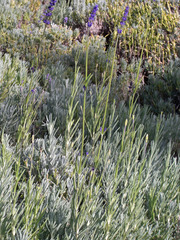 Lavandula angustifoliat0
- Treatment
- Continuous croppingt0
- Outcome
- 20–40 cm subsoile0
- Direction
- decreasee0
- Value
- P < 0.05e0
Not reportedComparator
Verbatim
e0“a significant decrease in 20–40 cm subsoil ( P < 0.05)”
t0“Continuous cropping of lavender”
Title
Junnan Jian; Weikang Luo; Bian Ran; et al. Frontiers in Plant Science 2026. doi:10.3389/fpls.2026.1840314
Other claims from this paper (9)
- Intervention effect Six years of continuous cropping significantly increased lavender essential oil yield by 37.9%.
- Intervention effect Six years of continuous cropping left the relative contents of the listed signature lavender oil constituents stable.
- Observation Soil nutrients under continuous lavender cropping followed a low-high-low pattern.
- Observation Soil organic carbon and total nitrogen peaked after three years of continuous lavender cropping.
- Mechanism Reduced soil disturbance under perennial lavender cultivation was proposed to explain the three-year soil carbon and nitrogen peak.
- Intervention effect Continuous cropping did not significantly change soil bacterial alpha diversity in the 0–20 cm topsoil.
- Association Soil bacterial co-occurrence network complexity decreased with continuous cropping duration across all layers.
- Mechanism Model analyses identified intensified microbial carbon limitation and alleviated nitrogen limitation as drivers of increased lavender oil yield.
- Recommendation The authors recommend three to five years of continuous lavender cropping followed by rotation.