View: List Claim type Research area Organism Taxon as written Decade Paper Intervention effect observed cited background negative measured Claim · model-written summary
Earlier NIAB TAG work found an initial yield decrease after conversion to noninversion tillage.
winter sown combinable crops t0 noninversion tillage system e0 Not reported Comparator
Verbatim
e0 “Previous work undertaken at NIAB TAG had shown an initial decrease in crop yield immediately after conversion to a noninversion tillage system ”
✓ located verbatim in the source · abstract, characters 1164–1306 t0 “winter sown combinable crops ”
✓ located verbatim in the source · title, characters 46–74 Other claims from this paper (1) Association observed original result negative measured Claim · model-written summary
Unmanaged disease can significantly decrease Waxy Yam yield and quality.
yield and quality e0 if not managed properly e0 Verbatim
e0 “leading to a significant decrease in the yield and quality of Waxy Yam if not managed properly. ”
✓ located verbatim in the source · abstract, characters 119–214 t0 “Epicoccum sorghinum
✓ located verbatim in the source · title, characters 16–35 Other claims from this paper (2) Association observed original result negative measured Claim · model-written summary
Increasing land size was associated with a 9% yield decrease in the main-island region.
land-size increase e0 main-island region e0 Verbatim
e0 “The TFP-improving land-size increase adversely resulted in a 9 % yield decrease in the main-island region ”
✓ located verbatim in the source · abstract, characters 1113–1218 t0 “soybean ”
✓ located verbatim in the source · title, characters 14–21 Other claims from this paper (8) Association observed original result negative measured Claim · model-written summary
Higher manganese and boron concentrations were associated with decrease in barley yield .
manganese and boron coucentrations e0 Verbatim
e0 “A decrease in yield and an increase in spotting were found to be associated with an increase in the manganese and boron coucentrations of the solutions ”
✓ located verbatim in the source · abstract, characters 336–487 e1 “Barley plants grown in standard Hoagland solutions ”
✓ located verbatim in the source · abstract, characters 177–227 Other claims from this paper (19) Intervention effect observed original result negative measured Claim · model-written summary
Limited irrigation II caused the smallest yield decrease compared with full irrigation.
limited irrigationⅡ e0 decrease degree e0 full irrigation treatment e0 Verbatim
e0 “The decrease degree of yield and grain per ear by treatment of limited irrigationⅡwere the smallest compared with the full irrigation treatment ”
✓ located verbatim in the source · abstract, characters 389–532 t0 “Upland Rice ”
✓ located verbatim in the source · title, characters 85–96 Other claims from this paper (5) Mechanism author interpretation original result negative measured Claim · model-written summary
The decrease in maximum quantum yield indicates damage to the photosynthetic apparatus.
damage to the photosynthetic apparatus e1 decrease in the maximum quantum yield e1 Verbatim
e0 “cotton plants ”
✓ located verbatim in the source · abstract, characters 740–753 e1 “This decrease in the maximum quantum yield indicates damage to the photosynthetic apparatus of the plants. ”
✓ located verbatim in the source · abstract, characters 1008–1114 Other claims from this paper (1) Observation author interpretation review summary negative projected Claim · model-written summary
In future climates with warmer temperatures and elevated CO2, cotton yield will decrease .
Verbatim
e0 “Thus, it is concluded that in future climates, if increases in [CO2] are associated with higher temperatures, cotton yield and quality will decrease particularly in regions where present temperature are near to optimum. ”
✓ located verbatim in the source · abstract, characters 604–823 Other claims from this paper (10) Intervention effect observed original result negative measured Claim · model-written summary
A decrease in solar radiation after silking dropped maize grain yield and biomass.
a decrease in solar radiation after silking e1 grain yield and biomass e1 Not reported Comparator
Verbatim
e0 “Matching of maize growth with solar radiation is of great importance for achieving high yield ”
✓ located verbatim in the source · abstract, characters 9–102 e1 “a decrease in solar radiation after silking caused a drop in maize grain yield and biomass ”
✓ located verbatim in the source · abstract, characters 317–407 Other claims from this paper (7) Association observed original result negative projected Claim · model-written summary
A corn yield model suggests warmer climate would decrease eastern Kansas corn yield s by about 19%.
warmer climate e0 Verbatim
e0 “A corn yield model suggests that the warmer climate would decrease corn yield s in eastern Kansas by about 19% ”
✓ located verbatim in the source · abstract, characters 687–796 Other claims from this paper (2) Association observed original result negative measured Claim · model-written summary
Average yield loss is 769 +/- 319 kg ha(-1) for each unit decrease in leaf area index below the plateau.
decrease in leaf area index e3 decrease inferred e3 769 +/- 319 kg ha(-1) e3 Verbatim
e0 “full-season soybean [Glycine max (L.) Merrill] ”
✓ located verbatim in the source · abstract, characters 85–131 e3 “Average yield loss was 769 +/- 319 kg ha(-1) for each unit decrease in leaf area index below the plateau ”
✓ located verbatim in the source · abstract, characters 1150–1254 Other claims from this paper (6) Lexical search (BM25). All words must match; if nothing does, any word. Organism names also match every spelling of the same organism. No semantic search yet.
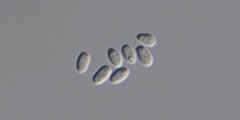 Epicoccum sorghinum
 Glycine max
 Hordeum vulgare
 Oryza sativa
 Gossypium hirsutum
 Zea mays
 Zea mays subsp. mays