View: List Claim type Research area Organism Taxon as written Decade Paper Intervention effect observed original result negative measured Claim · model-written summary
The salinity-induced yield decrease was maximum in PS 1347.
Not reported Comparator
Verbatim
t0 “two soybean (Glycine max L.) genotypes ”
✓ located verbatim in the source · title, characters 47–85 e4 “salinity decrease d the grain yield and biological yield in both the genotypes, the decrease being maximum in PS 1347 ”
✓ located verbatim in the source · abstract, characters 867–983 Other claims from this paper (6) Intervention effect observed original result no effect measured Claim · model-written summary
Zinc sulphate and zinc oxide caused little or no decrease in tuber yield .
zinc sulphate and zinc oxide e0 little or no decrease e0 Not reported Comparator
Verbatim
e0 “zinc sulphate and zinc oxide caused little or no decrease in tuber yield . ”
✓ located verbatim in the source · abstract, characters 1880–1953 t0 “potato mop‐top virus ”
✓ located verbatim in the source · title, characters 51–71 Other claims from this paper (19) Intervention effect observed original result negative measured Claim · model-written summary
Both infections tended to decrease yield .
Infection by S. turgidiscabies e0 Not reported Comparator
Verbatim
e0 “Infection by S. turgidiscabies and S. scabies delayed emergence, had the tendency to decrease the yield ”
✓ located verbatim in the source · abstract, characters 846–949 t0 “potato ”
✓ located verbatim in the source · title, characters 13–19 Other claims from this paper (7) Observation observed original result positive measured Claim · model-written summary
All PSII associated chlorophyll pools experienced the decrease in triplet yield .
all the Chl pools associated with PSII e0 Verbatim
e0 “The decrease in ³Chl* yield is equally experienced by all the Chl pools associated with PSII ”
✓ located verbatim in the source · abstract, characters 875–967 t0 “Physcomitrella patens
✓ located verbatim in the source · title, characters 71–92 Other claims from this paper (5) Observation observed original result negative measured Claim · model-written summary
Small red beans showed a slight decrease in genetic yield trend.
slight decrease e0 Verbatim
e0 “navy beans and small red beans show a slight decrease ”
✓ located verbatim in the source · abstract, characters 1498–1551 e1 “positive trend in yield for black beans ”
✓ located verbatim in the source · abstract, characters 1451–1490 Other claims from this paper (5) Intervention effect observed original result negative measured Claim · model-written summary
An unventilated, unenriched tomato house suffered a 13% yield decrease
Not reported Comparator
Verbatim
e1 “The yield of 2 crops of tomatoes ( Lycopersicon esculentum Mill. cv. Tropic) was determined in CO 2 enriched, unventilated and conventionally ventilated greenhouses ”
✓ located verbatim in the source · abstract, characters 9–173 e3 “An unventilated, unenriched house suffered a 13% yield decrease ”
✓ located verbatim in the source · abstract, characters 749–812 Other claims from this paper (11) Association observed original result negative projected Claim · model-written summary
Warming predicted a cotton yield decrease of 1.4% per decade.
temperature increase e0 Not reported Taxon
Verbatim
e0 “predicted yield decrease of 1.4% decade -1 in Xinjiang due to a significant temperature increase of 0.37°C decade -1 ”
✓ located verbatim in the source · abstract, characters 1280–1396 Other claims from this paper (13) Intervention effect observed original result negative measured Claim · model-written summary
Increasing soybean frequency tended to decrease yield .
increase in frequency of soybean in the rotation e0 Not reported Comparator
Verbatim
e0 “Severity of BSR tended to increase, and yield and seed weight of soybean tended to decrease with an increase in frequency of soybean in the rotation. ”
✓ located verbatim in the source · abstract, characters 1232–1381 t0 “Soybean ”
✓ located verbatim in the source · title, characters 74–81 Other claims from this paper (19) Association observed original result negative measured Claim · model-written summary
A one percent increase in March deviation corresponded to a 5.6 unit decrease in maize yield .
March deviation e0 1 per cent increase e0 Verbatim
e0 “1 per cent increase in March deviation leads to 5.6 unit decrease in yield of maize ”
✓ located verbatim in the source · abstract, characters 991–1074 Other claims from this paper (4) Intervention effect author interpretation original result negative measured Claim · model-written summary
Preventing floral tiller development would decrease dry matter yield .
western wheatgrass e1 Preventing development of floral tillers e0 Not reported Comparator
Verbatim
e0 “Preventing development of floral tillers would increase DMD but decrease DM yield . ”
✓ located verbatim in the source · abstract, characters 1007–1089 e1 “'Rosana' western wheatgrass (Agropyron smithii ) and 'Lodorm' green needlegrass (Stipa viridula ) ”
✓ located verbatim in the source · abstract, characters 162–257 Other claims from this paper (8) Lexical search (BM25). All words must match; if nothing does, any word. Organism names also match every spelling of the same organism. No semantic search yet.
 Glycine max
 Solanum tuberosum
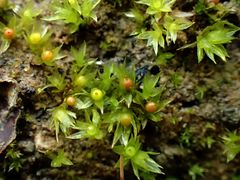 Physcomitrium patens
 Solanum lycopersicum
 Zea mays