View: List Claim type Research area Organism Taxon as written Decade Paper Intervention effect observed original result no effect not significant (as stated) measured Claim · model-written summary
For Jewel, removal of all primary or secondary buds did not significantly decrease yield relative to control plots.
removal of all primary or secondary buds e3 did not result in a significant decrease e3 control plots e3 Verbatim
t0 “Compensatory Ability of Strawberries to Bud and Flower Removal ”
✓ located verbatim in the source · title, characters 0–62 e3 “For the cultivar ‘Jewel’, removal of all primary or secondary buds did not result in a significant decrease in yield relative to control plots ”
✓ located verbatim in the source · abstract, characters 582–724 Other claims from this paper (9) Intervention effect observed original result no effect measured Claim · model-written summary
In-row sowing at 8 viable seeds m-2 of U. ruziziensis did not decrease sorghum grain yield .
8 viable seeds m-2 of U. ruziziensis using in-row seeding e0 sorghum grain yield e0 do not decrease e0 Not reported Comparator
Verbatim
e0 “The seeding density of 8 viable seeds m-2 of U. ruziziensis using in-row seeding, and up to 10 viable seeds m-2 using inter-row, and broadcast seedings do not decrease sorghum grain yield ”
✓ located verbatim in the source · abstract, characters 807–994 Other claims from this paper (6) Intervention effect observed original result no effect measured Claim · model-written summary
N fertilization did not decrease species diversity over time.
N fertilization e0 species diversity e0 did not decrease e0 Not reported Taxon Comparator
Verbatim
e0 “N fertilization did not decrease species diversity through time. ”
✓ located verbatim in the source · abstract, characters 1389–1453 Other claims from this paper (14) Intervention effect observed original result no effect measured Claim · model-written summary
Biostimulant-treated grass showed no decrease in yield and quality when the N rate was reduced by 20 to 25%
treated with the biostimulant e3 yield and quality e3 when the N rate was reduced by 20 to 25% e3 Field-based evaluations e3 Not reported Comparator
Verbatim
e3 “Field-based evaluations demonstrated no decrease in yield and quality from harvested and grazed grass treated with the biostimulant when the N rate was reduced by 20 to 25% ”
✓ located verbatim in the source · abstract, characters 1174–1346 Other claims from this paper (3) Intervention effect observed original result no effect not significant (as stated) measured Claim · model-written summary
A 75% fertilizer reduction with AMF caused no significant yield decrease .
reduction in the top dressing fertilizer dose by 50% and 75% e0 yield of peppers e0 did not cause a statistically significant decrease e0 Not reported Comparator
Verbatim
e0 “In the experimental units with AMF, the reduction in the top dressing fertilizer dose by 50% and 75% did not cause a statistically significant decrease in the yield of peppers ”
✓ located verbatim in the source · abstract, characters 1222–1397 t0 “Sweet Pepper (Capsicum annuum L.) ”
✓ located verbatim in the source · title, characters 116–149 Other claims from this paper (13) Intervention effect observed original result no effect measured Claim · model-written summary
Cu-enriched hog manure did not decrease corn grain yield on the three soils.
did not decrease e0 on the three soils e0 Not reported Comparator
Verbatim
e0 “Application of these levels of Cu as either CuSO 4 or Cu‐enriched hog manure did not decrease corn ( Zea mays L.) grain yield s on the three soils ”
✓ located verbatim in the source · abstract, characters 979–1124 Other claims from this paper (5) Intervention effect observed original result no effect not significant (as stated) measured Claim · model-written summary
Co-applying low-quality water at 25% and 50% with 75% and 50% high-quality water did not significantly decrease wheat yield and yield attributes in either season.
LQW at 25% and 50% co-applied with 75% and 50% HQW e5 yield and yield attributes e5 did not significantly decrease e5 a private farm at Abis-Alexandria e3 Not reported Comparator
Verbatim
e5 “Application of LQW at 25% and 50% co-applied with 75% and 50% HQW did not significantly decrease the yield and yield attributes of wheat in both seasons of cultivations ”
✓ located verbatim in the source · abstract, characters 1558–1726 e3 “at a private farm at Abis-Alexandria ”
✓ located verbatim in the source · abstract, characters 689–725 Other claims from this paper (7) Intervention effect observed original result no effect measured Claim · model-written summary
The increase in oil content from positive selection was achieved without any decrease in seed yield of white mustard.
continuous positive selection e3 Not reported Comparator
Verbatim
e3 “By continuous positive selection during twelve years oil content was increased with 7.46 %, and by negative selection decrease d with 7.32 % ”
✓ located verbatim in the source · abstract, characters 447–586 e5 “The increase in oil content has been possible without any decrease in seed yield ”
✓ located verbatim in the source · abstract, characters 713–793 t0 “Continuous selection for seed number per pod and oil content in white mustard ”
✓ located verbatim in the source · title, characters 0–77 Other claims from this paper (12) Intervention effect observed original result no effect not significant (as stated) simulated Claim · model-written summary
Simulated maize planting could extend to early January with 30 kg ha-1 nitrogen without significant yield decrease .
without a significant decrease e0 30 and 60 kg ha-1 e0 Not reported Comparator
Verbatim
e0 “planting can be extended to early December, late December, early January and late January without a significant decrease in yield by adding no nitrogen, 15, 30 and 60 kg ha-1, respectively ”
✓ located verbatim in the source · abstract, characters 892–1080 t0 “maize ”
✓ located verbatim in the source · title, characters 51–56 Other claims from this paper (6) Intervention effect observed original result no effect measured Claim · model-written summary
Mild water reductions did not evidence crop mineral nutrition imbalances or yield decrease .
mild water reductions e5 crop mineral nutrition imbalances and yield decrease e5 no_change inferred e5 irrigation at the full rate of ETc e2 Verbatim
e1 “orange trees [Citrus sinensis (L.) Osbeck] ”
✓ located verbatim in the source · abstract, characters 325–367 e2 “Two different DI strategies supplying 70 and 50% of crop evapotranspiration (ETc) were compared with irrigation at the full rate of ETc ”
✓ located verbatim in the source · abstract, characters 402–537 e5 “The study does not evidence crop mineral nutrition imbalances and yield decrease caused by mild water reductions ”
✓ located verbatim in the source · abstract, characters 1136–1248 Other claims from this paper (7) Lexical search (BM25). All words must match; if nothing does, any word. Organism names also match every spelling of the same organism. No semantic search yet.
 Fragaria
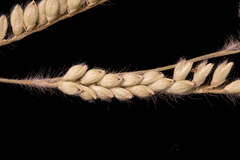 Urochloa ruziziensis
 Capsicum annuum
 Zea mays
 Triticum aestivum
 Sinapis alba
 Citrus sinensis