View: List Claim type Research area Organism Taxon as written Decade Paper Association observed review summary negative basis n/a Claim · model-written summary
Prior studies associate a 1°C temperature rise with a 5–10% rice yield decrease .
temperature increases of merely 1°C e0 Not reported Taxon
Verbatim
e0 “temperature increases of merely 1°C result in a 5–10% decrease in yield ”
✓ located verbatim in the source · abstract, characters 509–580 t0 “rice breeding ”
✓ located verbatim in the source · title, characters 25–38 Other claims from this paper (2) Intervention effect observed original result negative measured Claim · model-written summary
Lower-third defoliation caused the smallest seed yield decrease relative to control.
lower 1/3 defoliation e0 lowest decrease e0 Not reported Comparator
Verbatim
e0 “the lowest decrease was observed in the lower 1/3 defoliation level ”
✓ located verbatim in the source · abstract, characters 1238–1305 t0 “Safflower ”
✓ located verbatim in the source · title, characters 119–128 Other claims from this paper (16) Intervention effect observed original result negative measured Claim · model-written summary
Intercropping caused a 2–7% yield decrease in egusi melon.
Not reported Comparator
Verbatim
e2 “Intercropping did not significantly influence bunch yield of plantain but it caused a 2–7 and 20% yield decrease in egusi melon and water melon respectively ”
✓ located verbatim in the source · abstract, characters 472–628 Other claims from this paper (6) Intervention effect author interpretation original result negative measured Claim · model-written summary
Reducing plant density to save water may decrease rather than increase wheat yield under water-limited conditions.
reducing the density e1 Not reported Comparator
Verbatim
e1 “reducing the density of palnts to reduce water use may decrease rather than increase wheat yield under water limited conditions ”
✓ located verbatim in the source · abstract, characters 1397–1524 Other claims from this paper (8) Intervention effect observed original result negative measured Claim · model-written summary
Yield of Kanto 100 tended to decrease in mixtures.
Not reported Comparator
Verbatim
t0 “Mixed Planting of Rice Varieties ”
✓ located verbatim in the source · title, characters 25–57 e6 “The yield of Koshihikari obviously increased in mixtures and that of Kanto 100 tended to decrease ”
✓ located verbatim in the source · abstract, characters 1001–1098 Other claims from this paper (13) Association observed original result negative measured Claim · model-written summary
A 1 °C warming was associated with an average 2.6% decrease in maize yield .
Verbatim
e1 “Analysis of the data indicated an average decrease of 2.6% in maize yield for 1 °C warming ”
✓ located verbatim in the source · abstract, characters 375–465 Other claims from this paper (11) Association observed original result positive measured Claim · model-written summary
Fruit yield of acid lime was closely associated with the decrease in chlorosis (r = 0.939).
decrease in chlorosis e3 Not reported Direction
Verbatim
t0 “Acid Lime ”
✓ located verbatim in the source · title, characters 71–80 e3 “Fruit yield was closely associated with the decrease in chlorosis (r = 0.939**) ”
✓ located verbatim in the source · abstract, characters 369–448 Other claims from this paper (4) Intervention effect observed original result positive basis n/a Claim · model-written summary
Under optimal nitrogen supply grain yield does not decrease .
optimum nitrogen supply e0 does not decrease e0 Not reported Comparator
Verbatim
e0 “Under conditions of optimum nitrogen supply, protein content and yield per unit area increase but grain yield does not decrease ”
✓ located verbatim in the source · abstract, characters 839–966 t0 “small grains ”
✓ located verbatim in the source · title, characters 94–106 t1 “small grains ”
✓ located verbatim in the source · title, characters 94–106 Other claims from this paper (7) Observation observed original result negative projected Claim · model-written summary
Under RCP8.5 wheat yield is projected to decrease 9%, 18%, and 27% across the three periods.
Verbatim
e0 “Under RCP8.5, the yield would decrease by 9%, 18% and 27%, respectively. ”
✓ located verbatim in the source · abstract, characters 833–905 t0 “Wheat ”
✓ located verbatim in the source · title, characters 88–93 Other claims from this paper (15) Observation RCP4.5 projects growing season rainfall decreases of 9%, 15%, and 19% in 2030, 2050, and 2070. Observation RCP4.5 projects temperature rises of 0.7 °C, 1.2 °C, and 1.4 °C in 2030, 2050, and 2070. Observation Under RCP4.5 wheat yield is projected to decrease 9%, 15%, and 19% in 2030, 2050, and 2070. Recommendation Short-season cultivars are projected suitable for low-rainfall environments. Recommendation Long-season cultivars are projected suitable for high-rainfall environments. Observation At a low-rainfall site in 2050 under RCP4.5, early maturing variety yield is projected to fall 11% and 31%. Observation At a high-rainfall site, the corresponding projected early variety yield changes are a 9% decrease and 1% increase. Observation At a low-rainfall site, early-sown variety yield is projected to fall 14%. Observation At a low-rainfall site, late-sown early variety yield is projected to fall 23%. Observation Late-maturing wheat is projected to have much greater yield reduction at the low-rainfall site. Observation At the higher-rainfall site, early-sown early maturing variety yield reduction is projected at 3%. Observation At the higher-rainfall site, late-sown early maturing variety yield reduction is projected at 15%. Observation At the higher-rainfall site, late-maturing wheat yield reduction is projected at 1% with early sowing. Observation At the higher-rainfall site, late-maturing wheat yield reduction is projected at 2% with late sowing. Recommendation The authors conclude changes in agronomic practices can mitigate future climate impacts on wheat yield. Observation observed original result negative projected Claim · model-written summary
High-quality long-grain rice yield was projected to decrease 0.17 percent.
High-quality long-grain rice e0 Verbatim
e0 “High-quality long-grain rice with 0.17 percent reduction have the highest decrease in yield ”
✓ located verbatim in the source · abstract, characters 1546–1637 Other claims from this paper (5) Lexical search (BM25). All words must match; if nothing does, any word. Organism names also match every spelling of the same organism. No semantic search yet.
 Carthamus tinctorius
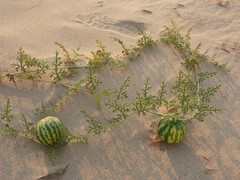 Citrullus mucosospermus
 Triticum aestivum
 Oryza sativa
 Zea mays